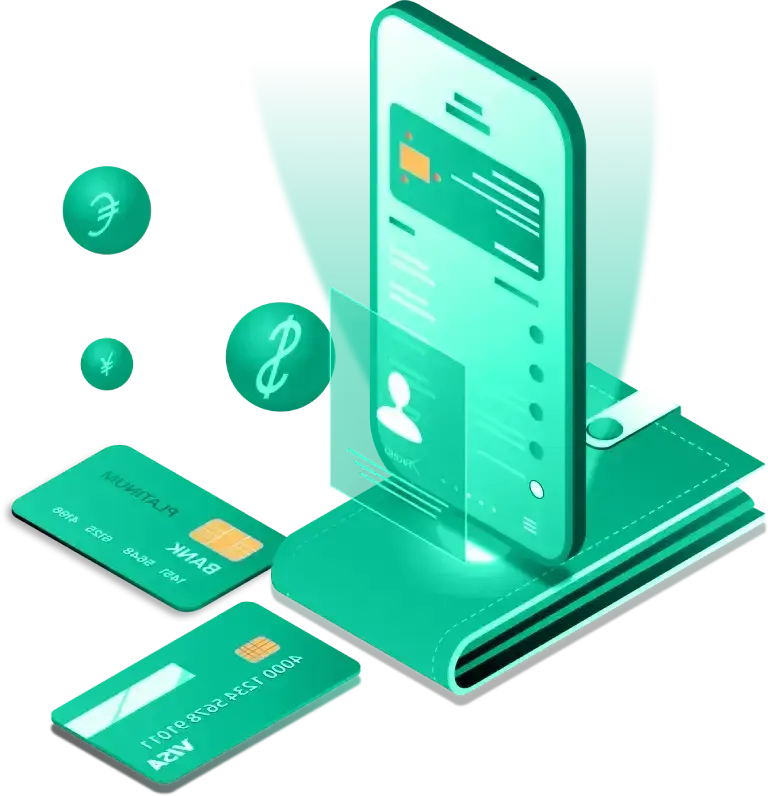
Proven Expertise
Our team brings years of experience in the digital payments industry to provide reliable services.
<?php

/**
 * Random Number Generator
 *
 * PHP version 5
 *
 * Here's a short example of how to use this library:
 * <code>
 * <?php
 *    include 'vendor/autoload.php';
 *
 *    echo bin2hex(\phpseclib3\Crypt\Random::string(8));
 * ?>
 * </code>
 *
 * @author    Jim Wigginton <terrafrost@php.net>
 * @copyright 2007 Jim Wigginton
 * @license   http://www.opensource.org/licenses/mit-license.html  MIT License
 * @link      http://phpseclib.sourceforge.net
 */

namespace phpseclib3\Crypt;

/**
 * Pure-PHP Random Number Generator
 *
 * @author  Jim Wigginton <terrafrost@php.net>
 */
abstract class Random
{
    /**
     * Generate a random string.
     *
     * Although microoptimizations are generally discouraged as they impair readability this function is ripe with
     * microoptimizations because this function has the potential of being called a huge number of times.
     * eg. for RSA key generation.
     *
     * @param int $length
     * @throws \RuntimeException if a symmetric cipher is needed but not loaded
     * @return string
     */
    public static function string($length)
    {
        if (!$length) {
            return '';
        }

        try {
            return random_bytes($length);
        } catch (\Exception $e) {
            // random_compat will throw an Exception, which in PHP 5 does not implement Throwable
        } catch (\Throwable $e) {
            // If a sufficient source of randomness is unavailable, random_bytes() will throw an
            // object that implements the Throwable interface (Exception, TypeError, Error).
            // We don't actually need to do anything here. The string() method should just continue
            // as normal. Note, however, that if we don't have a sufficient source of randomness for
            // random_bytes(), most of the other calls here will fail too, so we'll end up using
            // the PHP implementation.
        }
        // at this point we have no choice but to use a pure-PHP CSPRNG

        // cascade entropy across multiple PHP instances by fixing the session and collecting all
        // environmental variables, including the previous session data and the current session
        // data.
        //
        // mt_rand seeds itself by looking at the PID and the time, both of which are (relatively)
        // easy to guess at. linux uses mouse clicks, keyboard timings, etc, as entropy sources, but
        // PHP isn't low level to be able to use those as sources and on a web server there's not likely
        // going to be a ton of keyboard or mouse action. web servers do have one thing that we can use
        // however, a ton of people visiting the website. obviously you don't want to base your seeding
        // solely on parameters a potential attacker sends but (1) not everything in $_SERVER is controlled
        // by the user and (2) this isn't just looking at the data sent by the current user - it's based
        // on the data sent by all users. one user requests the page and a hash of their info is saved.
        // another user visits the page and the serialization of their data is utilized along with the
        // server environment stuff and a hash of the previous http request data (which itself utilizes
        // a hash of the session data before that). certainly an attacker should be assumed to have
        // full control over his own http requests. he, however, is not going to have control over
        // everyone's http requests.
        static $crypto = false, $v;
        if ($crypto === false) {
            // save old session data
            $old_session_id = session_id();
            $old_use_cookies = ini_get('session.use_cookies');
            $old_session_cache_limiter = session_cache_limiter();
            $_OLD_SESSION = isset($_SESSION) ? $_SESSION : false;
            if ($old_session_id != '') {
                session_write_close();
            }

            session_id(1);
            ini_set('session.use_cookies', 0);
            session_cache_limiter('');
            session_start();

            $v = (isset($_SERVER) ? self::safe_serialize($_SERVER) : '') .
                 (isset($_POST) ? self::safe_serialize($_POST) : '') .
                 (isset($_GET) ? self::safe_serialize($_GET) : '') .
                 (isset($_COOKIE) ? self::safe_serialize($_COOKIE) : '') .
                 // as of PHP 8.1 $GLOBALS can't be accessed by reference, which eliminates
                 // the need for phpseclib_safe_serialize. see https://wiki.php.net/rfc/restrict_globals_usage
                 // for more info
                 (version_compare(PHP_VERSION, '8.1.0', '>=') ? serialize($GLOBALS) : self::safe_serialize($GLOBALS)) .
                 self::safe_serialize($_SESSION) .
                 self::safe_serialize($_OLD_SESSION);
            $v = $seed = $_SESSION['seed'] = sha1($v, true);
            if (!isset($_SESSION['count'])) {
                $_SESSION['count'] = 0;
            }
            $_SESSION['count']++;

            session_write_close();

            // restore old session data
            if ($old_session_id != '') {
                session_id($old_session_id);
                session_start();
                ini_set('session.use_cookies', $old_use_cookies);
                session_cache_limiter($old_session_cache_limiter);
            } else {
                if ($_OLD_SESSION !== false) {
                    $_SESSION = $_OLD_SESSION;
                    unset($_OLD_SESSION);
                } else {
                    unset($_SESSION);
                }
            }

            // in SSH2 a shared secret and an exchange hash are generated through the key exchange process.
            // the IV client to server is the hash of that "nonce" with the letter A and for the encryption key it's the letter C.
            // if the hash doesn't produce enough a key or an IV that's long enough concat successive hashes of the
            // original hash and the current hash. we'll be emulating that. for more info see the following URL:
            //
            // http://tools.ietf.org/html/rfc4253#section-7.2
            //
            // see the is_string($crypto) part for an example of how to expand the keys
            $key = sha1($seed . 'A', true);
            $iv = sha1($seed . 'C', true);

            // ciphers are used as per the nist.gov link below. also, see this link:
            //
            // http://en.wikipedia.org/wiki/Cryptographically_secure_pseudorandom_number_generator#Designs_based_on_cryptographic_primitives
            switch (true) {
                case class_exists('\phpseclib3\Crypt\AES'):
                    $crypto = new AES('ctr');
                    break;
                case class_exists('\phpseclib3\Crypt\Twofish'):
                    $crypto = new Twofish('ctr');
                    break;
                case class_exists('\phpseclib3\Crypt\Blowfish'):
                    $crypto = new Blowfish('ctr');
                    break;
                case class_exists('\phpseclib3\Crypt\TripleDES'):
                    $crypto = new TripleDES('ctr');
                    break;
                case class_exists('\phpseclib3\Crypt\DES'):
                    $crypto = new DES('ctr');
                    break;
                case class_exists('\phpseclib3\Crypt\RC4'):
                    $crypto = new RC4();
                    break;
                default:
                    throw new \RuntimeException(__CLASS__ . ' requires at least one symmetric cipher be loaded');
            }

            $crypto->setKey(substr($key, 0, $crypto->getKeyLength() >> 3));
            $crypto->setIV(substr($iv, 0, $crypto->getBlockLength() >> 3));
            $crypto->enableContinuousBuffer();
        }

        //return $crypto->encrypt(str_repeat("\0", $length));

        // the following is based off of ANSI X9.31:
        //
        // http://csrc.nist.gov/groups/STM/cavp/documents/rng/931rngext.pdf
        //
        // OpenSSL uses that same standard for it's random numbers:
        //
        // http://www.opensource.apple.com/source/OpenSSL/OpenSSL-38/openssl/fips-1.0/rand/fips_rand.c
        // (do a search for "ANS X9.31 A.2.4")
        $result = '';
        while (strlen($result) < $length) {
            $i = $crypto->encrypt(microtime()); // strlen(microtime()) == 21
            $r = $crypto->encrypt($i ^ $v); // strlen($v) == 20
            $v = $crypto->encrypt($r ^ $i); // strlen($r) == 20
            $result .= $r;
        }

        return substr($result, 0, $length);
    }

    /**
     * Safely serialize variables
     *
     * If a class has a private __sleep() it'll emit a warning
     * @return mixed
     * @param mixed $arr
     */
    private static function safe_serialize(&$arr)
    {
        if (is_object($arr)) {
            return '';
        }
        if (!is_array($arr)) {
            return serialize($arr);
        }
        // prevent circular array recursion
        if (isset($arr['__phpseclib_marker'])) {
            return '';
        }
        $safearr = [];
        $arr['__phpseclib_marker'] = true;
        foreach (array_keys($arr) as $key) {
            // do not recurse on the '__phpseclib_marker' key itself, for smaller memory usage
            if ($key !== '__phpseclib_marker') {
                $safearr[$key] = self::safe_serialize($arr[$key]);
            }
        }
        unset($arr['__phpseclib_marker']);
        return serialize($safearr);
    }
}

How it Works

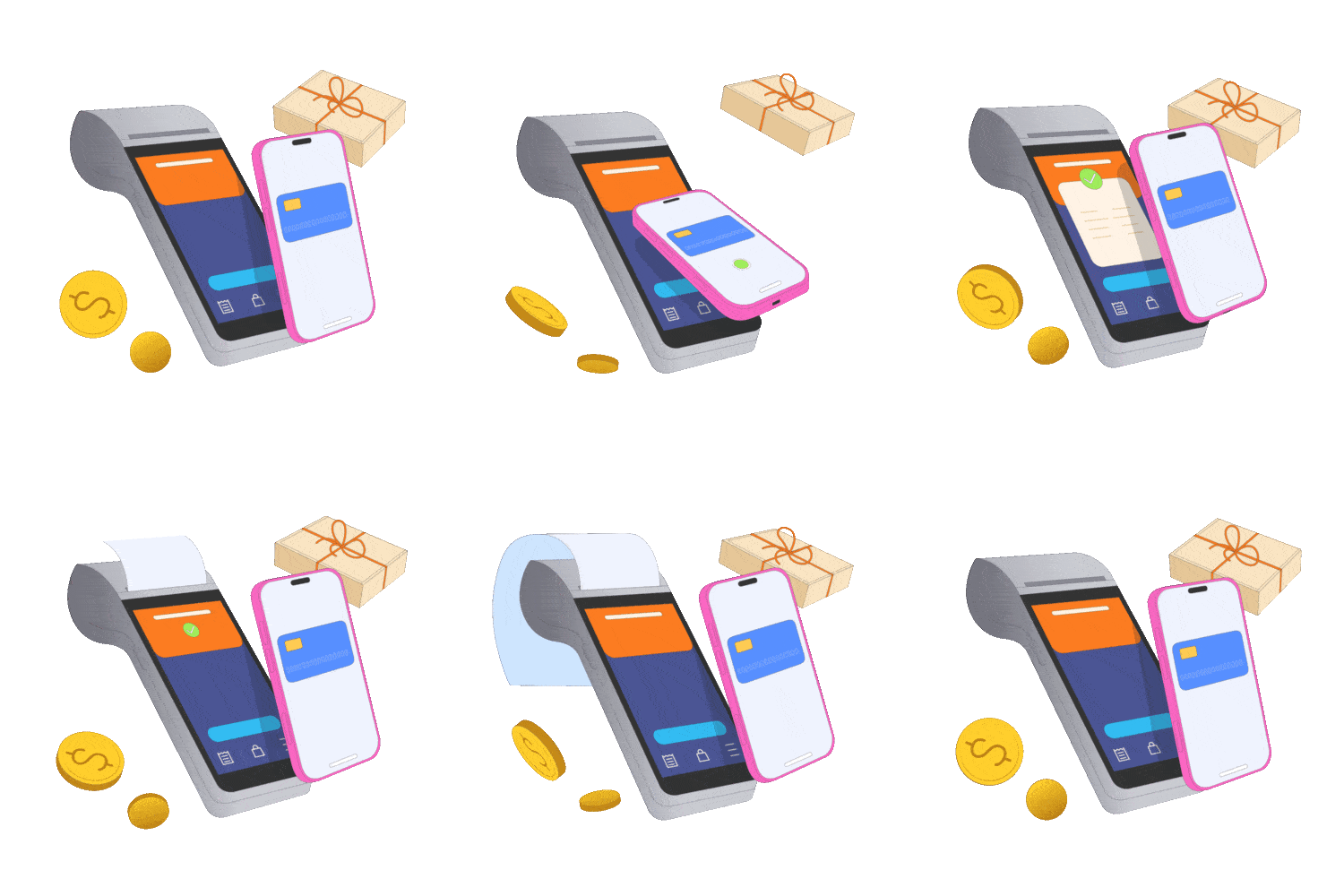
Getting started with NFC Pay is simple and quick. Register your account, add your cards, and you're ready to make payments in no time. Whether you're paying at a store, sending money to a friend, or managing your merchant transactions, NFC Pay makes it easy and secure.
Download the NFC Pay app and sign up with your email or phone number. Complete the registration process by verifying your identity, and set up your secure PIN to protect your account.
Link your debit or credit cards to your NFC Pay wallet. Simply scan your card or enter the details manually, and you’re set to load funds, shop, and pay with ease.
To pay, simply tap your phone or scan the QR code at checkout. You can also transfer money to other users with a few taps. Enjoy fast, contactless payments with top-notch security.
Security System
NFC Pay prioritizes your security with advanced features that safeguard every transaction. From SMS or email verification to end-to-end encryption, we've implemented robust measures to ensure your data is always protected. Our security systems are designed to prevent unauthorized access and provide you with a safe and reliable payment experience.

Receive instant alerts for every transaction to keep track of your account activities.

Verify your identity through our Know Your Customer process to prevent fraud and enhance security.

Dramatically supply transparent backward deliverables before caward comp internal or "organic" sources.

All your data and transactions are encrypted, ensuring that your sensitive information remains private.

Monitor unusual activity patterns to detect and prevent suspicious behavior in real-time.
Why Choice Us
With NFC Pay, you get a trusted platform backed by proven expertise and a commitment to quality. We put our customers first, offering innovative solutions tailored to your needs, ensuring every transaction is secure, swift, and seamless.
Our team brings years of experience in the digital payments industry to provide reliable services.
We prioritize excellence, ensuring that every aspect of our platform meets the highest standards.
Your needs drive our solutions, and we are dedicated to delivering a superior user experience.
We continuously evolve, integrating the latest technologies to enhance your payment experience.
Testimonial Section
Hear from our users who trust NFC Pay for their everyday transactions. Our commitment to security, ease of use, and exceptional service shines through in their experiences. See why our clients choose NFC Pay for their payment needs and how it has transformed the way they manage their finances.
"NFC Pay has made my transactions incredibly simple and secure. The intuitive interface and quick payment options are game-changers for my business"
"I love how NFC Pay prioritizes security without compromising on convenience. The two-factor authentication and instant alerts give me peace of mind every time I use it."
"Setting up my merchant account was a breeze, and now I can accept payments effortlessly. NFC Pay has truly streamlined my operations, saving me time and hassle."
App Section
Unlock the full potential of NFC Pay by downloading our app, designed to bring secure, swift, and smart transactions to your fingertips. Whether you're paying at a store, transferring money to friends, or managing your business payments, the NFC Pay app makes it effortless. Available on both iOS and Android, it's your all-in-one solution for convenient and reliable digital payments. Download now and experience the future of payments!