Proven Expertise
Our team brings years of experience in the digital payments industry to provide reliable services.
<?php
/**
* Pure-PHP PKCS#1 (v2.1) compliant implementation of RSA.
*
* PHP version 5
*
* Here's an example of how to encrypt and decrypt text with this library:
* <code>
* <?php
* include 'vendor/autoload.php';
*
* $private = \phpseclib3\Crypt\RSA::createKey();
* $public = $private->getPublicKey();
*
* $plaintext = 'terrafrost';
*
* $ciphertext = $public->encrypt($plaintext);
*
* echo $private->decrypt($ciphertext);
* ?>
* </code>
*
* Here's an example of how to create signatures and verify signatures with this library:
* <code>
* <?php
* include 'vendor/autoload.php';
*
* $private = \phpseclib3\Crypt\RSA::createKey();
* $public = $private->getPublicKey();
*
* $plaintext = 'terrafrost';
*
* $signature = $private->sign($plaintext);
*
* echo $public->verify($plaintext, $signature) ? 'verified' : 'unverified';
* ?>
* </code>
*
* One thing to consider when using this: so phpseclib uses PSS mode by default.
* Technically, id-RSASSA-PSS has a different key format than rsaEncryption. So
* should phpseclib save to the id-RSASSA-PSS format by default or the
* rsaEncryption format? For stand-alone keys I figure rsaEncryption is better
* because SSH doesn't use PSS and idk how many SSH servers would be able to
* decode an id-RSASSA-PSS key. For X.509 certificates the id-RSASSA-PSS
* format is used by default (unless you change it up to use PKCS1 instead)
*
* @author Jim Wigginton <terrafrost@php.net>
* @copyright 2009 Jim Wigginton
* @license http://www.opensource.org/licenses/mit-license.html MIT License
* @link http://phpseclib.sourceforge.net
*/
namespace phpseclib3\Crypt;
use phpseclib3\Crypt\Common\AsymmetricKey;
use phpseclib3\Crypt\RSA\Formats\Keys\PSS;
use phpseclib3\Crypt\RSA\PrivateKey;
use phpseclib3\Crypt\RSA\PublicKey;
use phpseclib3\Exception\InconsistentSetupException;
use phpseclib3\Exception\UnsupportedAlgorithmException;
use phpseclib3\Math\BigInteger;
/**
* Pure-PHP PKCS#1 compliant implementation of RSA.
*
* @author Jim Wigginton <terrafrost@php.net>
*/
abstract class RSA extends AsymmetricKey
{
/**
* Algorithm Name
*
* @var string
*/
const ALGORITHM = 'RSA';
/**
* Use {@link http://en.wikipedia.org/wiki/Optimal_Asymmetric_Encryption_Padding Optimal Asymmetric Encryption Padding}
* (OAEP) for encryption / decryption.
*
* Uses sha256 by default
*
* @see self::setHash()
* @see self::setMGFHash()
* @see self::encrypt()
* @see self::decrypt()
*/
const ENCRYPTION_OAEP = 1;
/**
* Use PKCS#1 padding.
*
* Although self::PADDING_OAEP / self::PADDING_PSS offers more security, including PKCS#1 padding is necessary for purposes of backwards
* compatibility with protocols (like SSH-1) written before OAEP's introduction.
*
* @see self::encrypt()
* @see self::decrypt()
*/
const ENCRYPTION_PKCS1 = 2;
/**
* Do not use any padding
*
* Although this method is not recommended it can none-the-less sometimes be useful if you're trying to decrypt some legacy
* stuff, if you're trying to diagnose why an encrypted message isn't decrypting, etc.
*
* @see self::encrypt()
* @see self::decrypt()
*/
const ENCRYPTION_NONE = 4;
/**
* Use the Probabilistic Signature Scheme for signing
*
* Uses sha256 and 0 as the salt length
*
* @see self::setSaltLength()
* @see self::setMGFHash()
* @see self::setHash()
* @see self::sign()
* @see self::verify()
* @see self::setHash()
*/
const SIGNATURE_PSS = 16;
/**
* Use a relaxed version of PKCS#1 padding for signature verification
*
* @see self::sign()
* @see self::verify()
* @see self::setHash()
*/
const SIGNATURE_RELAXED_PKCS1 = 32;
/**
* Use PKCS#1 padding for signature verification
*
* @see self::sign()
* @see self::verify()
* @see self::setHash()
*/
const SIGNATURE_PKCS1 = 64;
/**
* Encryption padding mode
*
* @var int
*/
protected $encryptionPadding = self::ENCRYPTION_OAEP;
/**
* Signature padding mode
*
* @var int
*/
protected $signaturePadding = self::SIGNATURE_PSS;
/**
* Length of hash function output
*
* @var int
*/
protected $hLen;
/**
* Length of salt
*
* @var int
*/
protected $sLen;
/**
* Label
*
* @var string
*/
protected $label = '';
/**
* Hash function for the Mask Generation Function
*
* @var \phpseclib3\Crypt\Hash
*/
protected $mgfHash;
/**
* Length of MGF hash function output
*
* @var int
*/
protected $mgfHLen;
/**
* Modulus (ie. n)
*
* @var \phpseclib3\Math\BigInteger
*/
protected $modulus;
/**
* Modulus length
*
* @var \phpseclib3\Math\BigInteger
*/
protected $k;
/**
* Exponent (ie. e or d)
*
* @var \phpseclib3\Math\BigInteger
*/
protected $exponent;
/**
* Default public exponent
*
* @var int
* @link http://en.wikipedia.org/wiki/65537_%28number%29
*/
private static $defaultExponent = 65537;
/**
* Enable Blinding?
*
* @var bool
*/
protected static $enableBlinding = true;
/**
* OpenSSL configuration file name.
*
* @see self::createKey()
* @var ?string
*/
protected static $configFile;
/**
* Smallest Prime
*
* Per <http://cseweb.ucsd.edu/~hovav/dist/survey.pdf#page=5>, this number ought not result in primes smaller
* than 256 bits. As a consequence if the key you're trying to create is 1024 bits and you've set smallestPrime
* to 384 bits then you're going to get a 384 bit prime and a 640 bit prime (384 + 1024 % 384). At least if
* engine is set to self::ENGINE_INTERNAL. If Engine is set to self::ENGINE_OPENSSL then smallest Prime is
* ignored (ie. multi-prime RSA support is more intended as a way to speed up RSA key generation when there's
* a chance neither gmp nor OpenSSL are installed)
*
* @var int
*/
private static $smallestPrime = 4096;
/**
* Public Exponent
*
* @var \phpseclib3\Math\BigInteger
*/
protected $publicExponent;
/**
* Sets the public exponent for key generation
*
* This will be 65537 unless changed.
*
* @param int $val
*/
public static function setExponent($val)
{
self::$defaultExponent = $val;
}
/**
* Sets the smallest prime number in bits. Used for key generation
*
* This will be 4096 unless changed.
*
* @param int $val
*/
public static function setSmallestPrime($val)
{
self::$smallestPrime = $val;
}
/**
* Sets the OpenSSL config file path
*
* Set to the empty string to use the default config file
*
* @param string $val
*/
public static function setOpenSSLConfigPath($val)
{
self::$configFile = $val;
}
/**
* Create a private key
*
* The public key can be extracted from the private key
*
* @return RSA\PrivateKey
* @param int $bits
*/
public static function createKey($bits = 2048)
{
self::initialize_static_variables();
$class = new \ReflectionClass(static::class);
if ($class->isFinal()) {
throw new \RuntimeException('createKey() should not be called from final classes (' . static::class . ')');
}
$regSize = $bits >> 1; // divide by two to see how many bits P and Q would be
if ($regSize > self::$smallestPrime) {
$num_primes = floor($bits / self::$smallestPrime);
$regSize = self::$smallestPrime;
} else {
$num_primes = 2;
}
if ($num_primes == 2 && $bits >= 384 && self::$defaultExponent == 65537) {
if (!isset(self::$engines['PHP'])) {
self::useBestEngine();
}
// OpenSSL uses 65537 as the exponent and requires RSA keys be 384 bits minimum
if (self::$engines['OpenSSL']) {
$config = [];
if (self::$configFile) {
$config['config'] = self::$configFile;
}
$rsa = openssl_pkey_new(['private_key_bits' => $bits] + $config);
openssl_pkey_export($rsa, $privatekeystr, null, $config);
// clear the buffer of error strings stemming from a minimalistic openssl.cnf
// https://github.com/php/php-src/issues/11054 talks about other errors this'll pick up
while (openssl_error_string() !== false) {
}
return RSA::load($privatekeystr);
}
}
static $e;
if (!isset($e)) {
$e = new BigInteger(self::$defaultExponent);
}
$n = clone self::$one;
$exponents = $coefficients = $primes = [];
$lcm = [
'top' => clone self::$one,
'bottom' => false
];
do {
for ($i = 1; $i <= $num_primes; $i++) {
if ($i != $num_primes) {
$primes[$i] = BigInteger::randomPrime($regSize);
} else {
extract(BigInteger::minMaxBits($bits));
/** @var BigInteger $min
* @var BigInteger $max
*/
list($min) = $min->divide($n);
$min = $min->add(self::$one);
list($max) = $max->divide($n);
$primes[$i] = BigInteger::randomRangePrime($min, $max);
}
// the first coefficient is calculated differently from the rest
// ie. instead of being $primes[1]->modInverse($primes[2]), it's $primes[2]->modInverse($primes[1])
if ($i > 2) {
$coefficients[$i] = $n->modInverse($primes[$i]);
}
$n = $n->multiply($primes[$i]);
$temp = $primes[$i]->subtract(self::$one);
// textbook RSA implementations use Euler's totient function instead of the least common multiple.
// see http://en.wikipedia.org/wiki/Euler%27s_totient_function
$lcm['top'] = $lcm['top']->multiply($temp);
$lcm['bottom'] = $lcm['bottom'] === false ? $temp : $lcm['bottom']->gcd($temp);
}
list($temp) = $lcm['top']->divide($lcm['bottom']);
$gcd = $temp->gcd($e);
$i0 = 1;
} while (!$gcd->equals(self::$one));
$coefficients[2] = $primes[2]->modInverse($primes[1]);
$d = $e->modInverse($temp);
foreach ($primes as $i => $prime) {
$temp = $prime->subtract(self::$one);
$exponents[$i] = $e->modInverse($temp);
}
// from <http://tools.ietf.org/html/rfc3447#appendix-A.1.2>:
// RSAPrivateKey ::= SEQUENCE {
// version Version,
// modulus INTEGER, -- n
// publicExponent INTEGER, -- e
// privateExponent INTEGER, -- d
// prime1 INTEGER, -- p
// prime2 INTEGER, -- q
// exponent1 INTEGER, -- d mod (p-1)
// exponent2 INTEGER, -- d mod (q-1)
// coefficient INTEGER, -- (inverse of q) mod p
// otherPrimeInfos OtherPrimeInfos OPTIONAL
// }
$privatekey = new PrivateKey();
$privatekey->modulus = $n;
$privatekey->k = $bits >> 3;
$privatekey->publicExponent = $e;
$privatekey->exponent = $d;
$privatekey->primes = $primes;
$privatekey->exponents = $exponents;
$privatekey->coefficients = $coefficients;
/*
$publickey = new PublicKey;
$publickey->modulus = $n;
$publickey->k = $bits >> 3;
$publickey->exponent = $e;
$publickey->publicExponent = $e;
$publickey->isPublic = true;
*/
return $privatekey;
}
/**
* OnLoad Handler
*
* @return bool
*/
protected static function onLoad(array $components)
{
$key = $components['isPublicKey'] ?
new PublicKey() :
new PrivateKey();
$key->modulus = $components['modulus'];
$key->publicExponent = $components['publicExponent'];
$key->k = $key->modulus->getLengthInBytes();
if ($components['isPublicKey'] || !isset($components['privateExponent'])) {
$key->exponent = $key->publicExponent;
} else {
$key->privateExponent = $components['privateExponent'];
$key->exponent = $key->privateExponent;
$key->primes = $components['primes'];
$key->exponents = $components['exponents'];
$key->coefficients = $components['coefficients'];
}
if ($components['format'] == PSS::class) {
// in the X509 world RSA keys are assumed to use PKCS1 padding by default. only if the key is
// explicitly a PSS key is the use of PSS assumed. phpseclib does not work like this. phpseclib
// uses PSS padding by default. it assumes the more secure method by default and altho it provides
// for the less secure PKCS1 method you have to go out of your way to use it. this is consistent
// with the latest trends in crypto. libsodium (NaCl) is actually a little more extreme in that
// not only does it defaults to the most secure methods - it doesn't even let you choose less
// secure methods
//$key = $key->withPadding(self::SIGNATURE_PSS);
if (isset($components['hash'])) {
$key = $key->withHash($components['hash']);
}
if (isset($components['MGFHash'])) {
$key = $key->withMGFHash($components['MGFHash']);
}
if (isset($components['saltLength'])) {
$key = $key->withSaltLength($components['saltLength']);
}
}
return $key;
}
/**
* Initialize static variables
*/
protected static function initialize_static_variables()
{
if (!isset(self::$configFile)) {
self::$configFile = dirname(__FILE__) . '/../openssl.cnf';
}
parent::initialize_static_variables();
}
/**
* Constructor
*
* PublicKey and PrivateKey objects can only be created from abstract RSA class
*/
protected function __construct()
{
parent::__construct();
$this->hLen = $this->hash->getLengthInBytes();
$this->mgfHash = new Hash('sha256');
$this->mgfHLen = $this->mgfHash->getLengthInBytes();
}
/**
* Integer-to-Octet-String primitive
*
* See {@link http://tools.ietf.org/html/rfc3447#section-4.1 RFC3447#section-4.1}.
*
* @param bool|\phpseclib3\Math\BigInteger $x
* @param int $xLen
* @return bool|string
*/
protected function i2osp($x, $xLen)
{
if ($x === false) {
return false;
}
$x = $x->toBytes();
if (strlen($x) > $xLen) {
throw new \OutOfRangeException('Resultant string length out of range');
}
return str_pad($x, $xLen, chr(0), STR_PAD_LEFT);
}
/**
* Octet-String-to-Integer primitive
*
* See {@link http://tools.ietf.org/html/rfc3447#section-4.2 RFC3447#section-4.2}.
*
* @param string $x
* @return \phpseclib3\Math\BigInteger
*/
protected function os2ip($x)
{
return new BigInteger($x, 256);
}
/**
* EMSA-PKCS1-V1_5-ENCODE
*
* See {@link http://tools.ietf.org/html/rfc3447#section-9.2 RFC3447#section-9.2}.
*
* @param string $m
* @param int $emLen
* @throws \LengthException if the intended encoded message length is too short
* @return string
*/
protected function emsa_pkcs1_v1_5_encode($m, $emLen)
{
$h = $this->hash->hash($m);
// see http://tools.ietf.org/html/rfc3447#page-43
switch ($this->hash->getHash()) {
case 'md2':
$t = "\x30\x20\x30\x0c\x06\x08\x2a\x86\x48\x86\xf7\x0d\x02\x02\x05\x00\x04\x10";
break;
case 'md5':
$t = "\x30\x20\x30\x0c\x06\x08\x2a\x86\x48\x86\xf7\x0d\x02\x05\x05\x00\x04\x10";
break;
case 'sha1':
$t = "\x30\x21\x30\x09\x06\x05\x2b\x0e\x03\x02\x1a\x05\x00\x04\x14";
break;
case 'sha256':
$t = "\x30\x31\x30\x0d\x06\x09\x60\x86\x48\x01\x65\x03\x04\x02\x01\x05\x00\x04\x20";
break;
case 'sha384':
$t = "\x30\x41\x30\x0d\x06\x09\x60\x86\x48\x01\x65\x03\x04\x02\x02\x05\x00\x04\x30";
break;
case 'sha512':
$t = "\x30\x51\x30\x0d\x06\x09\x60\x86\x48\x01\x65\x03\x04\x02\x03\x05\x00\x04\x40";
break;
// from https://www.emc.com/collateral/white-papers/h11300-pkcs-1v2-2-rsa-cryptography-standard-wp.pdf#page=40
case 'sha224':
$t = "\x30\x2d\x30\x0d\x06\x09\x60\x86\x48\x01\x65\x03\x04\x02\x04\x05\x00\x04\x1c";
break;
case 'sha512/224':
$t = "\x30\x2d\x30\x0d\x06\x09\x60\x86\x48\x01\x65\x03\x04\x02\x05\x05\x00\x04\x1c";
break;
case 'sha512/256':
$t = "\x30\x31\x30\x0d\x06\x09\x60\x86\x48\x01\x65\x03\x04\x02\x06\x05\x00\x04\x20";
}
$t .= $h;
$tLen = strlen($t);
if ($emLen < $tLen + 11) {
throw new \LengthException('Intended encoded message length too short');
}
$ps = str_repeat(chr(0xFF), $emLen - $tLen - 3);
$em = "\0\1$ps\0$t";
return $em;
}
/**
* EMSA-PKCS1-V1_5-ENCODE (without NULL)
*
* Quoting https://tools.ietf.org/html/rfc8017#page-65,
*
* "The parameters field associated with id-sha1, id-sha224, id-sha256,
* id-sha384, id-sha512, id-sha512/224, and id-sha512/256 should
* generally be omitted, but if present, it shall have a value of type
* NULL"
*
* @param string $m
* @param int $emLen
* @return string
*/
protected function emsa_pkcs1_v1_5_encode_without_null($m, $emLen)
{
$h = $this->hash->hash($m);
// see http://tools.ietf.org/html/rfc3447#page-43
switch ($this->hash->getHash()) {
case 'sha1':
$t = "\x30\x1f\x30\x07\x06\x05\x2b\x0e\x03\x02\x1a\x04\x14";
break;
case 'sha256':
$t = "\x30\x2f\x30\x0b\x06\x09\x60\x86\x48\x01\x65\x03\x04\x02\x01\x04\x20";
break;
case 'sha384':
$t = "\x30\x3f\x30\x0b\x06\x09\x60\x86\x48\x01\x65\x03\x04\x02\x02\x04\x30";
break;
case 'sha512':
$t = "\x30\x4f\x30\x0b\x06\x09\x60\x86\x48\x01\x65\x03\x04\x02\x03\x04\x40";
break;
// from https://www.emc.com/collateral/white-papers/h11300-pkcs-1v2-2-rsa-cryptography-standard-wp.pdf#page=40
case 'sha224':
$t = "\x30\x2b\x30\x0b\x06\x09\x60\x86\x48\x01\x65\x03\x04\x02\x04\x04\x1c";
break;
case 'sha512/224':
$t = "\x30\x2b\x30\x0b\x06\x09\x60\x86\x48\x01\x65\x03\x04\x02\x05\x04\x1c";
break;
case 'sha512/256':
$t = "\x30\x2f\x30\x0b\x06\x09\x60\x86\x48\x01\x65\x03\x04\x02\x06\x04\x20";
break;
default:
throw new UnsupportedAlgorithmException('md2 and md5 require NULLs');
}
$t .= $h;
$tLen = strlen($t);
if ($emLen < $tLen + 11) {
throw new \LengthException('Intended encoded message length too short');
}
$ps = str_repeat(chr(0xFF), $emLen - $tLen - 3);
$em = "\0\1$ps\0$t";
return $em;
}
/**
* MGF1
*
* See {@link http://tools.ietf.org/html/rfc3447#appendix-B.2.1 RFC3447#appendix-B.2.1}.
*
* @param string $mgfSeed
* @param int $maskLen
* @return string
*/
protected function mgf1($mgfSeed, $maskLen)
{
// if $maskLen would yield strings larger than 4GB, PKCS#1 suggests a "Mask too long" error be output.
$t = '';
$count = ceil($maskLen / $this->mgfHLen);
for ($i = 0; $i < $count; $i++) {
$c = pack('N', $i);
$t .= $this->mgfHash->hash($mgfSeed . $c);
}
return substr($t, 0, $maskLen);
}
/**
* Returns the key size
*
* More specifically, this returns the size of the modulo in bits.
*
* @return int
*/
public function getLength()
{
return !isset($this->modulus) ? 0 : $this->modulus->getLength();
}
/**
* Determines which hashing function should be used
*
* Used with signature production / verification and (if the encryption mode is self::PADDING_OAEP) encryption and
* decryption.
*
* @param string $hash
*/
public function withHash($hash)
{
$new = clone $this;
// \phpseclib3\Crypt\Hash supports algorithms that PKCS#1 doesn't support. md5-96 and sha1-96, for example.
switch (strtolower($hash)) {
case 'md2':
case 'md5':
case 'sha1':
case 'sha256':
case 'sha384':
case 'sha512':
case 'sha224':
case 'sha512/224':
case 'sha512/256':
$new->hash = new Hash($hash);
break;
default:
throw new UnsupportedAlgorithmException(
'The only supported hash algorithms are: md2, md5, sha1, sha256, sha384, sha512, sha224, sha512/224, sha512/256'
);
}
$new->hLen = $new->hash->getLengthInBytes();
return $new;
}
/**
* Determines which hashing function should be used for the mask generation function
*
* The mask generation function is used by self::PADDING_OAEP and self::PADDING_PSS and although it's
* best if Hash and MGFHash are set to the same thing this is not a requirement.
*
* @param string $hash
*/
public function withMGFHash($hash)
{
$new = clone $this;
// \phpseclib3\Crypt\Hash supports algorithms that PKCS#1 doesn't support. md5-96 and sha1-96, for example.
switch (strtolower($hash)) {
case 'md2':
case 'md5':
case 'sha1':
case 'sha256':
case 'sha384':
case 'sha512':
case 'sha224':
case 'sha512/224':
case 'sha512/256':
$new->mgfHash = new Hash($hash);
break;
default:
throw new UnsupportedAlgorithmException(
'The only supported hash algorithms are: md2, md5, sha1, sha256, sha384, sha512, sha224, sha512/224, sha512/256'
);
}
$new->mgfHLen = $new->mgfHash->getLengthInBytes();
return $new;
}
/**
* Returns the MGF hash algorithm currently being used
*
*/
public function getMGFHash()
{
return clone $this->mgfHash;
}
/**
* Determines the salt length
*
* Used by RSA::PADDING_PSS
*
* To quote from {@link http://tools.ietf.org/html/rfc3447#page-38 RFC3447#page-38}:
*
* Typical salt lengths in octets are hLen (the length of the output
* of the hash function Hash) and 0.
*
* @param int $sLen
*/
public function withSaltLength($sLen)
{
$new = clone $this;
$new->sLen = $sLen;
return $new;
}
/**
* Returns the salt length currently being used
*
*/
public function getSaltLength()
{
return $this->sLen !== null ? $this->sLen : $this->hLen;
}
/**
* Determines the label
*
* Used by RSA::PADDING_OAEP
*
* To quote from {@link http://tools.ietf.org/html/rfc3447#page-17 RFC3447#page-17}:
*
* Both the encryption and the decryption operations of RSAES-OAEP take
* the value of a label L as input. In this version of PKCS #1, L is
* the empty string; other uses of the label are outside the scope of
* this document.
*
* @param string $label
*/
public function withLabel($label)
{
$new = clone $this;
$new->label = $label;
return $new;
}
/**
* Returns the label currently being used
*
*/
public function getLabel()
{
return $this->label;
}
/**
* Determines the padding modes
*
* Example: $key->withPadding(RSA::ENCRYPTION_PKCS1 | RSA::SIGNATURE_PKCS1);
*
* @param int $padding
*/
public function withPadding($padding)
{
$masks = [
self::ENCRYPTION_OAEP,
self::ENCRYPTION_PKCS1,
self::ENCRYPTION_NONE
];
$encryptedCount = 0;
$selected = 0;
foreach ($masks as $mask) {
if ($padding & $mask) {
$selected = $mask;
$encryptedCount++;
}
}
if ($encryptedCount > 1) {
throw new InconsistentSetupException('Multiple encryption padding modes have been selected; at most only one should be selected');
}
$encryptionPadding = $selected;
$masks = [
self::SIGNATURE_PSS,
self::SIGNATURE_RELAXED_PKCS1,
self::SIGNATURE_PKCS1
];
$signatureCount = 0;
$selected = 0;
foreach ($masks as $mask) {
if ($padding & $mask) {
$selected = $mask;
$signatureCount++;
}
}
if ($signatureCount > 1) {
throw new InconsistentSetupException('Multiple signature padding modes have been selected; at most only one should be selected');
}
$signaturePadding = $selected;
$new = clone $this;
if ($encryptedCount) {
$new->encryptionPadding = $encryptionPadding;
}
if ($signatureCount) {
$new->signaturePadding = $signaturePadding;
}
return $new;
}
/**
* Returns the padding currently being used
*
*/
public function getPadding()
{
return $this->signaturePadding | $this->encryptionPadding;
}
/**
* Returns the current engine being used
*
* OpenSSL is only used in this class (and it's subclasses) for key generation
* Even then it depends on the parameters you're using. It's not used for
* multi-prime RSA nor is it used if the key length is outside of the range
* supported by OpenSSL
*
* @see self::useInternalEngine()
* @see self::useBestEngine()
* @return string
*/
public function getEngine()
{
if (!isset(self::$engines['PHP'])) {
self::useBestEngine();
}
return self::$engines['OpenSSL'] && self::$defaultExponent == 65537 ?
'OpenSSL' :
'PHP';
}
/**
* Enable RSA Blinding
*
*/
public static function enableBlinding()
{
static::$enableBlinding = true;
}
/**
* Disable RSA Blinding
*
*/
public static function disableBlinding()
{
static::$enableBlinding = false;
}
}

How it Works

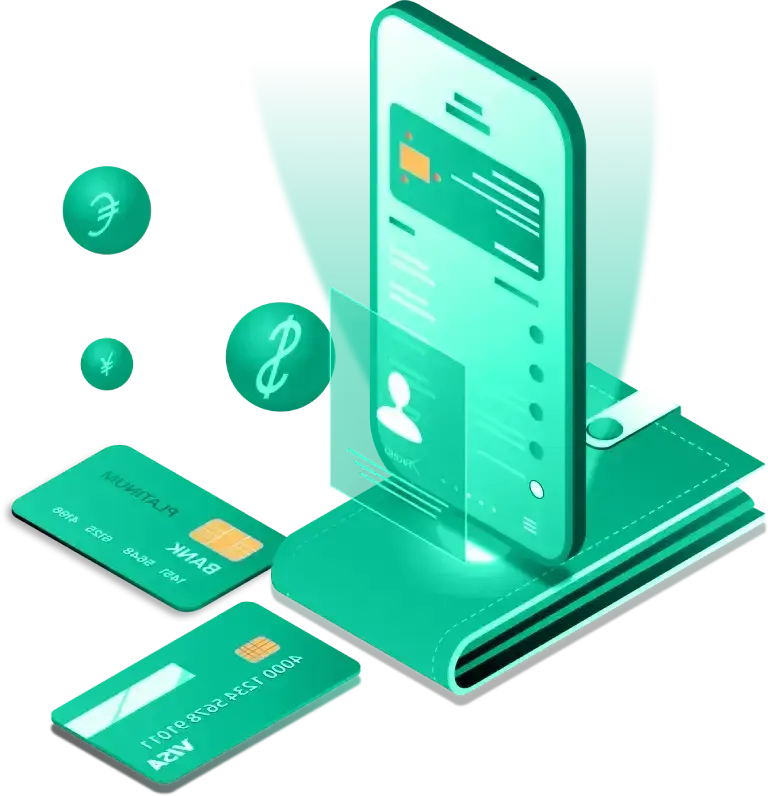
Getting started with NFC Pay is simple and quick. Register your account, add your cards, and you're ready to make payments in no time. Whether you're paying at a store, sending money to a friend, or managing your merchant transactions, NFC Pay makes it easy and secure.
Download the NFC Pay app and sign up with your email or phone number. Complete the registration process by verifying your identity, and set up your secure PIN to protect your account.
Link your debit or credit cards to your NFC Pay wallet. Simply scan your card or enter the details manually, and you’re set to load funds, shop, and pay with ease.
To pay, simply tap your phone or scan the QR code at checkout. You can also transfer money to other users with a few taps. Enjoy fast, contactless payments with top-notch security.

Security System
NFC Pay prioritizes your security with advanced features that safeguard every transaction. From SMS or email verification to end-to-end encryption, we've implemented robust measures to ensure your data is always protected. Our security systems are designed to prevent unauthorized access and provide you with a safe and reliable payment experience.

Receive instant alerts for every transaction to keep track of your account activities.

Verify your identity through our Know Your Customer process to prevent fraud and enhance security.

Dramatically supply transparent backward deliverables before caward comp internal or "organic" sources.

All your data and transactions are encrypted, ensuring that your sensitive information remains private.

Monitor unusual activity patterns to detect and prevent suspicious behavior in real-time.
Why Choice Us
With NFC Pay, you get a trusted platform backed by proven expertise and a commitment to quality. We put our customers first, offering innovative solutions tailored to your needs, ensuring every transaction is secure, swift, and seamless.
Our team brings years of experience in the digital payments industry to provide reliable services.
We prioritize excellence, ensuring that every aspect of our platform meets the highest standards.
Your needs drive our solutions, and we are dedicated to delivering a superior user experience.
We continuously evolve, integrating the latest technologies to enhance your payment experience.
Testimonial Section
Hear from our users who trust NFC Pay for their everyday transactions. Our commitment to security, ease of use, and exceptional service shines through in their experiences. See why our clients choose NFC Pay for their payment needs and how it has transformed the way they manage their finances.
"NFC Pay has made my transactions incredibly simple and secure. The intuitive interface and quick payment options are game-changers for my business"
"I love how NFC Pay prioritizes security without compromising on convenience. The two-factor authentication and instant alerts give me peace of mind every time I use it."
"Setting up my merchant account was a breeze, and now I can accept payments effortlessly. NFC Pay has truly streamlined my operations, saving me time and hassle."
App Section
Unlock the full potential of NFC Pay by downloading our app, designed to bring secure, swift, and smart transactions to your fingertips. Whether you're paying at a store, transferring money to friends, or managing your business payments, the NFC Pay app makes it effortless. Available on both iOS and Android, it's your all-in-one solution for convenient and reliable digital payments. Download now and experience the future of payments!