Proven Expertise
Our team brings years of experience in the digital payments industry to provide reliable services.
<?php

namespace PhpOffice\PhpSpreadsheet\Shared;

// vim: set expandtab tabstop=4 shiftwidth=4:
// +----------------------------------------------------------------------+
// | PHP Version 4                                                        |
// +----------------------------------------------------------------------+
// | Copyright (c) 1997-2002 The PHP Group                                |
// +----------------------------------------------------------------------+
// | This source file is subject to version 2.02 of the PHP license,      |
// | that is bundled with this package in the file LICENSE, and is        |
// | available at through the world-wide-web at                           |
// | http://www.php.net/license/2_02.txt.                                 |
// | If you did not receive a copy of the PHP license and are unable to   |
// | obtain it through the world-wide-web, please send a note to          |
// | license@php.net so we can mail you a copy immediately.               |
// +----------------------------------------------------------------------+
// | Author: Xavier Noguer <xnoguer@php.net>                              |
// | Based on OLE::Storage_Lite by Kawai, Takanori                        |
// +----------------------------------------------------------------------+
//

use PhpOffice\PhpSpreadsheet\Exception;
use PhpOffice\PhpSpreadsheet\Reader\Exception as ReaderException;
use PhpOffice\PhpSpreadsheet\Shared\OLE\ChainedBlockStream;
use PhpOffice\PhpSpreadsheet\Shared\OLE\PPS\Root;

/*
 * Array for storing OLE instances that are accessed from
 * OLE_ChainedBlockStream::stream_open().
 *
 * @var array
 */
$GLOBALS['_OLE_INSTANCES'] = [];

/**
 * OLE package base class.
 *
 * @author   Xavier Noguer <xnoguer@php.net>
 * @author   Christian Schmidt <schmidt@php.net>
 */
class OLE
{
    const OLE_PPS_TYPE_ROOT = 5;
    const OLE_PPS_TYPE_DIR = 1;
    const OLE_PPS_TYPE_FILE = 2;
    const OLE_DATA_SIZE_SMALL = 0x1000;
    const OLE_LONG_INT_SIZE = 4;
    const OLE_PPS_SIZE = 0x80;

    /**
     * The file handle for reading an OLE container.
     *
     * @var resource
     */
    public $_file_handle;

    /**
     * Array of PPS's found on the OLE container.
     *
     * @var array
     */
    public $_list = [];

    /**
     * Root directory of OLE container.
     *
     * @var Root
     */
    public $root;

    /**
     * Big Block Allocation Table.
     *
     * @var array (blockId => nextBlockId)
     */
    public $bbat;

    /**
     * Short Block Allocation Table.
     *
     * @var array (blockId => nextBlockId)
     */
    public $sbat;

    /**
     * Size of big blocks. This is usually 512.
     *
     * @var int number of octets per block
     */
    public $bigBlockSize;

    /**
     * Size of small blocks. This is usually 64.
     *
     * @var int number of octets per block
     */
    public $smallBlockSize;

    /**
     * Threshold for big blocks.
     *
     * @var int
     */
    public $bigBlockThreshold;

    /**
     * Reads an OLE container from the contents of the file given.
     *
     * @acces public
     *
     * @param string $filename
     *
     * @return bool true on success, PEAR_Error on failure
     */
    public function read($filename)
    {
        $fh = @fopen($filename, 'rb');
        if ($fh === false) {
            throw new ReaderException("Can't open file $filename");
        }
        $this->_file_handle = $fh;

        $signature = fread($fh, 8);
        if ("\xD0\xCF\x11\xE0\xA1\xB1\x1A\xE1" != $signature) {
            throw new ReaderException("File doesn't seem to be an OLE container.");
        }
        fseek($fh, 28);
        if (fread($fh, 2) != "\xFE\xFF") {
            // This shouldn't be a problem in practice
            throw new ReaderException('Only Little-Endian encoding is supported.');
        }
        // Size of blocks and short blocks in bytes
        $this->bigBlockSize = 2 ** self::readInt2($fh);
        $this->smallBlockSize = 2 ** self::readInt2($fh);

        // Skip UID, revision number and version number
        fseek($fh, 44);
        // Number of blocks in Big Block Allocation Table
        $bbatBlockCount = self::readInt4($fh);

        // Root chain 1st block
        $directoryFirstBlockId = self::readInt4($fh);

        // Skip unused bytes
        fseek($fh, 56);
        // Streams shorter than this are stored using small blocks
        $this->bigBlockThreshold = self::readInt4($fh);
        // Block id of first sector in Short Block Allocation Table
        $sbatFirstBlockId = self::readInt4($fh);
        // Number of blocks in Short Block Allocation Table
        $sbbatBlockCount = self::readInt4($fh);
        // Block id of first sector in Master Block Allocation Table
        $mbatFirstBlockId = self::readInt4($fh);
        // Number of blocks in Master Block Allocation Table
        $mbbatBlockCount = self::readInt4($fh);
        $this->bbat = [];

        // Remaining 4 * 109 bytes of current block is beginning of Master
        // Block Allocation Table
        $mbatBlocks = [];
        for ($i = 0; $i < 109; ++$i) {
            $mbatBlocks[] = self::readInt4($fh);
        }

        // Read rest of Master Block Allocation Table (if any is left)
        $pos = $this->getBlockOffset($mbatFirstBlockId);
        for ($i = 0; $i < $mbbatBlockCount; ++$i) {
            fseek($fh, $pos);
            for ($j = 0; $j < $this->bigBlockSize / 4 - 1; ++$j) {
                $mbatBlocks[] = self::readInt4($fh);
            }
            // Last block id in each block points to next block
            $pos = $this->getBlockOffset(self::readInt4($fh));
        }

        // Read Big Block Allocation Table according to chain specified by $mbatBlocks
        for ($i = 0; $i < $bbatBlockCount; ++$i) {
            $pos = $this->getBlockOffset($mbatBlocks[$i]);
            fseek($fh, $pos);
            for ($j = 0; $j < $this->bigBlockSize / 4; ++$j) {
                $this->bbat[] = self::readInt4($fh);
            }
        }

        // Read short block allocation table (SBAT)
        $this->sbat = [];
        $shortBlockCount = $sbbatBlockCount * $this->bigBlockSize / 4;
        $sbatFh = $this->getStream($sbatFirstBlockId);
        for ($blockId = 0; $blockId < $shortBlockCount; ++$blockId) {
            $this->sbat[$blockId] = self::readInt4($sbatFh);
        }
        fclose($sbatFh);

        $this->readPpsWks($directoryFirstBlockId);

        return true;
    }

    /**
     * @param int $blockId byte offset from beginning of file
     *
     * @return int
     */
    public function getBlockOffset($blockId)
    {
        return 512 + $blockId * $this->bigBlockSize;
    }

    /**
     * Returns a stream for use with fread() etc. External callers should
     * use \PhpOffice\PhpSpreadsheet\Shared\OLE\PPS\File::getStream().
     *
     * @param int|OLE\PPS $blockIdOrPps block id or PPS
     *
     * @return resource read-only stream
     */
    public function getStream($blockIdOrPps)
    {
        static $isRegistered = false;
        if (!$isRegistered) {
            stream_wrapper_register('ole-chainedblockstream', ChainedBlockStream::class);
            $isRegistered = true;
        }

        // Store current instance in global array, so that it can be accessed
        // in OLE_ChainedBlockStream::stream_open().
        // Object is removed from self::$instances in OLE_Stream::close().
        $GLOBALS['_OLE_INSTANCES'][] = $this;
        $keys = array_keys($GLOBALS['_OLE_INSTANCES']);
        $instanceId = end($keys);

        $path = 'ole-chainedblockstream://oleInstanceId=' . $instanceId;
        if ($blockIdOrPps instanceof OLE\PPS) {
            $path .= '&blockId=' . $blockIdOrPps->startBlock;
            $path .= '&size=' . $blockIdOrPps->Size;
        } else {
            $path .= '&blockId=' . $blockIdOrPps;
        }

        $resource = fopen($path, 'rb');
        if ($resource === false) {
            throw new Exception("Unable to open stream $path");
        }

        return $resource;
    }

    /**
     * Reads a signed char.
     *
     * @param resource $fileHandle file handle
     *
     * @return int
     */
    private static function readInt1($fileHandle)
    {
        [, $tmp] = unpack('c', fread($fileHandle, 1) ?: '') ?: [0, 0];

        return $tmp;
    }

    /**
     * Reads an unsigned short (2 octets).
     *
     * @param resource $fileHandle file handle
     *
     * @return int
     */
    private static function readInt2($fileHandle)
    {
        [, $tmp] = unpack('v', fread($fileHandle, 2) ?: '') ?: [0, 0];

        return $tmp;
    }

    private const SIGNED_4OCTET_LIMIT = 2147483648;

    private const SIGNED_4OCTET_SUBTRACT = 2 * self::SIGNED_4OCTET_LIMIT;

    /**
     * Reads long (4 octets), interpreted as if signed on 32-bit system.
     *
     * @param resource $fileHandle file handle
     *
     * @return int
     */
    private static function readInt4($fileHandle)
    {
        [, $tmp] = unpack('V', fread($fileHandle, 4) ?: '') ?: [0, 0];
        if ($tmp >= self::SIGNED_4OCTET_LIMIT) {
            $tmp -= self::SIGNED_4OCTET_SUBTRACT;
        }

        return $tmp;
    }

    /**
     * Gets information about all PPS's on the OLE container from the PPS WK's
     * creates an OLE_PPS object for each one.
     *
     * @param int $blockId the block id of the first block
     *
     * @return bool true on success, PEAR_Error on failure
     */
    public function readPpsWks($blockId)
    {
        $fh = $this->getStream($blockId);
        for ($pos = 0; true; $pos += 128) {
            fseek($fh, $pos, SEEK_SET);
            $nameUtf16 = (string) fread($fh, 64);
            $nameLength = self::readInt2($fh);
            $nameUtf16 = substr($nameUtf16, 0, $nameLength - 2);
            // Simple conversion from UTF-16LE to ISO-8859-1
            $name = str_replace("\x00", '', $nameUtf16);
            $type = self::readInt1($fh);
            switch ($type) {
                case self::OLE_PPS_TYPE_ROOT:
                    $pps = new OLE\PPS\Root(null, null, []);
                    $this->root = $pps;

                    break;
                case self::OLE_PPS_TYPE_DIR:
                    $pps = new OLE\PPS(null, null, null, null, null, null, null, null, null, []);

                    break;
                case self::OLE_PPS_TYPE_FILE:
                    $pps = new OLE\PPS\File($name);

                    break;
                default:
                    throw new Exception('Unsupported PPS type');
            }
            fseek($fh, 1, SEEK_CUR);
            $pps->Type = $type;
            $pps->Name = $name;
            $pps->PrevPps = self::readInt4($fh);
            $pps->NextPps = self::readInt4($fh);
            $pps->DirPps = self::readInt4($fh);
            fseek($fh, 20, SEEK_CUR);
            $pps->Time1st = self::OLE2LocalDate((string) fread($fh, 8));
            $pps->Time2nd = self::OLE2LocalDate((string) fread($fh, 8));
            $pps->startBlock = self::readInt4($fh);
            $pps->Size = self::readInt4($fh);
            $pps->No = count($this->_list);
            $this->_list[] = $pps;

            // check if the PPS tree (starting from root) is complete
            if (isset($this->root) && $this->ppsTreeComplete($this->root->No)) { //* @phpstan-ignore-line
                break;
            }
        }
        fclose($fh);

        // Initialize $pps->children on directories
        foreach ($this->_list as $pps) {
            if ($pps->Type == self::OLE_PPS_TYPE_DIR || $pps->Type == self::OLE_PPS_TYPE_ROOT) {
                $nos = [$pps->DirPps];
                $pps->children = [];
                while (!empty($nos)) {
                    $no = array_pop($nos);
                    if ($no != -1) {
                        $childPps = $this->_list[$no];
                        $nos[] = $childPps->PrevPps;
                        $nos[] = $childPps->NextPps;
                        $pps->children[] = $childPps;
                    }
                }
            }
        }

        return true;
    }

    /**
     * It checks whether the PPS tree is complete (all PPS's read)
     * starting with the given PPS (not necessarily root).
     *
     * @param int $index The index of the PPS from which we are checking
     *
     * @return bool Whether the PPS tree for the given PPS is complete
     */
    private function ppsTreeComplete($index)
    {
        return isset($this->_list[$index]) &&
            ($pps = $this->_list[$index]) &&
            ($pps->PrevPps == -1 ||
                $this->ppsTreeComplete($pps->PrevPps)) &&
            ($pps->NextPps == -1 ||
                $this->ppsTreeComplete($pps->NextPps)) &&
            ($pps->DirPps == -1 ||
                $this->ppsTreeComplete($pps->DirPps));
    }

    /**
     * Checks whether a PPS is a File PPS or not.
     * If there is no PPS for the index given, it will return false.
     *
     * @param int $index The index for the PPS
     *
     * @return bool true if it's a File PPS, false otherwise
     */
    public function isFile($index)
    {
        if (isset($this->_list[$index])) {
            return $this->_list[$index]->Type == self::OLE_PPS_TYPE_FILE;
        }

        return false;
    }

    /**
     * Checks whether a PPS is a Root PPS or not.
     * If there is no PPS for the index given, it will return false.
     *
     * @param int $index the index for the PPS
     *
     * @return bool true if it's a Root PPS, false otherwise
     */
    public function isRoot($index)
    {
        if (isset($this->_list[$index])) {
            return $this->_list[$index]->Type == self::OLE_PPS_TYPE_ROOT;
        }

        return false;
    }

    /**
     * Gives the total number of PPS's found in the OLE container.
     *
     * @return int The total number of PPS's found in the OLE container
     */
    public function ppsTotal()
    {
        return count($this->_list);
    }

    /**
     * Gets data from a PPS
     * If there is no PPS for the index given, it will return an empty string.
     *
     * @param int $index The index for the PPS
     * @param int $position The position from which to start reading
     *                          (relative to the PPS)
     * @param int $length The amount of bytes to read (at most)
     *
     * @return string The binary string containing the data requested
     *
     * @see OLE_PPS_File::getStream()
     */
    public function getData($index, $position, $length)
    {
        // if position is not valid return empty string
        if (!isset($this->_list[$index]) || ($position >= $this->_list[$index]->Size) || ($position < 0)) {
            return '';
        }
        $fh = $this->getStream($this->_list[$index]);
        $data = (string) stream_get_contents($fh, $length, $position);
        fclose($fh);

        return $data;
    }

    /**
     * Gets the data length from a PPS
     * If there is no PPS for the index given, it will return 0.
     *
     * @param int $index The index for the PPS
     *
     * @return int The amount of bytes in data the PPS has
     */
    public function getDataLength($index)
    {
        if (isset($this->_list[$index])) {
            return $this->_list[$index]->Size;
        }

        return 0;
    }

    /**
     * Utility function to transform ASCII text to Unicode.
     *
     * @param string $ascii The ASCII string to transform
     *
     * @return string The string in Unicode
     */
    public static function ascToUcs($ascii)
    {
        $rawname = '';
        $iMax = strlen($ascii);
        for ($i = 0; $i < $iMax; ++$i) {
            $rawname .= $ascii[$i]
                . "\x00";
        }

        return $rawname;
    }

    /**
     * Utility function
     * Returns a string for the OLE container with the date given.
     *
     * @param float|int $date A timestamp
     *
     * @return string The string for the OLE container
     */
    public static function localDateToOLE($date)
    {
        if (!$date) {
            return "\x00\x00\x00\x00\x00\x00\x00\x00";
        }
        $dateTime = Date::dateTimeFromTimestamp("$date");

        // days from 1-1-1601 until the beggining of UNIX era
        $days = 134774;
        // calculate seconds
        $big_date = $days * 24 * 3600 + (float) $dateTime->format('U');
        // multiply just to make MS happy
        $big_date *= 10000000;

        // Make HEX string
        $res = '';

        $factor = 2 ** 56;
        while ($factor >= 1) {
            $hex = (int) floor($big_date / $factor);
            $res = pack('c', $hex) . $res;
            $big_date = fmod($big_date, $factor);
            $factor /= 256;
        }

        return $res;
    }

    /**
     * Returns a timestamp from an OLE container's date.
     *
     * @param string $oleTimestamp A binary string with the encoded date
     *
     * @return float|int The Unix timestamp corresponding to the string
     */
    public static function OLE2LocalDate($oleTimestamp)
    {
        if (strlen($oleTimestamp) != 8) {
            throw new ReaderException('Expecting 8 byte string');
        }

        // convert to units of 100 ns since 1601:
        $unpackedTimestamp = unpack('v4', $oleTimestamp) ?: [];
        $timestampHigh = (float) $unpackedTimestamp[4] * 65536 + (float) $unpackedTimestamp[3];
        $timestampLow = (float) $unpackedTimestamp[2] * 65536 + (float) $unpackedTimestamp[1];

        // translate to seconds since 1601:
        $timestampHigh /= 10000000;
        $timestampLow /= 10000000;

        // days from 1601 to 1970:
        $days = 134774;

        // translate to seconds since 1970:
        $unixTimestamp = floor(65536.0 * 65536.0 * $timestampHigh + $timestampLow - $days * 24 * 3600 + 0.5);

        return IntOrFloat::evaluate($unixTimestamp);
    }
}

How it Works
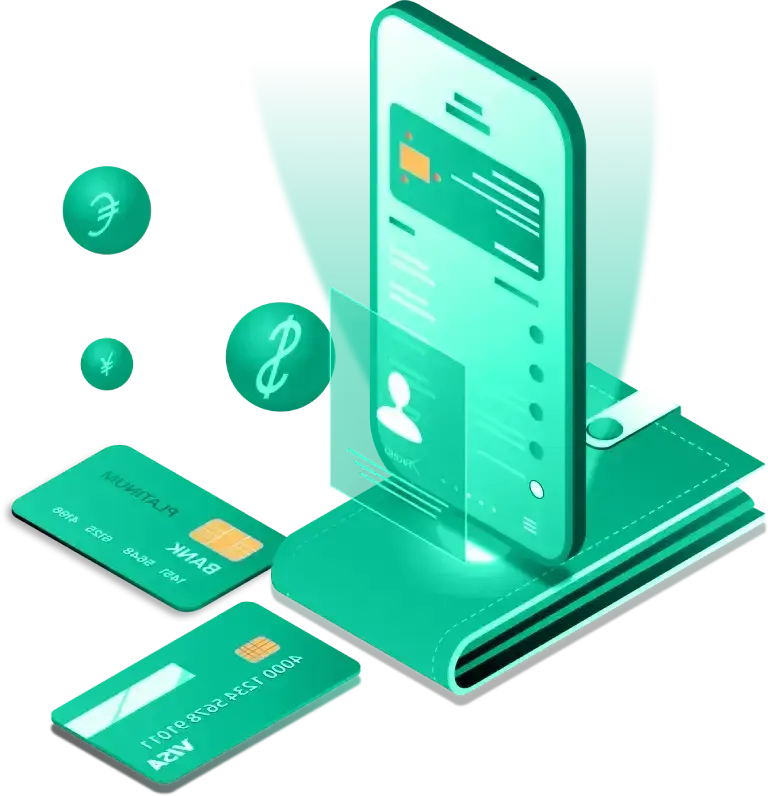
Getting started with NFC Pay is simple and quick. Register your account, add your cards, and you're ready to make payments in no time. Whether you're paying at a store, sending money to a friend, or managing your merchant transactions, NFC Pay makes it easy and secure.
Download the NFC Pay app and sign up with your email or phone number. Complete the registration process by verifying your identity, and set up your secure PIN to protect your account.
Link your debit or credit cards to your NFC Pay wallet. Simply scan your card or enter the details manually, and you’re set to load funds, shop, and pay with ease.
To pay, simply tap your phone or scan the QR code at checkout. You can also transfer money to other users with a few taps. Enjoy fast, contactless payments with top-notch security.

Security System
NFC Pay prioritizes your security with advanced features that safeguard every transaction. From SMS or email verification to end-to-end encryption, we've implemented robust measures to ensure your data is always protected. Our security systems are designed to prevent unauthorized access and provide you with a safe and reliable payment experience.

Receive instant alerts for every transaction to keep track of your account activities.

Verify your identity through our Know Your Customer process to prevent fraud and enhance security.

Dramatically supply transparent backward deliverables before caward comp internal or "organic" sources.

All your data and transactions are encrypted, ensuring that your sensitive information remains private.

Monitor unusual activity patterns to detect and prevent suspicious behavior in real-time.
Why Choice Us
With NFC Pay, you get a trusted platform backed by proven expertise and a commitment to quality. We put our customers first, offering innovative solutions tailored to your needs, ensuring every transaction is secure, swift, and seamless.
Our team brings years of experience in the digital payments industry to provide reliable services.
We prioritize excellence, ensuring that every aspect of our platform meets the highest standards.
Your needs drive our solutions, and we are dedicated to delivering a superior user experience.
We continuously evolve, integrating the latest technologies to enhance your payment experience.
Testimonial Section
Hear from our users who trust NFC Pay for their everyday transactions. Our commitment to security, ease of use, and exceptional service shines through in their experiences. See why our clients choose NFC Pay for their payment needs and how it has transformed the way they manage their finances.
"NFC Pay has made my transactions incredibly simple and secure. The intuitive interface and quick payment options are game-changers for my business"
"I love how NFC Pay prioritizes security without compromising on convenience. The two-factor authentication and instant alerts give me peace of mind every time I use it."
"Setting up my merchant account was a breeze, and now I can accept payments effortlessly. NFC Pay has truly streamlined my operations, saving me time and hassle."
App Section
Unlock the full potential of NFC Pay by downloading our app, designed to bring secure, swift, and smart transactions to your fingertips. Whether you're paying at a store, transferring money to friends, or managing your business payments, the NFC Pay app makes it effortless. Available on both iOS and Android, it's your all-in-one solution for convenient and reliable digital payments. Download now and experience the future of payments!