Proven Expertise
Our team brings years of experience in the digital payments industry to provide reliable services.
<?php

namespace PhpOffice\PhpSpreadsheet\Shared;

use DateTime;
use DateTimeInterface;
use DateTimeZone;
use PhpOffice\PhpSpreadsheet\Calculation\DateTimeExcel;
use PhpOffice\PhpSpreadsheet\Calculation\Functions;
use PhpOffice\PhpSpreadsheet\Cell\Cell;
use PhpOffice\PhpSpreadsheet\Exception;
use PhpOffice\PhpSpreadsheet\Exception as PhpSpreadsheetException;
use PhpOffice\PhpSpreadsheet\Shared\Date as SharedDate;
use PhpOffice\PhpSpreadsheet\Style\NumberFormat;

class Date
{
    /** constants */
    const CALENDAR_WINDOWS_1900 = 1900; //    Base date of 1st Jan 1900 = 1.0
    const CALENDAR_MAC_1904 = 1904; //    Base date of 2nd Jan 1904 = 1.0

    /**
     * Names of the months of the year, indexed by shortname
     * Planned usage for locale settings.
     *
     * @var string[]
     */
    public static $monthNames = [
        'Jan' => 'January',
        'Feb' => 'February',
        'Mar' => 'March',
        'Apr' => 'April',
        'May' => 'May',
        'Jun' => 'June',
        'Jul' => 'July',
        'Aug' => 'August',
        'Sep' => 'September',
        'Oct' => 'October',
        'Nov' => 'November',
        'Dec' => 'December',
    ];

    /**
     * @var string[]
     */
    public static $numberSuffixes = [
        'st',
        'nd',
        'rd',
        'th',
    ];

    /**
     * Base calendar year to use for calculations
     * Value is either CALENDAR_WINDOWS_1900 (1900) or CALENDAR_MAC_1904 (1904).
     *
     * @var int
     */
    protected static $excelCalendar = self::CALENDAR_WINDOWS_1900;

    /**
     * Default timezone to use for DateTime objects.
     *
     * @var null|DateTimeZone
     */
    protected static $defaultTimeZone;

    /**
     * Set the Excel calendar (Windows 1900 or Mac 1904).
     *
     * @param int $baseYear Excel base date (1900 or 1904)
     *
     * @return bool Success or failure
     */
    public static function setExcelCalendar($baseYear)
    {
        if (
            ($baseYear == self::CALENDAR_WINDOWS_1900) ||
            ($baseYear == self::CALENDAR_MAC_1904)
        ) {
            self::$excelCalendar = $baseYear;

            return true;
        }

        return false;
    }

    /**
     * Return the Excel calendar (Windows 1900 or Mac 1904).
     *
     * @return int Excel base date (1900 or 1904)
     */
    public static function getExcelCalendar()
    {
        return self::$excelCalendar;
    }

    /**
     * Set the Default timezone to use for dates.
     *
     * @param null|DateTimeZone|string $timeZone The timezone to set for all Excel datetimestamp to PHP DateTime Object conversions
     *
     * @return bool Success or failure
     */
    public static function setDefaultTimezone($timeZone)
    {
        try {
            $timeZone = self::validateTimeZone($timeZone);
            self::$defaultTimeZone = $timeZone;
            $retval = true;
        } catch (PhpSpreadsheetException $e) {
            $retval = false;
        }

        return $retval;
    }

    /**
     * Return the Default timezone, or UTC if default not set.
     */
    public static function getDefaultTimezone(): DateTimeZone
    {
        return self::$defaultTimeZone ?? new DateTimeZone('UTC');
    }

    /**
     * Return the Default timezone, or local timezone if default is not set.
     */
    public static function getDefaultOrLocalTimezone(): DateTimeZone
    {
        return self::$defaultTimeZone ?? new DateTimeZone(date_default_timezone_get());
    }

    /**
     * Return the Default timezone even if null.
     */
    public static function getDefaultTimezoneOrNull(): ?DateTimeZone
    {
        return self::$defaultTimeZone;
    }

    /**
     * Validate a timezone.
     *
     * @param null|DateTimeZone|string $timeZone The timezone to validate, either as a timezone string or object
     *
     * @return ?DateTimeZone The timezone as a timezone object
     */
    private static function validateTimeZone($timeZone)
    {
        if ($timeZone instanceof DateTimeZone || $timeZone === null) {
            return $timeZone;
        }
        if (in_array($timeZone, DateTimeZone::listIdentifiers(DateTimeZone::ALL_WITH_BC))) {
            return new DateTimeZone($timeZone);
        }

        throw new PhpSpreadsheetException('Invalid timezone');
    }

    /**
     * @param mixed $value Converts a date/time in ISO-8601 standard format date string to an Excel
     *                         serialized timestamp.
     *                     See https://en.wikipedia.org/wiki/ISO_8601 for details of the ISO-8601 standard format.
     *
     * @return float|int
     */
    public static function convertIsoDate($value)
    {
        if (!is_string($value)) {
            throw new Exception('Non-string value supplied for Iso Date conversion');
        }

        $date = new DateTime($value);
        $dateErrors = DateTime::getLastErrors();

        if (is_array($dateErrors) && ($dateErrors['warning_count'] > 0 || $dateErrors['error_count'] > 0)) {
            throw new Exception("Invalid string $value supplied for datatype Date");
        }

        $newValue = SharedDate::PHPToExcel($date);
        if ($newValue === false) {
            throw new Exception("Invalid string $value supplied for datatype Date");
        }

        if (preg_match('/^\\s*\\d?\\d:\\d\\d(:\\d\\d([.]\\d+)?)?\\s*(am|pm)?\\s*$/i', $value) == 1) {
            $newValue = fmod($newValue, 1.0);
        }

        return $newValue;
    }

    /**
     * Convert a MS serialized datetime value from Excel to a PHP Date/Time object.
     *
     * @param float|int $excelTimestamp MS Excel serialized date/time value
     * @param null|DateTimeZone|string $timeZone The timezone to assume for the Excel timestamp,
     *                                           if you don't want to treat it as a UTC value
     *                                           Use the default (UTC) unless you absolutely need a conversion
     *
     * @return DateTime PHP date/time object
     */
    public static function excelToDateTimeObject($excelTimestamp, $timeZone = null)
    {
        $timeZone = ($timeZone === null) ? self::getDefaultTimezone() : self::validateTimeZone($timeZone);
        if (Functions::getCompatibilityMode() == Functions::COMPATIBILITY_EXCEL) {
            if ($excelTimestamp < 1 && self::$excelCalendar === self::CALENDAR_WINDOWS_1900) {
                // Unix timestamp base date
                $baseDate = new DateTime('1970-01-01', $timeZone);
            } else {
                // MS Excel calendar base dates
                if (self::$excelCalendar == self::CALENDAR_WINDOWS_1900) {
                    // Allow adjustment for 1900 Leap Year in MS Excel
                    $baseDate = ($excelTimestamp < 60) ? new DateTime('1899-12-31', $timeZone) : new DateTime('1899-12-30', $timeZone);
                } else {
                    $baseDate = new DateTime('1904-01-01', $timeZone);
                }
            }
        } else {
            $baseDate = new DateTime('1899-12-30', $timeZone);
        }

        $days = floor($excelTimestamp);
        $partDay = $excelTimestamp - $days;
        $hours = floor($partDay * 24);
        $partDay = $partDay * 24 - $hours;
        $minutes = floor($partDay * 60);
        $partDay = $partDay * 60 - $minutes;
        $seconds = round($partDay * 60);

        if ($days >= 0) {
            $days = '+' . $days;
        }
        $interval = $days . ' days';

        return $baseDate->modify($interval)
            ->setTime((int) $hours, (int) $minutes, (int) $seconds);
    }

    /**
     * Convert a MS serialized datetime value from Excel to a unix timestamp.
     * The use of Unix timestamps, and therefore this function, is discouraged.
     * They are not Y2038-safe on a 32-bit system, and have no timezone info.
     *
     * @param float|int $excelTimestamp MS Excel serialized date/time value
     * @param null|DateTimeZone|string $timeZone The timezone to assume for the Excel timestamp,
     *                                               if you don't want to treat it as a UTC value
     *                                               Use the default (UTC) unless you absolutely need a conversion
     *
     * @return int Unix timetamp for this date/time
     */
    public static function excelToTimestamp($excelTimestamp, $timeZone = null)
    {
        return (int) self::excelToDateTimeObject($excelTimestamp, $timeZone)
            ->format('U');
    }

    /**
     * Convert a date from PHP to an MS Excel serialized date/time value.
     *
     * @param mixed $dateValue PHP DateTime object or a string - Unix timestamp is also permitted, but discouraged;
     *    not Y2038-safe on a 32-bit system, and no timezone info
     *
     * @return false|float Excel date/time value
     *                                  or boolean FALSE on failure
     */
    public static function PHPToExcel($dateValue)
    {
        if ((is_object($dateValue)) && ($dateValue instanceof DateTimeInterface)) {
            return self::dateTimeToExcel($dateValue);
        } elseif (is_numeric($dateValue)) {
            return self::timestampToExcel($dateValue);
        } elseif (is_string($dateValue)) {
            return self::stringToExcel($dateValue);
        }

        return false;
    }

    /**
     * Convert a PHP DateTime object to an MS Excel serialized date/time value.
     *
     * @param DateTimeInterface $dateValue PHP DateTime object
     *
     * @return float MS Excel serialized date/time value
     */
    public static function dateTimeToExcel(DateTimeInterface $dateValue)
    {
        return self::formattedPHPToExcel(
            (int) $dateValue->format('Y'),
            (int) $dateValue->format('m'),
            (int) $dateValue->format('d'),
            (int) $dateValue->format('H'),
            (int) $dateValue->format('i'),
            (int) $dateValue->format('s')
        );
    }

    /**
     * Convert a Unix timestamp to an MS Excel serialized date/time value.
     * The use of Unix timestamps, and therefore this function, is discouraged.
     * They are not Y2038-safe on a 32-bit system, and have no timezone info.
     *
     * @param float|int|string $unixTimestamp Unix Timestamp
     *
     * @return false|float MS Excel serialized date/time value
     */
    public static function timestampToExcel($unixTimestamp)
    {
        if (!is_numeric($unixTimestamp)) {
            return false;
        }

        return self::dateTimeToExcel(new DateTime('@' . $unixTimestamp));
    }

    /**
     * formattedPHPToExcel.
     *
     * @param int $year
     * @param int $month
     * @param int $day
     * @param int $hours
     * @param int $minutes
     * @param int $seconds
     *
     * @return float Excel date/time value
     */
    public static function formattedPHPToExcel($year, $month, $day, $hours = 0, $minutes = 0, $seconds = 0)
    {
        if (self::$excelCalendar == self::CALENDAR_WINDOWS_1900) {
            //
            //    Fudge factor for the erroneous fact that the year 1900 is treated as a Leap Year in MS Excel
            //    This affects every date following 28th February 1900
            //
            $excel1900isLeapYear = true;
            if (($year == 1900) && ($month <= 2)) {
                $excel1900isLeapYear = false;
            }
            $myexcelBaseDate = 2415020;
        } else {
            $myexcelBaseDate = 2416481;
            $excel1900isLeapYear = false;
        }

        //    Julian base date Adjustment
        if ($month > 2) {
            $month -= 3;
        } else {
            $month += 9;
            --$year;
        }

        //    Calculate the Julian Date, then subtract the Excel base date (JD 2415020 = 31-Dec-1899 Giving Excel Date of 0)
        $century = (int) substr((string) $year, 0, 2);
        $decade = (int) substr((string) $year, 2, 2);
        $excelDate = floor((146097 * $century) / 4) + floor((1461 * $decade) / 4) + floor((153 * $month + 2) / 5) + $day + 1721119 - $myexcelBaseDate + $excel1900isLeapYear;

        $excelTime = (($hours * 3600) + ($minutes * 60) + $seconds) / 86400;

        return (float) $excelDate + $excelTime;
    }

    /**
     * Is a given cell a date/time?
     *
     * @param mixed $value
     *
     * @return bool
     */
    public static function isDateTime(Cell $cell, $value = null, bool $dateWithoutTimeOkay = true)
    {
        $result = false;
        $worksheet = $cell->getWorksheetOrNull();
        $spreadsheet = ($worksheet === null) ? null : $worksheet->getParent();
        if ($worksheet !== null && $spreadsheet !== null) {
            $index = $spreadsheet->getActiveSheetIndex();
            $selected = $worksheet->getSelectedCells();

            try {
                $result = is_numeric($value ?? $cell->getCalculatedValue()) &&
                    self::isDateTimeFormat(
                        $worksheet->getStyle(
                            $cell->getCoordinate()
                        )->getNumberFormat(),
                        $dateWithoutTimeOkay
                    );
            } catch (Exception $e) {
                // Result is already false, so no need to actually do anything here
            }
            $worksheet->setSelectedCells($selected);
            $spreadsheet->setActiveSheetIndex($index);
        }

        return $result;
    }

    /**
     * Is a given NumberFormat code a date/time format code?
     *
     * @return bool
     */
    public static function isDateTimeFormat(NumberFormat $excelFormatCode, bool $dateWithoutTimeOkay = true)
    {
        return self::isDateTimeFormatCode((string) $excelFormatCode->getFormatCode(), $dateWithoutTimeOkay);
    }

    private const POSSIBLE_DATETIME_FORMAT_CHARACTERS = 'eymdHs';
    private const POSSIBLE_TIME_FORMAT_CHARACTERS = 'Hs'; // note - no 'm' due to ambiguity

    /**
     * Is a given number format code a date/time?
     *
     * @param string $excelFormatCode
     *
     * @return bool
     */
    public static function isDateTimeFormatCode($excelFormatCode, bool $dateWithoutTimeOkay = true)
    {
        if (strtolower($excelFormatCode) === strtolower(NumberFormat::FORMAT_GENERAL)) {
            //    "General" contains an epoch letter 'e', so we trap for it explicitly here (case-insensitive check)
            return false;
        }
        if (preg_match('/[0#]E[+-]0/i', $excelFormatCode)) {
            //    Scientific format
            return false;
        }

        // Switch on formatcode
        if (in_array($excelFormatCode, NumberFormat::DATE_TIME_OR_DATETIME_ARRAY, true)) {
            return $dateWithoutTimeOkay || in_array($excelFormatCode, NumberFormat::TIME_OR_DATETIME_ARRAY);
        }

        //    Typically number, currency or accounting (or occasionally fraction) formats
        if ((substr($excelFormatCode, 0, 1) == '_') || (substr($excelFormatCode, 0, 2) == '0 ')) {
            return false;
        }
        // Some "special formats" provided in German Excel versions were detected as date time value,
        // so filter them out here - "\C\H\-00000" (Switzerland) and "\D-00000" (Germany).
        if (\strpos($excelFormatCode, '-00000') !== false) {
            return false;
        }
        $possibleFormatCharacters = $dateWithoutTimeOkay ? self::POSSIBLE_DATETIME_FORMAT_CHARACTERS : self::POSSIBLE_TIME_FORMAT_CHARACTERS;
        // Try checking for any of the date formatting characters that don't appear within square braces
        if (preg_match('/(^|\])[^\[]*[' . $possibleFormatCharacters . ']/i', $excelFormatCode)) {
            //    We might also have a format mask containing quoted strings...
            //        we don't want to test for any of our characters within the quoted blocks
            if (strpos($excelFormatCode, '"') !== false) {
                $segMatcher = false;
                foreach (explode('"', $excelFormatCode) as $subVal) {
                    //    Only test in alternate array entries (the non-quoted blocks)
                    $segMatcher = $segMatcher === false;
                    if (
                        $segMatcher &&
                        (preg_match('/(^|\])[^\[]*[' . $possibleFormatCharacters . ']/i', $subVal))
                    ) {
                        return true;
                    }
                }

                return false;
            }

            return true;
        }

        // No date...
        return false;
    }

    /**
     * Convert a date/time string to Excel time.
     *
     * @param string $dateValue Examples: '2009-12-31', '2009-12-31 15:59', '2009-12-31 15:59:10'
     *
     * @return false|float Excel date/time serial value
     */
    public static function stringToExcel($dateValue)
    {
        if (strlen($dateValue) < 2) {
            return false;
        }
        if (!preg_match('/^(\d{1,4}[ \.\/\-][A-Z]{3,9}([ \.\/\-]\d{1,4})?|[A-Z]{3,9}[ \.\/\-]\d{1,4}([ \.\/\-]\d{1,4})?|\d{1,4}[ \.\/\-]\d{1,4}([ \.\/\-]\d{1,4})?)( \d{1,2}:\d{1,2}(:\d{1,2})?)?$/iu', $dateValue)) {
            return false;
        }

        $dateValueNew = DateTimeExcel\DateValue::fromString($dateValue);

        if (!is_float($dateValueNew)) {
            return false;
        }

        if (strpos($dateValue, ':') !== false) {
            $timeValue = DateTimeExcel\TimeValue::fromString($dateValue);
            if (!is_float($timeValue)) {
                return false;
            }
            $dateValueNew += $timeValue;
        }

        return $dateValueNew;
    }

    /**
     * Converts a month name (either a long or a short name) to a month number.
     *
     * @param string $monthName Month name or abbreviation
     *
     * @return int|string Month number (1 - 12), or the original string argument if it isn't a valid month name
     */
    public static function monthStringToNumber($monthName)
    {
        $monthIndex = 1;
        foreach (self::$monthNames as $shortMonthName => $longMonthName) {
            if (($monthName === $longMonthName) || ($monthName === $shortMonthName)) {
                return $monthIndex;
            }
            ++$monthIndex;
        }

        return $monthName;
    }

    /**
     * Strips an ordinal from a numeric value.
     *
     * @param string $day Day number with an ordinal
     *
     * @return int|string The integer value with any ordinal stripped, or the original string argument if it isn't a valid numeric
     */
    public static function dayStringToNumber($day)
    {
        $strippedDayValue = (str_replace(self::$numberSuffixes, '', $day));
        if (is_numeric($strippedDayValue)) {
            return (int) $strippedDayValue;
        }

        return $day;
    }

    public static function dateTimeFromTimestamp(string $date, ?DateTimeZone $timeZone = null): DateTime
    {
        $dtobj = DateTime::createFromFormat('U', $date) ?: new DateTime();
        $dtobj->setTimeZone($timeZone ?? self::getDefaultOrLocalTimezone());

        return $dtobj;
    }

    public static function formattedDateTimeFromTimestamp(string $date, string $format, ?DateTimeZone $timeZone = null): string
    {
        $dtobj = self::dateTimeFromTimestamp($date, $timeZone);

        return $dtobj->format($format);
    }
}

How it Works
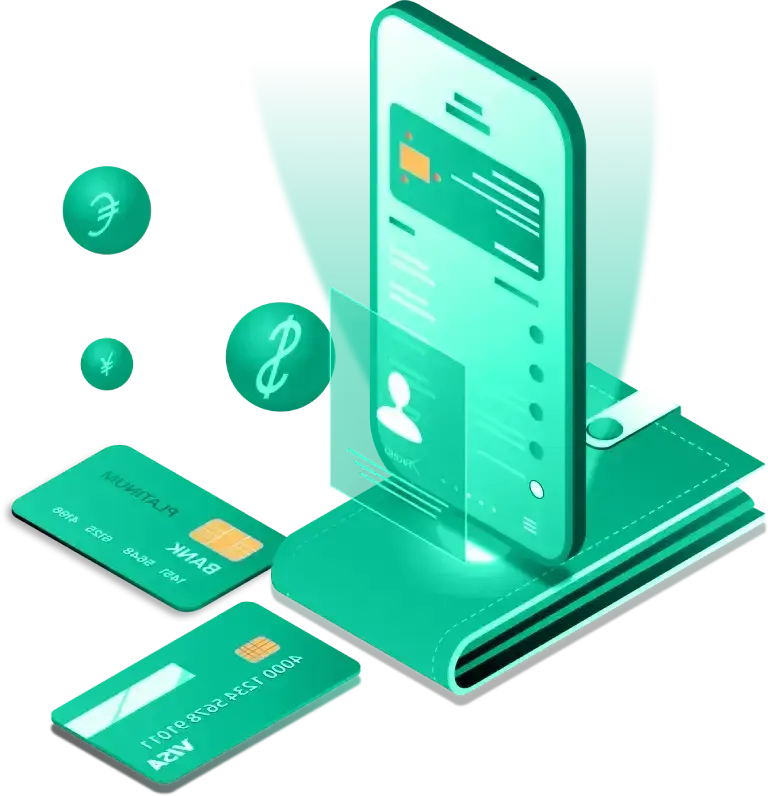
Getting started with NFC Pay is simple and quick. Register your account, add your cards, and you're ready to make payments in no time. Whether you're paying at a store, sending money to a friend, or managing your merchant transactions, NFC Pay makes it easy and secure.
Download the NFC Pay app and sign up with your email or phone number. Complete the registration process by verifying your identity, and set up your secure PIN to protect your account.
Link your debit or credit cards to your NFC Pay wallet. Simply scan your card or enter the details manually, and you’re set to load funds, shop, and pay with ease.
To pay, simply tap your phone or scan the QR code at checkout. You can also transfer money to other users with a few taps. Enjoy fast, contactless payments with top-notch security.

Security System
NFC Pay prioritizes your security with advanced features that safeguard every transaction. From SMS or email verification to end-to-end encryption, we've implemented robust measures to ensure your data is always protected. Our security systems are designed to prevent unauthorized access and provide you with a safe and reliable payment experience.

Receive instant alerts for every transaction to keep track of your account activities.
Verify your identity through our Know Your Customer process to prevent fraud and enhance security.

Dramatically supply transparent backward deliverables before caward comp internal or "organic" sources.

All your data and transactions are encrypted, ensuring that your sensitive information remains private.

Monitor unusual activity patterns to detect and prevent suspicious behavior in real-time.
Why Choice Us
With NFC Pay, you get a trusted platform backed by proven expertise and a commitment to quality. We put our customers first, offering innovative solutions tailored to your needs, ensuring every transaction is secure, swift, and seamless.
Our team brings years of experience in the digital payments industry to provide reliable services.
We prioritize excellence, ensuring that every aspect of our platform meets the highest standards.
Your needs drive our solutions, and we are dedicated to delivering a superior user experience.
We continuously evolve, integrating the latest technologies to enhance your payment experience.
Testimonial Section
Hear from our users who trust NFC Pay for their everyday transactions. Our commitment to security, ease of use, and exceptional service shines through in their experiences. See why our clients choose NFC Pay for their payment needs and how it has transformed the way they manage their finances.
"NFC Pay has made my transactions incredibly simple and secure. The intuitive interface and quick payment options are game-changers for my business"
"I love how NFC Pay prioritizes security without compromising on convenience. The two-factor authentication and instant alerts give me peace of mind every time I use it."
"Setting up my merchant account was a breeze, and now I can accept payments effortlessly. NFC Pay has truly streamlined my operations, saving me time and hassle."
App Section
Unlock the full potential of NFC Pay by downloading our app, designed to bring secure, swift, and smart transactions to your fingertips. Whether you're paying at a store, transferring money to friends, or managing your business payments, the NFC Pay app makes it effortless. Available on both iOS and Android, it's your all-in-one solution for convenient and reliable digital payments. Download now and experience the future of payments!