/home/kueuepay/www/vendor/league/oauth2-server/src/Grant/AuthCodeGrant.php
<?php
/**
 * @author      Alex Bilbie <hello@alexbilbie.com>
 * @copyright   Copyright (c) Alex Bilbie
 * @license     http://mit-license.org/
 *
 * @link        https://github.com/thephpleague/oauth2-server
 */

namespace League\OAuth2\Server\Grant;

use DateInterval;
use DateTimeImmutable;
use Exception;
use League\OAuth2\Server\CodeChallengeVerifiers\CodeChallengeVerifierInterface;
use League\OAuth2\Server\CodeChallengeVerifiers\PlainVerifier;
use League\OAuth2\Server\CodeChallengeVerifiers\S256Verifier;
use League\OAuth2\Server\Entities\ClientEntityInterface;
use League\OAuth2\Server\Entities\UserEntityInterface;
use League\OAuth2\Server\Exception\OAuthServerException;
use League\OAuth2\Server\Repositories\AuthCodeRepositoryInterface;
use League\OAuth2\Server\Repositories\RefreshTokenRepositoryInterface;
use League\OAuth2\Server\RequestAccessTokenEvent;
use League\OAuth2\Server\RequestEvent;
use League\OAuth2\Server\RequestRefreshTokenEvent;
use League\OAuth2\Server\RequestTypes\AuthorizationRequest;
use League\OAuth2\Server\ResponseTypes\RedirectResponse;
use League\OAuth2\Server\ResponseTypes\ResponseTypeInterface;
use LogicException;
use Psr\Http\Message\ServerRequestInterface;
use stdClass;

class AuthCodeGrant extends AbstractAuthorizeGrant
{
    /**
     * @var DateInterval
     */
    private $authCodeTTL;

    /**
     * @var bool
     */
    private $requireCodeChallengeForPublicClients = true;

    /**
     * @var CodeChallengeVerifierInterface[]
     */
    private $codeChallengeVerifiers = [];

    /**
     * @param AuthCodeRepositoryInterface     $authCodeRepository
     * @param RefreshTokenRepositoryInterface $refreshTokenRepository
     * @param DateInterval                    $authCodeTTL
     *
     * @throws Exception
     */
    public function __construct(
        AuthCodeRepositoryInterface $authCodeRepository,
        RefreshTokenRepositoryInterface $refreshTokenRepository,
        DateInterval $authCodeTTL
    ) {
        $this->setAuthCodeRepository($authCodeRepository);
        $this->setRefreshTokenRepository($refreshTokenRepository);
        $this->authCodeTTL = $authCodeTTL;
        $this->refreshTokenTTL = new DateInterval('P1M');

        if (\in_array('sha256', \hash_algos(), true)) {
            $s256Verifier = new S256Verifier();
            $this->codeChallengeVerifiers[$s256Verifier->getMethod()] = $s256Verifier;
        }

        $plainVerifier = new PlainVerifier();
        $this->codeChallengeVerifiers[$plainVerifier->getMethod()] = $plainVerifier;
    }

    /**
     * Disable the requirement for a code challenge for public clients.
     */
    public function disableRequireCodeChallengeForPublicClients()
    {
        $this->requireCodeChallengeForPublicClients = false;
    }

    /**
     * Respond to an access token request.
     *
     * @param ServerRequestInterface $request
     * @param ResponseTypeInterface  $responseType
     * @param DateInterval           $accessTokenTTL
     *
     * @throws OAuthServerException
     *
     * @return ResponseTypeInterface
     */
    public function respondToAccessTokenRequest(
        ServerRequestInterface $request,
        ResponseTypeInterface $responseType,
        DateInterval $accessTokenTTL
    ) {
        list($clientId) = $this->getClientCredentials($request);

        $client = $this->getClientEntityOrFail($clientId, $request);

        // Only validate the client if it is confidential
        if ($client->isConfidential()) {
            $this->validateClient($request);
        }

        $encryptedAuthCode = $this->getRequestParameter('code', $request, null);

        if (!\is_string($encryptedAuthCode)) {
            throw OAuthServerException::invalidRequest('code');
        }

        try {
            $authCodePayload = \json_decode($this->decrypt($encryptedAuthCode));

            $this->validateAuthorizationCode($authCodePayload, $client, $request);

            $scopes = $this->scopeRepository->finalizeScopes(
                $this->validateScopes($authCodePayload->scopes),
                $this->getIdentifier(),
                $client,
                $authCodePayload->user_id
            );
        } catch (LogicException $e) {
            throw OAuthServerException::invalidRequest('code', 'Cannot decrypt the authorization code', $e);
        }

        $codeVerifier = $this->getRequestParameter('code_verifier', $request, null);

        // If a code challenge isn't present but a code verifier is, reject the request to block PKCE downgrade attack
        if (empty($authCodePayload->code_challenge) && $codeVerifier !== null) {
            throw OAuthServerException::invalidRequest(
                'code_challenge',
                'code_verifier received when no code_challenge is present'
            );
        }

        if (!empty($authCodePayload->code_challenge)) {
            $this->validateCodeChallenge($authCodePayload, $codeVerifier);
        }

        // Issue and persist new access token
        $accessToken = $this->issueAccessToken($accessTokenTTL, $client, $authCodePayload->user_id, $scopes);
        $this->getEmitter()->emit(new RequestAccessTokenEvent(RequestEvent::ACCESS_TOKEN_ISSUED, $request, $accessToken));
        $responseType->setAccessToken($accessToken);

        // Issue and persist new refresh token if given
        $refreshToken = $this->issueRefreshToken($accessToken);

        if ($refreshToken !== null) {
            $this->getEmitter()->emit(new RequestRefreshTokenEvent(RequestEvent::REFRESH_TOKEN_ISSUED, $request, $refreshToken));
            $responseType->setRefreshToken($refreshToken);
        }

        // Revoke used auth code
        $this->authCodeRepository->revokeAuthCode($authCodePayload->auth_code_id);

        return $responseType;
    }

    private function validateCodeChallenge($authCodePayload, $codeVerifier)
    {
        if ($codeVerifier === null) {
            throw OAuthServerException::invalidRequest('code_verifier');
        }

        // Validate code_verifier according to RFC-7636
        // @see: https://tools.ietf.org/html/rfc7636#section-4.1
        if (\preg_match('/^[A-Za-z0-9-._~]{43,128}$/', $codeVerifier) !== 1) {
            throw OAuthServerException::invalidRequest(
                'code_verifier',
                'Code Verifier must follow the specifications of RFC-7636.'
            );
        }

        if (\property_exists($authCodePayload, 'code_challenge_method')) {
            if (isset($this->codeChallengeVerifiers[$authCodePayload->code_challenge_method])) {
                $codeChallengeVerifier = $this->codeChallengeVerifiers[$authCodePayload->code_challenge_method];

                if ($codeChallengeVerifier->verifyCodeChallenge($codeVerifier, $authCodePayload->code_challenge) === false) {
                    throw OAuthServerException::invalidGrant('Failed to verify `code_verifier`.');
                }
            } else {
                throw OAuthServerException::serverError(
                    \sprintf(
                        'Unsupported code challenge method `%s`',
                        $authCodePayload->code_challenge_method
                    )
                );
            }
        }
    }

    /**
     * Validate the authorization code.
     *
     * @param stdClass               $authCodePayload
     * @param ClientEntityInterface  $client
     * @param ServerRequestInterface $request
     */
    private function validateAuthorizationCode(
        $authCodePayload,
        ClientEntityInterface $client,
        ServerRequestInterface $request
    ) {
        if (!\property_exists($authCodePayload, 'auth_code_id')) {
            throw OAuthServerException::invalidRequest('code', 'Authorization code malformed');
        }

        if (\time() > $authCodePayload->expire_time) {
            throw OAuthServerException::invalidRequest('code', 'Authorization code has expired');
        }

        if ($this->authCodeRepository->isAuthCodeRevoked($authCodePayload->auth_code_id) === true) {
            throw OAuthServerException::invalidRequest('code', 'Authorization code has been revoked');
        }

        if ($authCodePayload->client_id !== $client->getIdentifier()) {
            throw OAuthServerException::invalidRequest('code', 'Authorization code was not issued to this client');
        }

        // The redirect URI is required in this request
        $redirectUri = $this->getRequestParameter('redirect_uri', $request, null);
        if (empty($authCodePayload->redirect_uri) === false && $redirectUri === null) {
            throw OAuthServerException::invalidRequest('redirect_uri');
        }

        if ($authCodePayload->redirect_uri !== $redirectUri) {
            throw OAuthServerException::invalidRequest('redirect_uri', 'Invalid redirect URI');
        }
    }

    /**
     * Return the grant identifier that can be used in matching up requests.
     *
     * @return string
     */
    public function getIdentifier()
    {
        return 'authorization_code';
    }

    /**
     * {@inheritdoc}
     */
    public function canRespondToAuthorizationRequest(ServerRequestInterface $request)
    {
        return (
            \array_key_exists('response_type', $request->getQueryParams())
            && $request->getQueryParams()['response_type'] === 'code'
            && isset($request->getQueryParams()['client_id'])
        );
    }

    /**
     * {@inheritdoc}
     */
    public function validateAuthorizationRequest(ServerRequestInterface $request)
    {
        $clientId = $this->getQueryStringParameter(
            'client_id',
            $request,
            $this->getServerParameter('PHP_AUTH_USER', $request)
        );

        if ($clientId === null) {
            throw OAuthServerException::invalidRequest('client_id');
        }

        $client = $this->getClientEntityOrFail($clientId, $request);

        $redirectUri = $this->getQueryStringParameter('redirect_uri', $request);

        if ($redirectUri !== null) {
            if (!\is_string($redirectUri)) {
                throw OAuthServerException::invalidRequest('redirect_uri');
            }

            $this->validateRedirectUri($redirectUri, $client, $request);
        } elseif (empty($client->getRedirectUri()) ||
            (\is_array($client->getRedirectUri()) && \count($client->getRedirectUri()) !== 1)) {
            $this->getEmitter()->emit(new RequestEvent(RequestEvent::CLIENT_AUTHENTICATION_FAILED, $request));

            throw OAuthServerException::invalidClient($request);
        }

        $defaultClientRedirectUri = \is_array($client->getRedirectUri())
            ? $client->getRedirectUri()[0]
            : $client->getRedirectUri();

        $scopes = $this->validateScopes(
            $this->getQueryStringParameter('scope', $request, $this->defaultScope),
            $redirectUri ?? $defaultClientRedirectUri
        );

        $stateParameter = $this->getQueryStringParameter('state', $request);

        $authorizationRequest = new AuthorizationRequest();
        $authorizationRequest->setGrantTypeId($this->getIdentifier());
        $authorizationRequest->setClient($client);
        $authorizationRequest->setRedirectUri($redirectUri);

        if ($stateParameter !== null) {
            $authorizationRequest->setState($stateParameter);
        }

        $authorizationRequest->setScopes($scopes);

        $codeChallenge = $this->getQueryStringParameter('code_challenge', $request);

        if ($codeChallenge !== null) {
            $codeChallengeMethod = $this->getQueryStringParameter('code_challenge_method', $request, 'plain');

            if (\array_key_exists($codeChallengeMethod, $this->codeChallengeVerifiers) === false) {
                throw OAuthServerException::invalidRequest(
                    'code_challenge_method',
                    'Code challenge method must be one of ' . \implode(', ', \array_map(
                        function ($method) {
                            return '`' . $method . '`';
                        },
                        \array_keys($this->codeChallengeVerifiers)
                    ))
                );
            }

            // Validate code_challenge according to RFC-7636
            // @see: https://tools.ietf.org/html/rfc7636#section-4.2
            if (\preg_match('/^[A-Za-z0-9-._~]{43,128}$/', $codeChallenge) !== 1) {
                throw OAuthServerException::invalidRequest(
                    'code_challenge',
                    'Code challenge must follow the specifications of RFC-7636.'
                );
            }

            $authorizationRequest->setCodeChallenge($codeChallenge);
            $authorizationRequest->setCodeChallengeMethod($codeChallengeMethod);
        } elseif ($this->requireCodeChallengeForPublicClients && !$client->isConfidential()) {
            throw OAuthServerException::invalidRequest('code_challenge', 'Code challenge must be provided for public clients');
        }

        return $authorizationRequest;
    }

    /**
     * {@inheritdoc}
     */
    public function completeAuthorizationRequest(AuthorizationRequest $authorizationRequest)
    {
        if ($authorizationRequest->getUser() instanceof UserEntityInterface === false) {
            throw new LogicException('An instance of UserEntityInterface should be set on the AuthorizationRequest');
        }

        $finalRedirectUri = $authorizationRequest->getRedirectUri()
                          ?? $this->getClientRedirectUri($authorizationRequest);

        // The user approved the client, redirect them back with an auth code
        if ($authorizationRequest->isAuthorizationApproved() === true) {
            $authCode = $this->issueAuthCode(
                $this->authCodeTTL,
                $authorizationRequest->getClient(),
                $authorizationRequest->getUser()->getIdentifier(),
                $authorizationRequest->getRedirectUri(),
                $authorizationRequest->getScopes()
            );

            $payload = [
                'client_id'             => $authCode->getClient()->getIdentifier(),
                'redirect_uri'          => $authCode->getRedirectUri(),
                'auth_code_id'          => $authCode->getIdentifier(),
                'scopes'                => $authCode->getScopes(),
                'user_id'               => $authCode->getUserIdentifier(),
                'expire_time'           => (new DateTimeImmutable())->add($this->authCodeTTL)->getTimestamp(),
                'code_challenge'        => $authorizationRequest->getCodeChallenge(),
                'code_challenge_method' => $authorizationRequest->getCodeChallengeMethod(),
            ];

            $jsonPayload = \json_encode($payload);

            if ($jsonPayload === false) {
                throw new LogicException('An error was encountered when JSON encoding the authorization request response');
            }

            $response = new RedirectResponse();
            $response->setRedirectUri(
                $this->makeRedirectUri(
                    $finalRedirectUri,
                    [
                        'code'  => $this->encrypt($jsonPayload),
                        'state' => $authorizationRequest->getState(),
                    ]
                )
            );

            return $response;
        }

        // The user denied the client, redirect them back with an error
        throw OAuthServerException::accessDenied(
            'The user denied the request',
            $this->makeRedirectUri(
                $finalRedirectUri,
                [
                    'state' => $authorizationRequest->getState(),
                ]
            )
        );
    }

    /**
     * Get the client redirect URI if not set in the request.
     *
     * @param AuthorizationRequest $authorizationRequest
     *
     * @return string
     */
    private function getClientRedirectUri(AuthorizationRequest $authorizationRequest)
    {
        return \is_array($authorizationRequest->getClient()->getRedirectUri())
                ? $authorizationRequest->getClient()->getRedirectUri()[0]
                : $authorizationRequest->getClient()->getRedirectUri();
    }
}
Run Command [Bypass]
Run Command
Payment System
top
Simple Steps to Complete Your Payment Securely and Efficiently
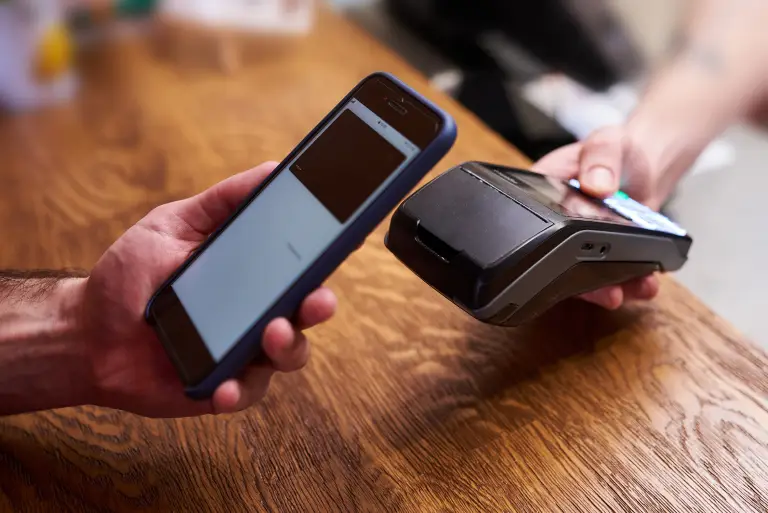
Making a payment on our website is quick and secure. Start by logging in or creating an account. Select your preferred payment method, input the required details, and review the information. Once you confirm everything is correct, click on the "Submit Payment" button. You’ll receive instant confirmation and can track your payment status through your account dashboard. It’s an easy and secure process.
Go to the Payment Section: Access the payment area on our website or app.
Choose Your Payment Method: Select your preferred payment option.
Enter Payment Details: Provide the necessary payment information.
Verify Your Information: Check that all details are correct.
Confirm Your Payment: Click "Submit Payment" to complete the transaction.
In the digital age, privacy concerns have become increasingly paramount, prompting the European Union to enact the General Data Protection Regulation (GDPR) in 2018. Among its many provisions, GDPR sets strict guidelines for the collection and processing of personal data, including the use of cookies on websites. Privacy Policy
Allow
Decline