<?php

/*
 * This file is part of the Symfony package.
 *
 * (c) Fabien Potencier <fabien@symfony.com>
 *
 * For the full copyright and license information, please view the LICENSE
 * file that was distributed with this source code.
 */

namespace Symfony\Component\HttpKernel\Fragment;

use Symfony\Component\HttpFoundation\Request;
use Symfony\Component\HttpFoundation\Response;
use Symfony\Component\HttpKernel\Controller\ControllerReference;
use Symfony\Component\HttpKernel\Event\ExceptionEvent;
use Symfony\Component\HttpKernel\HttpCache\SubRequestHandler;
use Symfony\Component\HttpKernel\HttpKernelInterface;
use Symfony\Component\HttpKernel\KernelEvents;
use Symfony\Contracts\EventDispatcher\EventDispatcherInterface;

/**
 * Implements the inline rendering strategy where the Request is rendered by the current HTTP kernel.
 *
 * @author Fabien Potencier <fabien@symfony.com>
 */
class InlineFragmentRenderer extends RoutableFragmentRenderer
{
    private $kernel;
    private $dispatcher;

    public function __construct(HttpKernelInterface $kernel, EventDispatcherInterface $dispatcher = null)
    {
        $this->kernel = $kernel;
        $this->dispatcher = $dispatcher;
    }

    /**
     * {@inheritdoc}
     *
     * Additional available options:
     *
     *  * alt: an alternative URI to render in case of an error
     */
    public function render(string|ControllerReference $uri, Request $request, array $options = []): Response
    {
        $reference = null;
        if ($uri instanceof ControllerReference) {
            $reference = $uri;

            // Remove attributes from the generated URI because if not, the Symfony
            // routing system will use them to populate the Request attributes. We don't
            // want that as we want to preserve objects (so we manually set Request attributes
            // below instead)
            $attributes = $reference->attributes;
            $reference->attributes = [];

            // The request format and locale might have been overridden by the user
            foreach (['_format', '_locale'] as $key) {
                if (isset($attributes[$key])) {
                    $reference->attributes[$key] = $attributes[$key];
                }
            }

            $uri = $this->generateFragmentUri($uri, $request, false, false);

            $reference->attributes = array_merge($attributes, $reference->attributes);
        }

        $subRequest = $this->createSubRequest($uri, $request);

        // override Request attributes as they can be objects (which are not supported by the generated URI)
        if (null !== $reference) {
            $subRequest->attributes->add($reference->attributes);
        }

        $level = ob_get_level();
        try {
            return SubRequestHandler::handle($this->kernel, $subRequest, HttpKernelInterface::SUB_REQUEST, false);
        } catch (\Exception $e) {
            // we dispatch the exception event to trigger the logging
            // the response that comes back is ignored
            if (isset($options['ignore_errors']) && $options['ignore_errors'] && $this->dispatcher) {
                $event = new ExceptionEvent($this->kernel, $request, HttpKernelInterface::SUB_REQUEST, $e);

                $this->dispatcher->dispatch($event, KernelEvents::EXCEPTION);
            }

            // let's clean up the output buffers that were created by the sub-request
            Response::closeOutputBuffers($level, false);

            if (isset($options['alt'])) {
                $alt = $options['alt'];
                unset($options['alt']);

                return $this->render($alt, $request, $options);
            }

            if (!isset($options['ignore_errors']) || !$options['ignore_errors']) {
                throw $e;
            }

            return new Response();
        }
    }

    protected function createSubRequest(string $uri, Request $request)
    {
        $cookies = $request->cookies->all();
        $server = $request->server->all();

        unset($server['HTTP_IF_MODIFIED_SINCE']);
        unset($server['HTTP_IF_NONE_MATCH']);

        $subRequest = Request::create($uri, 'get', [], $cookies, [], $server);
        if ($request->headers->has('Surrogate-Capability')) {
            $subRequest->headers->set('Surrogate-Capability', $request->headers->get('Surrogate-Capability'));
        }

        static $setSession;

        if (null === $setSession) {
            $setSession = \Closure::bind(static function ($subRequest, $request) { $subRequest->session = $request->session; }, null, Request::class);
        }
        $setSession($subRequest, $request);

        if ($request->get('_format')) {
            $subRequest->attributes->set('_format', $request->get('_format'));
        }
        if ($request->getDefaultLocale() !== $request->getLocale()) {
            $subRequest->setLocale($request->getLocale());
        }

        return $subRequest;
    }

    /**
     * {@inheritdoc}
     */
    public function getName(): string
    {
        return 'inline';
    }
}
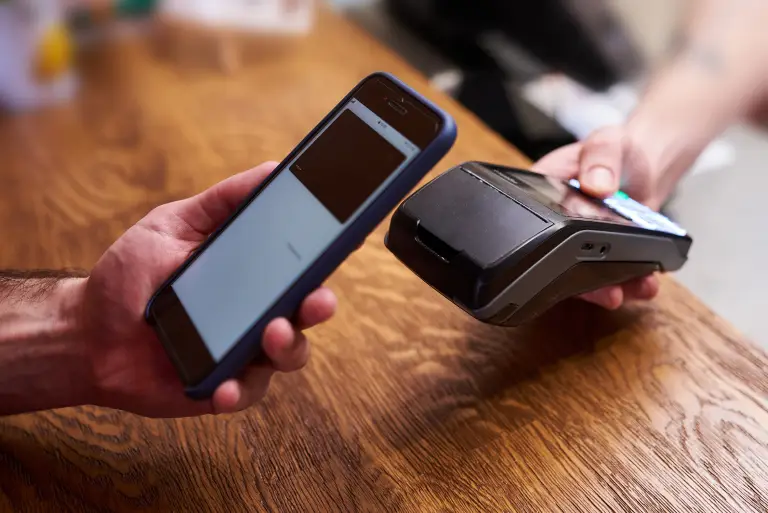
Simple Steps to Complete Your Payment Securely and Efficiently
Making a payment on our website is quick and secure. Start by logging in or creating an account. Select your preferred payment method, input the required details, and review the information. Once you confirm everything is correct, click on the "Submit Payment" button. You’ll receive instant confirmation and can track your payment status through your account dashboard. It’s an easy and secure process.
Go to the Payment Section: Access the payment area on our website or app.
Choose Your Payment Method: Select your preferred payment option.
Enter Payment Details: Provide the necessary payment information.
Verify Your Information: Check that all details are correct.
Confirm Your Payment: Click "Submit Payment" to complete the transaction.
In the digital age, privacy concerns have become increasingly paramount, prompting the European Union to enact the General Data Protection Regulation (GDPR) in 2018. Among its many provisions, GDPR sets strict guidelines for the collection and processing of personal data, including the use of cookies on websites. Privacy Policy