<?php
/*
* This file is part of the Symfony package.
*
* (c) Fabien Potencier <fabien@symfony.com>
*
* For the full copyright and license information, please view the LICENSE
* file that was distributed with this source code.
*/
namespace Symfony\Component\HttpKernel\Fragment;
use Symfony\Component\HttpFoundation\Request;
use Symfony\Component\HttpFoundation\RequestStack;
use Symfony\Component\HttpKernel\Controller\ControllerReference;
use Symfony\Component\HttpKernel\UriSigner;
/**
* Generates a fragment URI.
*
* @author Kévin Dunglas <kevin@dunglas.fr>
* @author Fabien Potencier <fabien@symfony.com>
*/
final class FragmentUriGenerator implements FragmentUriGeneratorInterface
{
private string $fragmentPath;
private $signer;
private $requestStack;
public function __construct(string $fragmentPath, UriSigner $signer = null, RequestStack $requestStack = null)
{
$this->fragmentPath = $fragmentPath;
$this->signer = $signer;
$this->requestStack = $requestStack;
}
/**
* {@inheritDoc}
*/
public function generate(ControllerReference $controller, Request $request = null, bool $absolute = false, bool $strict = true, bool $sign = true): string
{
if (null === $request && (null === $this->requestStack || null === $request = $this->requestStack->getCurrentRequest())) {
throw new \LogicException('Generating a fragment URL can only be done when handling a Request.');
}
if ($sign && null === $this->signer) {
throw new \LogicException('You must use a URI when using the ESI rendering strategy or set a URL signer.');
}
if ($strict) {
$this->checkNonScalar($controller->attributes);
}
// We need to forward the current _format and _locale values as we don't have
// a proper routing pattern to do the job for us.
// This makes things inconsistent if you switch from rendering a controller
// to rendering a route if the route pattern does not contain the special
// _format and _locale placeholders.
if (!isset($controller->attributes['_format'])) {
$controller->attributes['_format'] = $request->getRequestFormat();
}
if (!isset($controller->attributes['_locale'])) {
$controller->attributes['_locale'] = $request->getLocale();
}
$controller->attributes['_controller'] = $controller->controller;
$controller->query['_path'] = http_build_query($controller->attributes, '', '&');
$path = $this->fragmentPath.'?'.http_build_query($controller->query, '', '&');
// we need to sign the absolute URI, but want to return the path only.
$fragmentUri = $sign || $absolute ? $request->getUriForPath($path) : $request->getBaseUrl().$path;
if (!$sign) {
return $fragmentUri;
}
$fragmentUri = $this->signer->sign($fragmentUri);
return $absolute ? $fragmentUri : substr($fragmentUri, \strlen($request->getSchemeAndHttpHost()));
}
private function checkNonScalar(array $values): void
{
foreach ($values as $key => $value) {
if (\is_array($value)) {
$this->checkNonScalar($value);
} elseif (!\is_scalar($value) && null !== $value) {
throw new \LogicException(sprintf('Controller attributes cannot contain non-scalar/non-null values (value for key "%s" is not a scalar or null).', $key));
}
}
}
}
How To Payment
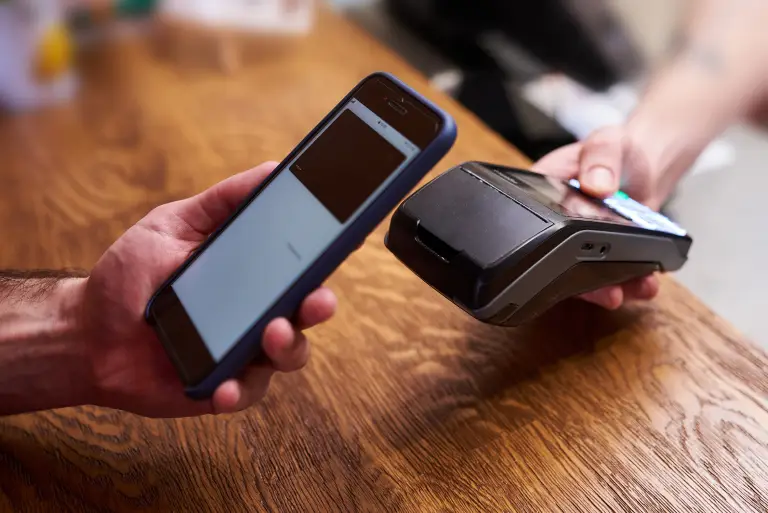
Making a payment on our website is quick and secure. Start by logging in or creating an account. Select your preferred payment method, input the required details, and review the information. Once you confirm everything is correct, click on the "Submit Payment" button. You’ll receive instant confirmation and can track your payment status through your account dashboard. It’s an easy and secure process.