<?php
namespace GuzzleHttp;
use Psr\Http\Message\MessageInterface;
use Psr\Http\Message\RequestInterface;
use Psr\Http\Message\ResponseInterface;
/**
* Formats log messages using variable substitutions for requests, responses,
* and other transactional data.
*
* The following variable substitutions are supported:
*
* - {request}: Full HTTP request message
* - {response}: Full HTTP response message
* - {ts}: ISO 8601 date in GMT
* - {date_iso_8601} ISO 8601 date in GMT
* - {date_common_log} Apache common log date using the configured timezone.
* - {host}: Host of the request
* - {method}: Method of the request
* - {uri}: URI of the request
* - {version}: Protocol version
* - {target}: Request target of the request (path + query + fragment)
* - {hostname}: Hostname of the machine that sent the request
* - {code}: Status code of the response (if available)
* - {phrase}: Reason phrase of the response (if available)
* - {error}: Any error messages (if available)
* - {req_header_*}: Replace `*` with the lowercased name of a request header to add to the message
* - {res_header_*}: Replace `*` with the lowercased name of a response header to add to the message
* - {req_headers}: Request headers
* - {res_headers}: Response headers
* - {req_body}: Request body
* - {res_body}: Response body
*
* @final
*/
class MessageFormatter implements MessageFormatterInterface
{
/**
* Apache Common Log Format.
*
* @see https://httpd.apache.org/docs/2.4/logs.html#common
*
* @var string
*/
public const CLF = '{hostname} {req_header_User-Agent} - [{date_common_log}] "{method} {target} HTTP/{version}" {code} {res_header_Content-Length}';
public const DEBUG = ">>>>>>>>\n{request}\n<<<<<<<<\n{response}\n--------\n{error}";
public const SHORT = '[{ts}] "{method} {target} HTTP/{version}" {code}';
/**
* @var string Template used to format log messages
*/
private $template;
/**
* @param string $template Log message template
*/
public function __construct(?string $template = self::CLF)
{
$this->template = $template ?: self::CLF;
}
/**
* Returns a formatted message string.
*
* @param RequestInterface $request Request that was sent
* @param ResponseInterface|null $response Response that was received
* @param \Throwable|null $error Exception that was received
*/
public function format(RequestInterface $request, ResponseInterface $response = null, \Throwable $error = null): string
{
$cache = [];
/** @var string */
return \preg_replace_callback(
'/{\s*([A-Za-z_\-\.0-9]+)\s*}/',
function (array $matches) use ($request, $response, $error, &$cache) {
if (isset($cache[$matches[1]])) {
return $cache[$matches[1]];
}
$result = '';
switch ($matches[1]) {
case 'request':
$result = Psr7\Message::toString($request);
break;
case 'response':
$result = $response ? Psr7\Message::toString($response) : '';
break;
case 'req_headers':
$result = \trim($request->getMethod()
.' '.$request->getRequestTarget())
.' HTTP/'.$request->getProtocolVersion()."\r\n"
.$this->headers($request);
break;
case 'res_headers':
$result = $response ?
\sprintf(
'HTTP/%s %d %s',
$response->getProtocolVersion(),
$response->getStatusCode(),
$response->getReasonPhrase()
)."\r\n".$this->headers($response)
: 'NULL';
break;
case 'req_body':
$result = $request->getBody()->__toString();
break;
case 'res_body':
if (!$response instanceof ResponseInterface) {
$result = 'NULL';
break;
}
$body = $response->getBody();
if (!$body->isSeekable()) {
$result = 'RESPONSE_NOT_LOGGEABLE';
break;
}
$result = $response->getBody()->__toString();
break;
case 'ts':
case 'date_iso_8601':
$result = \gmdate('c');
break;
case 'date_common_log':
$result = \date('d/M/Y:H:i:s O');
break;
case 'method':
$result = $request->getMethod();
break;
case 'version':
$result = $request->getProtocolVersion();
break;
case 'uri':
case 'url':
$result = $request->getUri()->__toString();
break;
case 'target':
$result = $request->getRequestTarget();
break;
case 'req_version':
$result = $request->getProtocolVersion();
break;
case 'res_version':
$result = $response
? $response->getProtocolVersion()
: 'NULL';
break;
case 'host':
$result = $request->getHeaderLine('Host');
break;
case 'hostname':
$result = \gethostname();
break;
case 'code':
$result = $response ? $response->getStatusCode() : 'NULL';
break;
case 'phrase':
$result = $response ? $response->getReasonPhrase() : 'NULL';
break;
case 'error':
$result = $error ? $error->getMessage() : 'NULL';
break;
default:
// handle prefixed dynamic headers
if (\strpos($matches[1], 'req_header_') === 0) {
$result = $request->getHeaderLine(\substr($matches[1], 11));
} elseif (\strpos($matches[1], 'res_header_') === 0) {
$result = $response
? $response->getHeaderLine(\substr($matches[1], 11))
: 'NULL';
}
}
$cache[$matches[1]] = $result;
return $result;
},
$this->template
);
}
/**
* Get headers from message as string
*/
private function headers(MessageInterface $message): string
{
$result = '';
foreach ($message->getHeaders() as $name => $values) {
$result .= $name.': '.\implode(', ', $values)."\r\n";
}
return \trim($result);
}
}
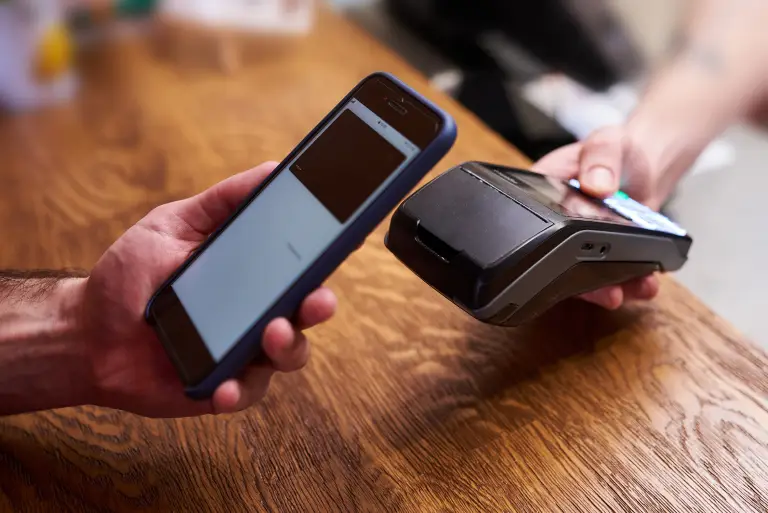
How To Payment
Making a payment on our website is quick and secure. Start by logging in or creating an account. Select your preferred payment method, input the required details, and review the information. Once you confirm everything is correct, click on the "Submit Payment" button. You’ll receive instant confirmation and can track your payment status through your account dashboard. It’s an easy and secure process.