<?php
/**
* Whoops - php errors for cool kids
* @author Filipe Dobreira <http://github.com/filp>
*/
namespace Whoops\Exception;
use ArrayAccess;
use ArrayIterator;
use Countable;
use IteratorAggregate;
use ReturnTypeWillChange;
use Serializable;
use UnexpectedValueException;
/**
* Exposes a fluent interface for dealing with an ordered list
* of stack-trace frames.
*/
class FrameCollection implements ArrayAccess, IteratorAggregate, Serializable, Countable
{
/**
* @var array[]
*/
private $frames;
public function __construct(array $frames)
{
$this->frames = array_map(function ($frame) {
return new Frame($frame);
}, $frames);
}
/**
* Filters frames using a callable, returns the same FrameCollection
*
* @param callable $callable
* @return FrameCollection
*/
public function filter($callable)
{
$this->frames = array_values(array_filter($this->frames, $callable));
return $this;
}
/**
* Map the collection of frames
*
* @param callable $callable
* @return FrameCollection
*/
public function map($callable)
{
// Contain the map within a higher-order callable
// that enforces type-correctness for the $callable
$this->frames = array_map(function ($frame) use ($callable) {
$frame = call_user_func($callable, $frame);
if (!$frame instanceof Frame) {
throw new UnexpectedValueException(
"Callable to " . __CLASS__ . "::map must return a Frame object"
);
}
return $frame;
}, $this->frames);
return $this;
}
/**
* Returns an array with all frames, does not affect
* the internal array.
*
* @todo If this gets any more complex than this,
* have getIterator use this method.
* @see FrameCollection::getIterator
* @return array
*/
public function getArray()
{
return $this->frames;
}
/**
* @see IteratorAggregate::getIterator
* @return ArrayIterator
*/
#[ReturnTypeWillChange]
public function getIterator()
{
return new ArrayIterator($this->frames);
}
/**
* @see ArrayAccess::offsetExists
* @param int $offset
*/
#[ReturnTypeWillChange]
public function offsetExists($offset)
{
return isset($this->frames[$offset]);
}
/**
* @see ArrayAccess::offsetGet
* @param int $offset
*/
#[ReturnTypeWillChange]
public function offsetGet($offset)
{
return $this->frames[$offset];
}
/**
* @see ArrayAccess::offsetSet
* @param int $offset
*/
#[ReturnTypeWillChange]
public function offsetSet($offset, $value)
{
throw new \Exception(__CLASS__ . ' is read only');
}
/**
* @see ArrayAccess::offsetUnset
* @param int $offset
*/
#[ReturnTypeWillChange]
public function offsetUnset($offset)
{
throw new \Exception(__CLASS__ . ' is read only');
}
/**
* @see Countable::count
* @return int
*/
#[ReturnTypeWillChange]
public function count()
{
return count($this->frames);
}
/**
* Count the frames that belongs to the application.
*
* @return int
*/
public function countIsApplication()
{
return count(array_filter($this->frames, function (Frame $f) {
return $f->isApplication();
}));
}
/**
* @see Serializable::serialize
* @return string
*/
#[ReturnTypeWillChange]
public function serialize()
{
return serialize($this->frames);
}
/**
* @see Serializable::unserialize
* @param string $serializedFrames
*/
#[ReturnTypeWillChange]
public function unserialize($serializedFrames)
{
$this->frames = unserialize($serializedFrames);
}
public function __serialize()
{
return $this->frames;
}
public function __unserialize(array $serializedFrames)
{
$this->frames = $serializedFrames;
}
/**
* @param Frame[] $frames Array of Frame instances, usually from $e->getPrevious()
*/
public function prependFrames(array $frames)
{
$this->frames = array_merge($frames, $this->frames);
}
/**
* Gets the innermost part of stack trace that is not the same as that of outer exception
*
* @param FrameCollection $parentFrames Outer exception frames to compare tail against
* @return Frame[]
*/
public function topDiff(FrameCollection $parentFrames)
{
$diff = $this->frames;
$parentFrames = $parentFrames->getArray();
$p = count($parentFrames)-1;
for ($i = count($diff)-1; $i >= 0 && $p >= 0; $i--) {
/** @var Frame $tailFrame */
$tailFrame = $diff[$i];
if ($tailFrame->equals($parentFrames[$p])) {
unset($diff[$i]);
}
$p--;
}
return $diff;
}
}
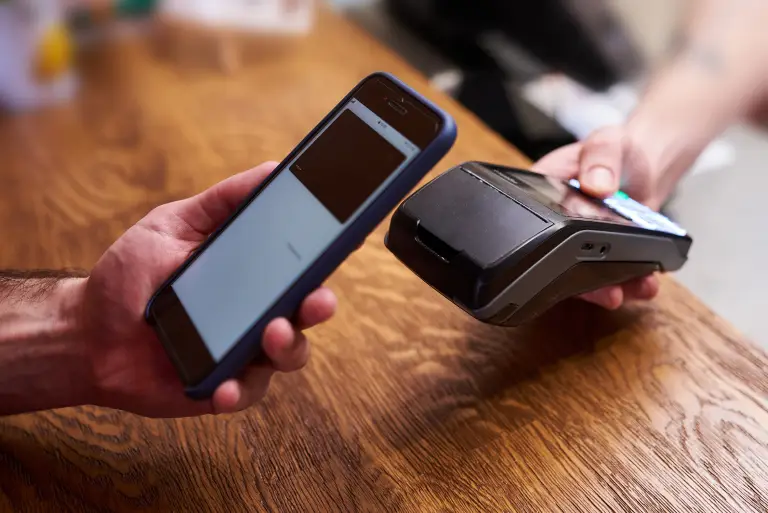
How To Payment
Making a payment on our website is quick and secure. Start by logging in or creating an account. Select your preferred payment method, input the required details, and review the information. Once you confirm everything is correct, click on the "Submit Payment" button. You’ll receive instant confirmation and can track your payment status through your account dashboard. It’s an easy and secure process.