
/home/kueuepay/public_html/vendor/phpunit/php-timer/README.md
# phpunit/php-timer

[![CI Status](https://github.com/sebastianbergmann/php-timer/workflows/CI/badge.svg)](https://github.com/sebastianbergmann/php-timer/actions)
[![Type Coverage](https://shepherd.dev/github/sebastianbergmann/php-timer/coverage.svg)](https://shepherd.dev/github/sebastianbergmann/php-timer)

Utility class for timing things, factored out of PHPUnit into a stand-alone component.

## Installation

You can add this library as a local, per-project dependency to your project using [Composer](https://getcomposer.org/):

```
composer require phpunit/php-timer
```

If you only need this library during development, for instance to run your project's test suite, then you should add it as a development-time dependency:

```
composer require --dev phpunit/php-timer
```

## Usage

### Basic Timing

```php
require __DIR__ . '/vendor/autoload.php';

use SebastianBergmann\Timer\Timer;

$timer = new Timer;

$timer->start();

foreach (\range(0, 100000) as $i) {
    // ...
}

$duration = $timer->stop();

var_dump(get_class($duration));
var_dump($duration->asString());
var_dump($duration->asSeconds());
var_dump($duration->asMilliseconds());
var_dump($duration->asMicroseconds());
var_dump($duration->asNanoseconds());
```

The code above yields the output below:

```
string(32) "SebastianBergmann\Timer\Duration"
string(9) "00:00.002"
float(0.002851062)
float(2.851062)
float(2851.062)
int(2851062)
```

### Resource Consumption

#### Explicit duration

```php
require __DIR__ . '/vendor/autoload.php';

use SebastianBergmann\Timer\ResourceUsageFormatter;
use SebastianBergmann\Timer\Timer;

$timer = new Timer;
$timer->start();

foreach (\range(0, 100000) as $i) {
    // ...
}

print (new ResourceUsageFormatter)->resourceUsage($timer->stop());
```

The code above yields the output below:

```
Time: 00:00.002, Memory: 6.00 MB
```

#### Duration since PHP Startup (using unreliable `$_SERVER['REQUEST_TIME_FLOAT']`)

```php
require __DIR__ . '/vendor/autoload.php';

use SebastianBergmann\Timer\ResourceUsageFormatter;

foreach (\range(0, 100000) as $i) {
    // ...
}

print (new ResourceUsageFormatter)->resourceUsageSinceStartOfRequest();
```

The code above yields the output below:

```
Time: 00:00.002, Memory: 6.00 MB
```
Save Card
top

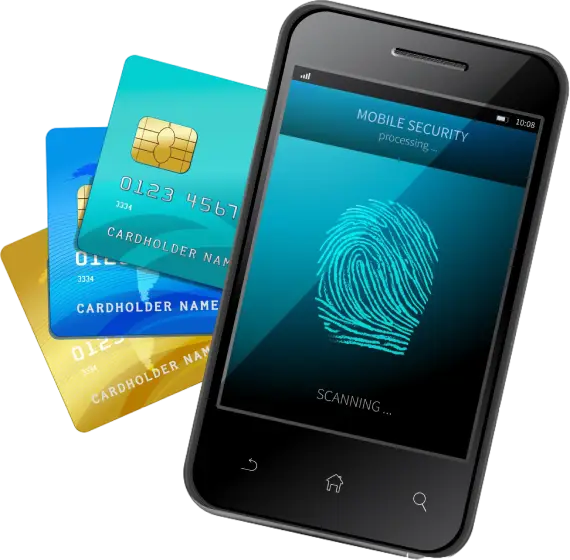
Save Your Card for Quick and Easy Future Payments Online

Simplify your payment experience by securely saving your card on our platform. After your initial transaction, you can choose to store your card details safely for future use. This feature eliminates the need to re-enter your payment information each time, making checkouts faster while keeping your data secure with advanced encryption and robust security measures.

  • Navigate to the “Save Card” section.
  • Click on “Add Card.”
  • Choose your preferred setup method.
  • Your card is now saved for future payments.
img