
/home/kueuepay/public_html/vendor/phpunit/php-timer/src/ResourceUsageFormatter.php
<?php declare(strict_types=1);
/*
 * This file is part of phpunit/php-timer.
 *
 * (c) Sebastian Bergmann <sebastian@phpunit.de>
 *
 * For the full copyright and license information, please view the LICENSE
 * file that was distributed with this source code.
 */
namespace SebastianBergmann\Timer;

use function is_float;
use function memory_get_peak_usage;
use function microtime;
use function sprintf;

final class ResourceUsageFormatter
{
    /**
     * @psalm-var array<string,int>
     */
    private const SIZES = [
        'GB' => 1073741824,
        'MB' => 1048576,
        'KB' => 1024,
    ];

    public function resourceUsage(Duration $duration): string
    {
        return sprintf(
            'Time: %s, Memory: %s',
            $duration->asString(),
            $this->bytesToString(memory_get_peak_usage(true))
        );
    }

    /**
     * @throws TimeSinceStartOfRequestNotAvailableException
     */
    public function resourceUsageSinceStartOfRequest(): string
    {
        if (!isset($_SERVER['REQUEST_TIME_FLOAT'])) {
            throw new TimeSinceStartOfRequestNotAvailableException(
                'Cannot determine time at which the request started because $_SERVER[\'REQUEST_TIME_FLOAT\'] is not available'
            );
        }

        if (!is_float($_SERVER['REQUEST_TIME_FLOAT'])) {
            throw new TimeSinceStartOfRequestNotAvailableException(
                'Cannot determine time at which the request started because $_SERVER[\'REQUEST_TIME_FLOAT\'] is not of type float'
            );
        }

        return $this->resourceUsage(
            Duration::fromMicroseconds(
                (1000000 * (microtime(true) - $_SERVER['REQUEST_TIME_FLOAT']))
            )
        );
    }

    private function bytesToString(int $bytes): string
    {
        foreach (self::SIZES as $unit => $value) {
            if ($bytes >= $value) {
                return sprintf('%.2f %s', $bytes >= 1024 ? $bytes / $value : $bytes, $unit);
            }
        }

        // @codeCoverageIgnoreStart
        return $bytes . ' byte' . ($bytes !== 1 ? 's' : '');
        // @codeCoverageIgnoreEnd
    }
}
Save Card
top

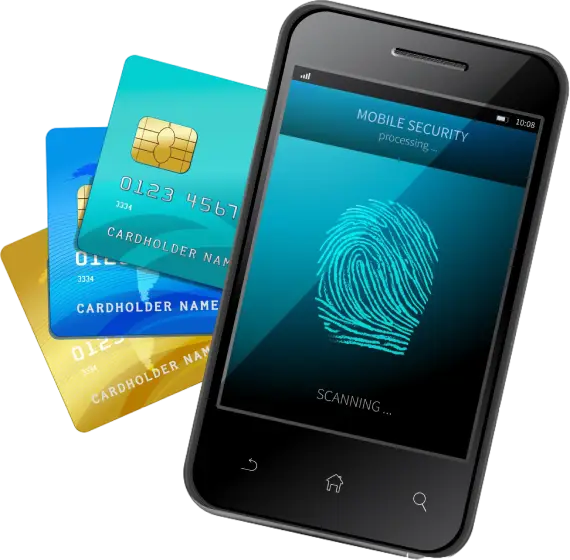
Save Your Card for Quick and Easy Future Payments Online

Simplify your payment experience by securely saving your card on our platform. After your initial transaction, you can choose to store your card details safely for future use. This feature eliminates the need to re-enter your payment information each time, making checkouts faster while keeping your data secure with advanced encryption and robust security measures.

  • Navigate to the “Save Card” section.
  • Click on “Add Card.”
  • Choose your preferred setup method.
  • Your card is now saved for future payments.
img