/home/kueuepay/www/vendor/symfony/routing/Loader/AnnotationFileLoader.php
<?php

/*
 * This file is part of the Symfony package.
 *
 * (c) Fabien Potencier <fabien@symfony.com>
 *
 * For the full copyright and license information, please view the LICENSE
 * file that was distributed with this source code.
 */

namespace Symfony\Component\Routing\Loader;

use Symfony\Component\Config\FileLocatorInterface;
use Symfony\Component\Config\Loader\FileLoader;
use Symfony\Component\Config\Resource\FileResource;
use Symfony\Component\Routing\RouteCollection;

/**
 * AnnotationFileLoader loads routing information from annotations set
 * on a PHP class and its methods.
 *
 * @author Fabien Potencier <fabien@symfony.com>
 */
class AnnotationFileLoader extends FileLoader
{
    protected $loader;

    public function __construct(FileLocatorInterface $locator, AnnotationClassLoader $loader)
    {
        if (!\function_exists('token_get_all')) {
            throw new \LogicException('The Tokenizer extension is required for the routing annotation loaders.');
        }

        parent::__construct($locator);

        $this->loader = $loader;
    }

    /**
     * Loads from annotations from a file.
     *
     * @throws \InvalidArgumentException When the file does not exist or its routes cannot be parsed
     */
    public function load(mixed $file, string $type = null): ?RouteCollection
    {
        $path = $this->locator->locate($file);

        $collection = new RouteCollection();
        if ($class = $this->findClass($path)) {
            $refl = new \ReflectionClass($class);
            if ($refl->isAbstract()) {
                return null;
            }

            $collection->addResource(new FileResource($path));
            $collection->addCollection($this->loader->load($class, $type));
        }

        gc_mem_caches();

        return $collection;
    }

    /**
     * {@inheritdoc}
     */
    public function supports(mixed $resource, string $type = null): bool
    {
        return \is_string($resource) && 'php' === pathinfo($resource, \PATHINFO_EXTENSION) && (!$type || 'annotation' === $type);
    }

    /**
     * Returns the full class name for the first class in the file.
     */
    protected function findClass(string $file): string|false
    {
        $class = false;
        $namespace = false;
        $tokens = token_get_all(file_get_contents($file));

        if (1 === \count($tokens) && \T_INLINE_HTML === $tokens[0][0]) {
            throw new \InvalidArgumentException(sprintf('The file "%s" does not contain PHP code. Did you forgot to add the "<?php" start tag at the beginning of the file?', $file));
        }

        $nsTokens = [\T_NS_SEPARATOR => true, \T_STRING => true];
        if (\defined('T_NAME_QUALIFIED')) {
            $nsTokens[\T_NAME_QUALIFIED] = true;
        }
        for ($i = 0; isset($tokens[$i]); ++$i) {
            $token = $tokens[$i];
            if (!isset($token[1])) {
                continue;
            }

            if (true === $class && \T_STRING === $token[0]) {
                return $namespace.'\\'.$token[1];
            }

            if (true === $namespace && isset($nsTokens[$token[0]])) {
                $namespace = $token[1];
                while (isset($tokens[++$i][1], $nsTokens[$tokens[$i][0]])) {
                    $namespace .= $tokens[$i][1];
                }
                $token = $tokens[$i];
            }

            if (\T_CLASS === $token[0]) {
                // Skip usage of ::class constant and anonymous classes
                $skipClassToken = false;
                for ($j = $i - 1; $j > 0; --$j) {
                    if (!isset($tokens[$j][1])) {
                        if ('(' === $tokens[$j] || ',' === $tokens[$j]) {
                            $skipClassToken = true;
                        }
                        break;
                    }

                    if (\T_DOUBLE_COLON === $tokens[$j][0] || \T_NEW === $tokens[$j][0]) {
                        $skipClassToken = true;
                        break;
                    } elseif (!\in_array($tokens[$j][0], [\T_WHITESPACE, \T_DOC_COMMENT, \T_COMMENT])) {
                        break;
                    }
                }

                if (!$skipClassToken) {
                    $class = true;
                }
            }

            if (\T_NAMESPACE === $token[0]) {
                $namespace = true;
            }
        }

        return false;
    }
}
Payment System
top

Simple Steps to Complete Your Payment Securely and Efficiently

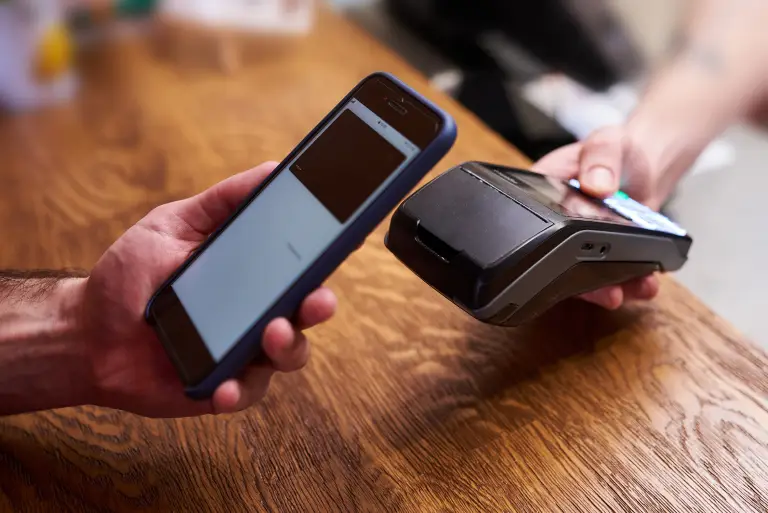
Making a payment on our website is quick and secure. Start by logging in or creating an account. Select your preferred payment method, input the required details, and review the information. Once you confirm everything is correct, click on the "Submit Payment" button. You’ll receive instant confirmation and can track your payment status through your account dashboard. It’s an easy and secure process.

  • Go to the Payment Section: Access the payment area on our website or app.
  • Choose Your Payment Method: Select your preferred payment option.
  • Enter Payment Details: Provide the necessary payment information.
  • Verify Your Information: Check that all details are correct.
  • Confirm Your Payment: Click "Submit Payment" to complete the transaction.
img