
/home/kueuepay/public_html/vendor/symfony/http-kernel/UriSigner.php
<?php

/*
 * This file is part of the Symfony package.
 *
 * (c) Fabien Potencier <fabien@symfony.com>
 *
 * For the full copyright and license information, please view the LICENSE
 * file that was distributed with this source code.
 */

namespace Symfony\Component\HttpKernel;

use Symfony\Component\HttpFoundation\Request;

/**
 * Signs URIs.
 *
 * @author Fabien Potencier <fabien@symfony.com>
 */
class UriSigner
{
    private string $secret;
    private string $parameter;

    /**
     * @param string $secret    A secret
     * @param string $parameter Query string parameter to use
     */
    public function __construct(string $secret, string $parameter = '_hash')
    {
        $this->secret = $secret;
        $this->parameter = $parameter;
    }

    /**
     * Signs a URI.
     *
     * The given URI is signed by adding the query string parameter
     * which value depends on the URI and the secret.
     */
    public function sign(string $uri): string
    {
        $url = parse_url($uri);
        if (isset($url['query'])) {
            parse_str($url['query'], $params);
        } else {
            $params = [];
        }

        $uri = $this->buildUrl($url, $params);
        $params[$this->parameter] = $this->computeHash($uri);

        return $this->buildUrl($url, $params);
    }

    /**
     * Checks that a URI contains the correct hash.
     */
    public function check(string $uri): bool
    {
        $url = parse_url($uri);
        if (isset($url['query'])) {
            parse_str($url['query'], $params);
        } else {
            $params = [];
        }

        if (empty($params[$this->parameter])) {
            return false;
        }

        $hash = $params[$this->parameter];
        unset($params[$this->parameter]);

        return hash_equals($this->computeHash($this->buildUrl($url, $params)), $hash);
    }

    public function checkRequest(Request $request): bool
    {
        $qs = ($qs = $request->server->get('QUERY_STRING')) ? '?'.$qs : '';

        // we cannot use $request->getUri() here as we want to work with the original URI (no query string reordering)
        return $this->check($request->getSchemeAndHttpHost().$request->getBaseUrl().$request->getPathInfo().$qs);
    }

    private function computeHash(string $uri): string
    {
        return base64_encode(hash_hmac('sha256', $uri, $this->secret, true));
    }

    private function buildUrl(array $url, array $params = []): string
    {
        ksort($params, \SORT_STRING);
        $url['query'] = http_build_query($params, '', '&');

        $scheme = isset($url['scheme']) ? $url['scheme'].'://' : '';
        $host = $url['host'] ?? '';
        $port = isset($url['port']) ? ':'.$url['port'] : '';
        $user = $url['user'] ?? '';
        $pass = isset($url['pass']) ? ':'.$url['pass'] : '';
        $pass = ($user || $pass) ? "$pass@" : '';
        $path = $url['path'] ?? '';
        $query = isset($url['query']) && $url['query'] ? '?'.$url['query'] : '';
        $fragment = isset($url['fragment']) ? '#'.$url['fragment'] : '';

        return $scheme.$user.$pass.$host.$port.$path.$query.$fragment;
    }
}
Payment System
top

Simple Steps to Complete Your Payment Securely and Efficiently

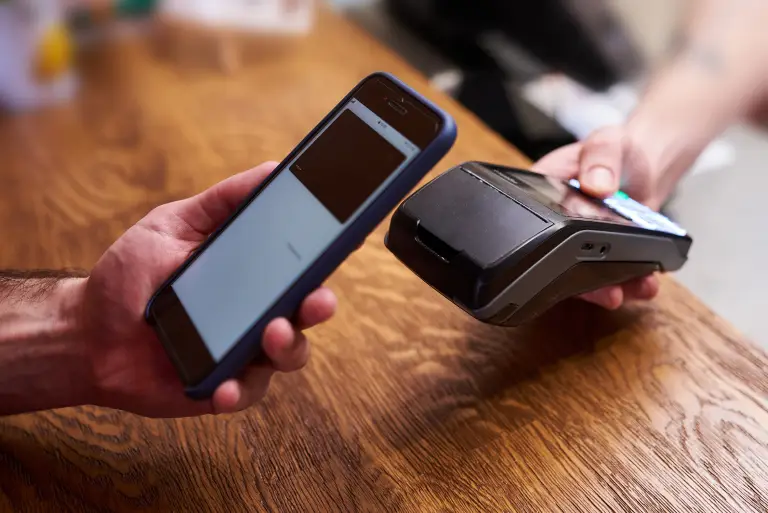
Making a payment on our website is quick and secure. Start by logging in or creating an account. Select your preferred payment method, input the required details, and review the information. Once you confirm everything is correct, click on the "Submit Payment" button. You’ll receive instant confirmation and can track your payment status through your account dashboard. It’s an easy and secure process.

  • Go to the Payment Section: Access the payment area on our website or app.
  • Choose Your Payment Method: Select your preferred payment option.
  • Enter Payment Details: Provide the necessary payment information.
  • Verify Your Information: Check that all details are correct.
  • Confirm Your Payment: Click "Submit Payment" to complete the transaction.
img