<?php

/*
 * This file is part of the Symfony package.
 *
 * (c) Fabien Potencier <fabien@symfony.com>
 *
 * For the full copyright and license information, please view the LICENSE
 * file that was distributed with this source code.
 */

namespace Symfony\Component\Console\Output;

use Symfony\Component\Console\Formatter\OutputFormatterInterface;

/**
 * ConsoleOutput is the default class for all CLI output. It uses STDOUT and STDERR.
 *
 * This class is a convenient wrapper around `StreamOutput` for both STDOUT and STDERR.
 *
 *     $output = new ConsoleOutput();
 *
 * This is equivalent to:
 *
 *     $output = new StreamOutput(fopen('php://stdout', 'w'));
 *     $stdErr = new StreamOutput(fopen('php://stderr', 'w'));
 *
 * @author Fabien Potencier <fabien@symfony.com>
 */
class ConsoleOutput extends StreamOutput implements ConsoleOutputInterface
{
    private $stderr;
    private array $consoleSectionOutputs = [];

    /**
     * @param int                           $verbosity The verbosity level (one of the VERBOSITY constants in OutputInterface)
     * @param bool|null                     $decorated Whether to decorate messages (null for auto-guessing)
     * @param OutputFormatterInterface|null $formatter Output formatter instance (null to use default OutputFormatter)
     */
    public function __construct(int $verbosity = self::VERBOSITY_NORMAL, bool $decorated = null, OutputFormatterInterface $formatter = null)
    {
        parent::__construct($this->openOutputStream(), $verbosity, $decorated, $formatter);

        if (null === $formatter) {
            // for BC reasons, stdErr has it own Formatter only when user don't inject a specific formatter.
            $this->stderr = new StreamOutput($this->openErrorStream(), $verbosity, $decorated);

            return;
        }

        $actualDecorated = $this->isDecorated();
        $this->stderr = new StreamOutput($this->openErrorStream(), $verbosity, $decorated, $this->getFormatter());

        if (null === $decorated) {
            $this->setDecorated($actualDecorated && $this->stderr->isDecorated());
        }
    }

    /**
     * Creates a new output section.
     */
    public function section(): ConsoleSectionOutput
    {
        return new ConsoleSectionOutput($this->getStream(), $this->consoleSectionOutputs, $this->getVerbosity(), $this->isDecorated(), $this->getFormatter());
    }

    /**
     * {@inheritdoc}
     */
    public function setDecorated(bool $decorated)
    {
        parent::setDecorated($decorated);
        $this->stderr->setDecorated($decorated);
    }

    /**
     * {@inheritdoc}
     */
    public function setFormatter(OutputFormatterInterface $formatter)
    {
        parent::setFormatter($formatter);
        $this->stderr->setFormatter($formatter);
    }

    /**
     * {@inheritdoc}
     */
    public function setVerbosity(int $level)
    {
        parent::setVerbosity($level);
        $this->stderr->setVerbosity($level);
    }

    /**
     * {@inheritdoc}
     */
    public function getErrorOutput(): OutputInterface
    {
        return $this->stderr;
    }

    /**
     * {@inheritdoc}
     */
    public function setErrorOutput(OutputInterface $error)
    {
        $this->stderr = $error;
    }

    /**
     * Returns true if current environment supports writing console output to
     * STDOUT.
     */
    protected function hasStdoutSupport(): bool
    {
        return false === $this->isRunningOS400();
    }

    /**
     * Returns true if current environment supports writing console output to
     * STDERR.
     */
    protected function hasStderrSupport(): bool
    {
        return false === $this->isRunningOS400();
    }

    /**
     * Checks if current executing environment is IBM iSeries (OS400), which
     * doesn't properly convert character-encodings between ASCII to EBCDIC.
     */
    private function isRunningOS400(): bool
    {
        $checks = [
            \function_exists('php_uname') ? php_uname('s') : '',
            getenv('OSTYPE'),
            \PHP_OS,
        ];

        return false !== stripos(implode(';', $checks), 'OS400');
    }

    /**
     * @return resource
     */
    private function openOutputStream()
    {
        if (!$this->hasStdoutSupport()) {
            return fopen('php://output', 'w');
        }

        // Use STDOUT when possible to prevent from opening too many file descriptors
        return \defined('STDOUT') ? \STDOUT : (@fopen('php://stdout', 'w') ?: fopen('php://output', 'w'));
    }

    /**
     * @return resource
     */
    private function openErrorStream()
    {
        if (!$this->hasStderrSupport()) {
            return fopen('php://output', 'w');
        }

        // Use STDERR when possible to prevent from opening too many file descriptors
        return \defined('STDERR') ? \STDERR : (@fopen('php://stderr', 'w') ?: fopen('php://output', 'w'));
    }
}
Simple Steps to Complete Your Payment Securely and Efficiently
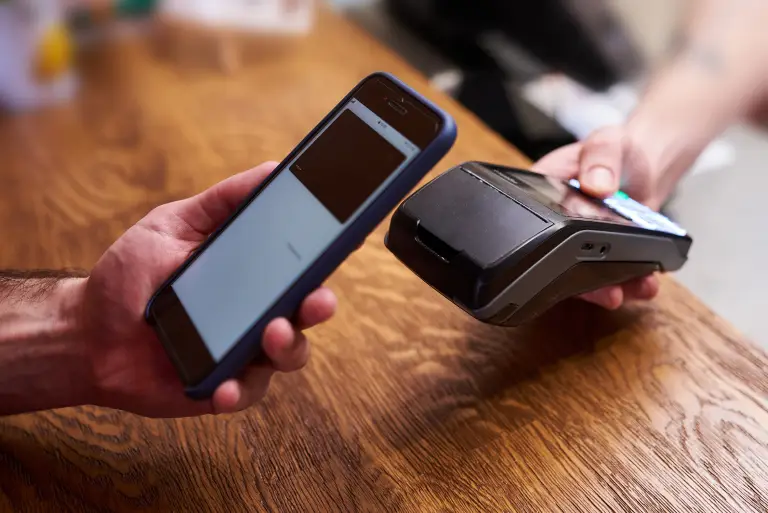
Making a payment on our website is quick and secure. Start by logging in or creating an account. Select your preferred payment method, input the required details, and review the information. Once you confirm everything is correct, click on the "Submit Payment" button. You’ll receive instant confirmation and can track your payment status through your account dashboard. It’s an easy and secure process.
Go to the Payment Section: Access the payment area on our website or app.
Choose Your Payment Method: Select your preferred payment option.
Enter Payment Details: Provide the necessary payment information.
Verify Your Information: Check that all details are correct.
Confirm Your Payment: Click "Submit Payment" to complete the transaction.
In the digital age, privacy concerns have become increasingly paramount, prompting the European Union to enact the General Data Protection Regulation (GDPR) in 2018. Among its many provisions, GDPR sets strict guidelines for the collection and processing of personal data, including the use of cookies on websites. Privacy Policy