
/home/kueuepay/public_html/vendor/ramsey/uuid/src/UuidInterface.php
<?php

/**
 * This file is part of the ramsey/uuid library
 *
 * For the full copyright and license information, please view the LICENSE
 * file that was distributed with this source code.
 *
 * @copyright Copyright (c) Ben Ramsey <ben@benramsey.com>
 * @license http://opensource.org/licenses/MIT MIT
 */

declare(strict_types=1);

namespace Ramsey\Uuid;

use JsonSerializable;
use Ramsey\Uuid\Fields\FieldsInterface;
use Ramsey\Uuid\Type\Hexadecimal;
use Ramsey\Uuid\Type\Integer as IntegerObject;
use Serializable;
use Stringable;

/**
 * A UUID is a universally unique identifier adhering to an agreed-upon
 * representation format and standard for generation
 *
 * @psalm-immutable
 */
interface UuidInterface extends
    DeprecatedUuidInterface,
    JsonSerializable,
    Serializable,
    Stringable
{
    /**
     * Returns -1, 0, or 1 if the UUID is less than, equal to, or greater than
     * the other UUID
     *
     * The first of two UUIDs is greater than the second if the most
     * significant field in which the UUIDs differ is greater for the first
     * UUID.
     *
     * * Q. What's the value of being able to sort UUIDs?
     * * A. Use them as keys in a B-Tree or similar mapping.
     *
     * @param UuidInterface $other The UUID to compare
     *
     * @return int<-1,1> -1, 0, or 1 if the UUID is less than, equal to, or greater than $other
     */
    public function compareTo(UuidInterface $other): int;

    /**
     * Returns true if the UUID is equal to the provided object
     *
     * The result is true if and only if the argument is not null, is a UUID
     * object, has the same variant, and contains the same value, bit for bit,
     * as the UUID.
     *
     * @param object|null $other An object to test for equality with this UUID
     *
     * @return bool True if the other object is equal to this UUID
     */
    public function equals(?object $other): bool;

    /**
     * Returns the binary string representation of the UUID
     *
     * @psalm-return non-empty-string
     */
    public function getBytes(): string;

    /**
     * Returns the fields that comprise this UUID
     */
    public function getFields(): FieldsInterface;

    /**
     * Returns the hexadecimal representation of the UUID
     */
    public function getHex(): Hexadecimal;

    /**
     * Returns the integer representation of the UUID
     */
    public function getInteger(): IntegerObject;

    /**
     * Returns the string standard representation of the UUID as a URN
     *
     * @link http://en.wikipedia.org/wiki/Uniform_Resource_Name Uniform Resource Name
     * @link https://tools.ietf.org/html/rfc4122#section-3 RFC 4122, § 3: Namespace Registration Template
     */
    public function getUrn(): string;

    /**
     * Returns the string standard representation of the UUID
     *
     * @psalm-return non-empty-string
     */
    public function toString(): string;

    /**
     * Casts the UUID to the string standard representation
     *
     * @psalm-return non-empty-string
     */
    public function __toString(): string;
}
Payment System
top

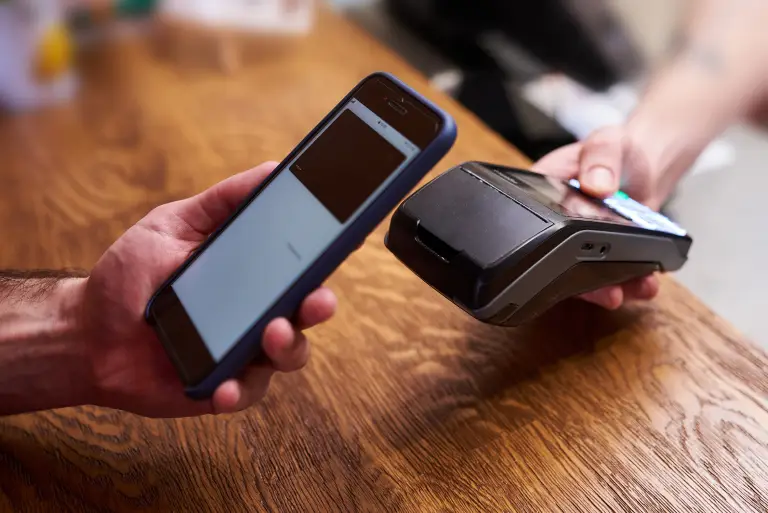
Simple Steps to Complete Your Payment Securely and Efficiently

Making a payment on our website is quick and secure. Start by logging in or creating an account. Select your preferred payment method, input the required details, and review the information. Once you confirm everything is correct, click on the "Submit Payment" button. You’ll receive instant confirmation and can track your payment status through your account dashboard. It’s an easy and secure process.

  • Go to the Payment Section: Access the payment area on our website or app.
  • Choose Your Payment Method: Select your preferred payment option.
  • Enter Payment Details: Provide the necessary payment information.
  • Verify Your Information: Check that all details are correct.
  • Confirm Your Payment: Click "Submit Payment" to complete the transaction.
img