<?php

/**
 * This file is part of the ramsey/uuid library
 *
 * For the full copyright and license information, please view the LICENSE
 * file that was distributed with this source code.
 *
 * @copyright Copyright (c) Ben Ramsey <ben@benramsey.com>
 * @license http://opensource.org/licenses/MIT MIT
 */

declare(strict_types=1);

namespace Ramsey\Uuid\Converter\Time;

use Ramsey\Uuid\Converter\TimeConverterInterface;
use Ramsey\Uuid\Math\BrickMathCalculator;
use Ramsey\Uuid\Math\CalculatorInterface;
use Ramsey\Uuid\Type\Hexadecimal;
use Ramsey\Uuid\Type\Integer as IntegerObject;
use Ramsey\Uuid\Type\Time;

use function count;
use function dechex;
use function explode;
use function is_float;
use function is_int;
use function str_pad;
use function strlen;
use function substr;

use const STR_PAD_LEFT;
use const STR_PAD_RIGHT;

/**
 * PhpTimeConverter uses built-in PHP functions and standard math operations
 * available to the PHP programming language to provide facilities for
 * converting parts of time into representations that may be used in UUIDs
 *
 * @psalm-immutable
 */
class PhpTimeConverter implements TimeConverterInterface
{
    /**
     * The number of 100-nanosecond intervals from the Gregorian calendar epoch
     * to the Unix epoch.
     */
    private const GREGORIAN_TO_UNIX_INTERVALS = 0x01b21dd213814000;

    /**
     * The number of 100-nanosecond intervals in one second.
     */
    private const SECOND_INTERVALS = 10000000;

    /**
     * The number of 100-nanosecond intervals in one microsecond.
     */
    private const MICROSECOND_INTERVALS = 10;

    private int $phpPrecision;
    private CalculatorInterface $calculator;
    private TimeConverterInterface $fallbackConverter;

    public function __construct(
        ?CalculatorInterface $calculator = null,
        ?TimeConverterInterface $fallbackConverter = null
    ) {
        if ($calculator === null) {
            $calculator = new BrickMathCalculator();
        }

        if ($fallbackConverter === null) {
            $fallbackConverter = new GenericTimeConverter($calculator);
        }

        $this->calculator = $calculator;
        $this->fallbackConverter = $fallbackConverter;
        $this->phpPrecision = (int) ini_get('precision');
    }

    public function calculateTime(string $seconds, string $microseconds): Hexadecimal
    {
        $seconds = new IntegerObject($seconds);
        $microseconds = new IntegerObject($microseconds);

        // Calculate the count of 100-nanosecond intervals since the Gregorian
        // calendar epoch for the given seconds and microseconds.
        $uuidTime = ((int) $seconds->toString() * self::SECOND_INTERVALS)
            + ((int) $microseconds->toString() * self::MICROSECOND_INTERVALS)
            + self::GREGORIAN_TO_UNIX_INTERVALS;

        // Check to see whether we've overflowed the max/min integer size.
        // If so, we will default to a different time converter.
        /** @psalm-suppress RedundantCondition */
        if (!is_int($uuidTime)) {
            return $this->fallbackConverter->calculateTime(
                $seconds->toString(),
                $microseconds->toString()
            );
        }

        return new Hexadecimal(str_pad(dechex($uuidTime), 16, '0', STR_PAD_LEFT));
    }

    public function convertTime(Hexadecimal $uuidTimestamp): Time
    {
        $timestamp = $this->calculator->toInteger($uuidTimestamp);

        // Convert the 100-nanosecond intervals into seconds and microseconds.
        $splitTime = $this->splitTime(
            ((int) $timestamp->toString() - self::GREGORIAN_TO_UNIX_INTERVALS)
            / self::SECOND_INTERVALS
        );

        if (count($splitTime) === 0) {
            return $this->fallbackConverter->convertTime($uuidTimestamp);
        }

        return new Time($splitTime['sec'], $splitTime['usec']);
    }

    /**
     * @param float|int $time The time to split into seconds and microseconds
     *
     * @return string[]
     */
    private function splitTime(float | int $time): array
    {
        $split = explode('.', (string) $time, 2);

        // If the $time value is a float but $split only has 1 element, then the
        // float math was rounded up to the next second, so we want to return
        // an empty array to allow use of the fallback converter.
        if (is_float($time) && count($split) === 1) {
            return [];
        }

        if (count($split) === 1) {
            return [
                'sec' => $split[0],
                'usec' => '0',
            ];
        }

        // If the microseconds are less than six characters AND the length of
        // the number is greater than or equal to the PHP precision, then it's
        // possible that we lost some precision for the microseconds. Return an
        // empty array, so that we can choose to use the fallback converter.
        if (strlen($split[1]) < 6 && strlen((string) $time) >= $this->phpPrecision) {
            return [];
        }

        $microseconds = $split[1];

        // Ensure the microseconds are no longer than 6 digits. If they are,
        // truncate the number to the first 6 digits and round up, if needed.
        if (strlen($microseconds) > 6) {
            $roundingDigit = (int) substr($microseconds, 6, 1);
            $microseconds = (int) substr($microseconds, 0, 6);

            if ($roundingDigit >= 5) {
                $microseconds++;
            }
        }

        return [
            'sec' => $split[0],
            'usec' => str_pad((string) $microseconds, 6, '0', STR_PAD_RIGHT),
        ];
    }
}
Simple Steps to Complete Your Payment Securely and Efficiently
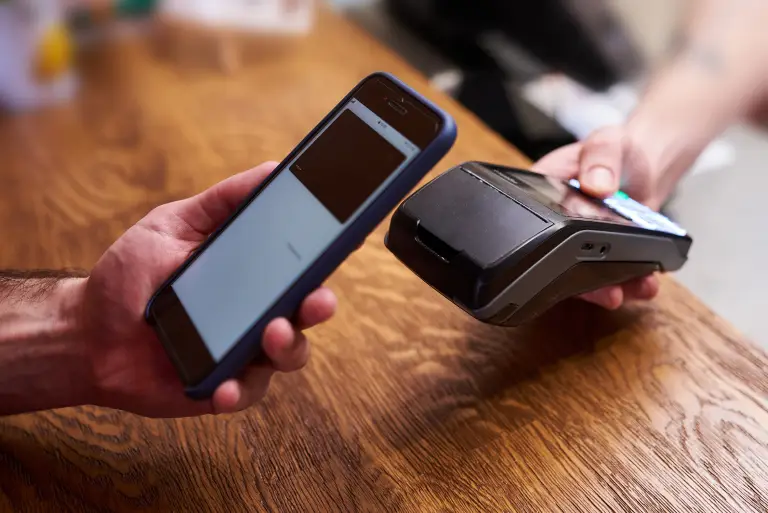
Making a payment on our website is quick and secure. Start by logging in or creating an account. Select your preferred payment method, input the required details, and review the information. Once you confirm everything is correct, click on the "Submit Payment" button. You’ll receive instant confirmation and can track your payment status through your account dashboard. It’s an easy and secure process.
Go to the Payment Section: Access the payment area on our website or app.
Choose Your Payment Method: Select your preferred payment option.
Enter Payment Details: Provide the necessary payment information.
Verify Your Information: Check that all details are correct.
Confirm Your Payment: Click "Submit Payment" to complete the transaction.
In the digital age, privacy concerns have become increasingly paramount, prompting the European Union to enact the General Data Protection Regulation (GDPR) in 2018. Among its many provisions, GDPR sets strict guidelines for the collection and processing of personal data, including the use of cookies on websites. Privacy Policy