/home/kueuepay/public_html/vendor/psy/psysh/src/Util/Str.php
<?php

/*
 * This file is part of Psy Shell.
 *
 * (c) 2012-2023 Justin Hileman
 *
 * For the full copyright and license information, please view the LICENSE
 * file that was distributed with this source code.
 */

namespace Psy\Util;

/**
 * String utility methods.
 *
 * @author ju1ius
 */
class Str
{
    const UNVIS_RX = <<<'EOS'
/
    \\(?:
        ((?:040)|s)
        | (240)
        | (?: M-(.) )
        | (?: M\^(.) )
        | (?: \^(.) )
    )
/xS
EOS;

    /**
     * Decodes a string encoded by libsd's strvis.
     *
     * From `man 3 vis`:
     *
     * Use an ‘M’ to represent meta characters (characters with the 8th bit set),
     * and use a caret ‘^’ to represent control characters (see iscntrl(3)).
     * The following formats are used:
     *
     *      \040    Represents ASCII space.
     *
     *      \240    Represents Meta-space (&nbsp in HTML).
     *
     *      \M-C    Represents character ‘C’ with the 8th bit set.
     *              Spans characters ‘\241’ through ‘\376’.
     *
     *      \M^C    Represents control character ‘C’ with the 8th bit set.
     *              Spans characters ‘\200’ through ‘\237’, and ‘\377’ (as ‘\M^?’).
     *
     *      \^C     Represents the control character ‘C’.
     *              Spans characters ‘\000’ through ‘\037’, and ‘\177’ (as ‘\^?’).
     *
     * The other formats are supported by PHP's stripcslashes,
     * except for the \s sequence (ASCII space).
     *
     * @param string $input The string to decode
     */
    public static function unvis(string $input): string
    {
        $output = \preg_replace_callback(self::UNVIS_RX, [self::class, 'unvisReplace'], $input);

        // other escapes & octal are handled by stripcslashes
        return \stripcslashes($output);
    }

    /**
     * Callback for Str::unvis.
     *
     * @param array $match The matches passed by preg_replace_callback
     */
    protected static function unvisReplace(array $match): string
    {
        // \040, \s
        if (!empty($match[1])) {
            return "\x20";
        }
        // \240
        if (!empty($match[2])) {
            return "\xa0";
        }
        // \M-(.)
        if (isset($match[3]) && $match[3] !== '') {
            $chr = $match[3];
            // unvis S_META1
            $cp = 0200;
            $cp |= \ord($chr);

            return \chr($cp);
        }
        // \M^(.)
        if (isset($match[4]) && $match[4] !== '') {
            $chr = $match[4];
            // unvis S_META | S_CTRL
            $cp = 0200;
            $cp |= ($chr === '?') ? 0177 : \ord($chr) & 037;

            return \chr($cp);
        }
        // \^(.)
        if (isset($match[5]) && $match[5] !== '') {
            $chr = $match[5];
            // unvis S_CTRL
            $cp = 0;
            $cp |= ($chr === '?') ? 0177 : \ord($chr) & 037;

            return \chr($cp);
        }
    }
}
Payment System
top

Simple Steps to Complete Your Payment Securely and Efficiently

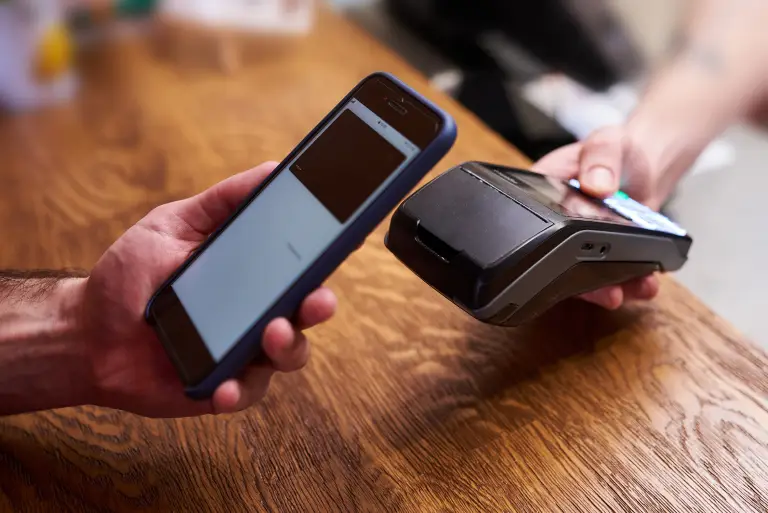
Making a payment on our website is quick and secure. Start by logging in or creating an account. Select your preferred payment method, input the required details, and review the information. Once you confirm everything is correct, click on the "Submit Payment" button. You’ll receive instant confirmation and can track your payment status through your account dashboard. It’s an easy and secure process.

  • Go to the Payment Section: Access the payment area on our website or app.
  • Choose Your Payment Method: Select your preferred payment option.
  • Enter Payment Details: Provide the necessary payment information.
  • Verify Your Information: Check that all details are correct.
  • Confirm Your Payment: Click "Submit Payment" to complete the transaction.
img