/home/kueuepay/public_html/vendor/phpunit/phpunit/src/Util/Json.php
<?php declare(strict_types=1);
/*
 * This file is part of PHPUnit.
 *
 * (c) Sebastian Bergmann <sebastian@phpunit.de>
 *
 * For the full copyright and license information, please view the LICENSE
 * file that was distributed with this source code.
 */
namespace PHPUnit\Util;

use const JSON_PRETTY_PRINT;
use const JSON_UNESCAPED_SLASHES;
use const JSON_UNESCAPED_UNICODE;
use function count;
use function is_array;
use function is_object;
use function json_decode;
use function json_encode;
use function json_last_error;
use function ksort;
use PHPUnit\Framework\Exception;

/**
 * @internal This class is not covered by the backward compatibility promise for PHPUnit
 */
final class Json
{
    /**
     * Prettify json string.
     *
     * @throws Exception
     */
    public static function prettify(string $json): string
    {
        $decodedJson = json_decode($json, false);

        if (json_last_error()) {
            throw new Exception(
                'Cannot prettify invalid json',
            );
        }

        return json_encode($decodedJson, JSON_PRETTY_PRINT | JSON_UNESCAPED_SLASHES | JSON_UNESCAPED_UNICODE);
    }

    /**
     * To allow comparison of JSON strings, first process them into a consistent
     * format so that they can be compared as strings.
     *
     * @return array ($error, $canonicalized_json)  The $error parameter is used
     *               to indicate an error decoding the json. This is used to avoid ambiguity
     *               with JSON strings consisting entirely of 'null' or 'false'.
     */
    public static function canonicalize(string $json): array
    {
        $decodedJson = json_decode($json);

        if (json_last_error()) {
            return [true, null];
        }

        self::recursiveSort($decodedJson);

        $reencodedJson = json_encode($decodedJson);

        return [false, $reencodedJson];
    }

    /**
     * JSON object keys are unordered while PHP array keys are ordered.
     *
     * Sort all array keys to ensure both the expected and actual values have
     * their keys in the same order.
     */
    private static function recursiveSort(&$json): void
    {
        if (!is_array($json)) {
            // If the object is not empty, change it to an associative array
            // so we can sort the keys (and we will still re-encode it
            // correctly, since PHP encodes associative arrays as JSON objects.)
            // But EMPTY objects MUST remain empty objects. (Otherwise we will
            // re-encode it as a JSON array rather than a JSON object.)
            // See #2919.
            if (is_object($json) && count((array) $json) > 0) {
                $json = (array) $json;
            } else {
                return;
            }
        }

        ksort($json);

        foreach ($json as $key => &$value) {
            self::recursiveSort($value);
        }
    }
}
Payment System
top

Simple Steps to Complete Your Payment Securely and Efficiently

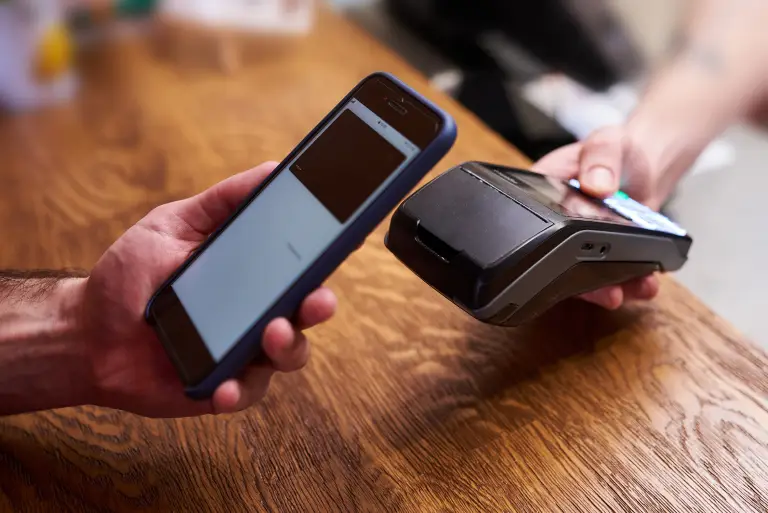
Making a payment on our website is quick and secure. Start by logging in or creating an account. Select your preferred payment method, input the required details, and review the information. Once you confirm everything is correct, click on the "Submit Payment" button. You’ll receive instant confirmation and can track your payment status through your account dashboard. It’s an easy and secure process.

  • Go to the Payment Section: Access the payment area on our website or app.
  • Choose Your Payment Method: Select your preferred payment option.
  • Enter Payment Details: Provide the necessary payment information.
  • Verify Your Information: Check that all details are correct.
  • Confirm Your Payment: Click "Submit Payment" to complete the transaction.
img