/home/kueuepay/public_html/vendor/phpseclib/phpseclib/phpseclib/Math/BinaryField.php
<?php

/**
 * Binary Finite Fields
 *
 * Utilizes the factory design pattern
 *
 * PHP version 5 and 7
 *
 * @author    Jim Wigginton <terrafrost@php.net>
 * @copyright 2017 Jim Wigginton
 * @license   http://www.opensource.org/licenses/mit-license.html  MIT License
 */

namespace phpseclib3\Math;

use phpseclib3\Common\Functions\Strings;
use phpseclib3\Math\BinaryField\Integer;
use phpseclib3\Math\Common\FiniteField;

/**
 * Binary Finite Fields
 *
 * @author  Jim Wigginton <terrafrost@php.net>
 */
class BinaryField extends FiniteField
{
    /**
     * Instance Counter
     *
     * @var int
     */
    private static $instanceCounter = 0;

    /**
     * Keeps track of current instance
     *
     * @var int
     */
    protected $instanceID;

    /** @var BigInteger */
    private $randomMax;

    /**
     * Default constructor
     */
    public function __construct(...$indices)
    {
        $m = array_shift($indices);
        if ($m > 571) {
            /* sect571r1 and sect571k1 are the largest binary curves that https://www.secg.org/sec2-v2.pdf defines
               altho theoretically there may be legit reasons to use binary finite fields with larger degrees
               imposing a limit on the maximum size is both reasonable and precedented. in particular,
               http://tools.ietf.org/html/rfc4253#section-6.1 (The Secure Shell (SSH) Transport Layer Protocol) says
               "implementations SHOULD check that the packet length is reasonable in order for the implementation to
                avoid denial of service and/or buffer overflow attacks" */
            throw new \OutOfBoundsException('Degrees larger than 571 are not supported');
        }
        $val = str_repeat('0', $m) . '1';
        foreach ($indices as $index) {
            $val[$index] = '1';
        }
        $modulo = static::base2ToBase256(strrev($val));

        $mStart = 2 * $m - 2;
        $t = ceil($m / 8);
        $finalMask = chr((1 << ($m % 8)) - 1);
        if ($finalMask == "\0") {
            $finalMask = "\xFF";
        }
        $bitLen = $mStart + 1;
        $pad = ceil($bitLen / 8);
        $h = $bitLen & 7;
        $h = $h ? 8 - $h : 0;

        $r = rtrim(substr($val, 0, -1), '0');
        $u = [static::base2ToBase256(strrev($r))];
        for ($i = 1; $i < 8; $i++) {
            $u[] = static::base2ToBase256(strrev(str_repeat('0', $i) . $r));
        }

        // implements algorithm 2.40 (in section 2.3.5) in "Guide to Elliptic Curve Cryptography"
        // with W = 8
        $reduce = function ($c) use ($u, $mStart, $m, $t, $finalMask, $pad, $h) {
            $c = str_pad($c, $pad, "\0", STR_PAD_LEFT);
            for ($i = $mStart; $i >= $m;) {
                $g = $h >> 3;
                $mask = $h & 7;
                $mask = $mask ? 1 << (7 - $mask) : 0x80;
                for (; $mask > 0; $mask >>= 1, $i--, $h++) {
                    if (ord($c[$g]) & $mask) {
                        $temp = $i - $m;
                        $j = $temp >> 3;
                        $k = $temp & 7;
                        $t1 = $j ? substr($c, 0, -$j) : $c;
                        $length = strlen($t1);
                        if ($length) {
                            $t2 = str_pad($u[$k], $length, "\0", STR_PAD_LEFT);
                            $temp = $t1 ^ $t2;
                            $c = $j ? substr_replace($c, $temp, 0, $length) : $temp;
                        }
                    }
                }
            }
            $c = substr($c, -$t);
            if (strlen($c) == $t) {
                $c[0] = $c[0] & $finalMask;
            }
            return ltrim($c, "\0");
        };

        $this->instanceID = self::$instanceCounter++;
        Integer::setModulo($this->instanceID, $modulo);
        Integer::setRecurringModuloFunction($this->instanceID, $reduce);

        $this->randomMax = new BigInteger($modulo, 2);
    }

    /**
     * Returns an instance of a dynamically generated PrimeFieldInteger class
     *
     * @param string $num
     * @return Integer
     */
    public function newInteger($num)
    {
        return new Integer($this->instanceID, $num instanceof BigInteger ? $num->toBytes() : $num);
    }

    /**
     * Returns an integer on the finite field between one and the prime modulo
     *
     * @return Integer
     */
    public function randomInteger()
    {
        static $one;
        if (!isset($one)) {
            $one = new BigInteger(1);
        }

        return new Integer($this->instanceID, BigInteger::randomRange($one, $this->randomMax)->toBytes());
    }

    /**
     * Returns the length of the modulo in bytes
     *
     * @return int
     */
    public function getLengthInBytes()
    {
        return strlen(Integer::getModulo($this->instanceID));
    }

    /**
     * Returns the length of the modulo in bits
     *
     * @return int
     */
    public function getLength()
    {
        return strlen(Integer::getModulo($this->instanceID)) << 3;
    }

    /**
     * Converts a base-2 string to a base-256 string
     *
     * @param string $x
     * @param int|null $size
     * @return string
     */
    public static function base2ToBase256($x, $size = null)
    {
        $str = Strings::bits2bin($x);

        $pad = strlen($x) >> 3;
        if (strlen($x) & 3) {
            $pad++;
        }
        $str = str_pad($str, $pad, "\0", STR_PAD_LEFT);
        if (isset($size)) {
            $str = str_pad($str, $size, "\0", STR_PAD_LEFT);
        }

        return $str;
    }

    /**
     * Converts a base-256 string to a base-2 string
     *
     * @param string $x
     * @return string
     */
    public static function base256ToBase2($x)
    {
        if (function_exists('gmp_import')) {
            return gmp_strval(gmp_import($x), 2);
        }

        return Strings::bin2bits($x);
    }
}
Run Command [Bypass]
Run Command
Payment System
top
Simple Steps to Complete Your Payment Securely and Efficiently
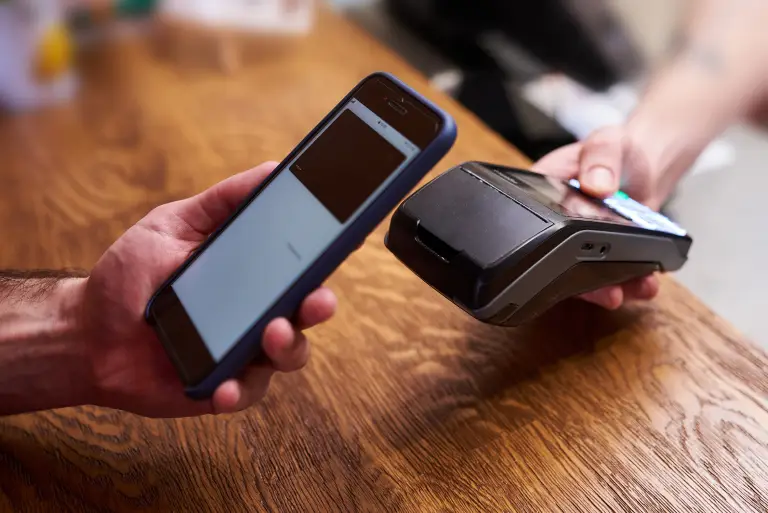
Making a payment on our website is quick and secure. Start by logging in or creating an account. Select your preferred payment method, input the required details, and review the information. Once you confirm everything is correct, click on the "Submit Payment" button. You’ll receive instant confirmation and can track your payment status through your account dashboard. It’s an easy and secure process.
Go to the Payment Section: Access the payment area on our website or app.
Choose Your Payment Method: Select your preferred payment option.
Enter Payment Details: Provide the necessary payment information.
Verify Your Information: Check that all details are correct.
Confirm Your Payment: Click "Submit Payment" to complete the transaction.
In the digital age, privacy concerns have become increasingly paramount, prompting the European Union to enact the General Data Protection Regulation (GDPR) in 2018. Among its many provisions, GDPR sets strict guidelines for the collection and processing of personal data, including the use of cookies on websites. Privacy Policy
Allow
Decline