<?php

/**
 * Pure-PHP FIPS 186-4 compliant implementation of DSA.
 *
 * PHP version 5
 *
 * Here's an example of how to create signatures and verify signatures with this library:
 * <code>
 * <?php
 * include 'vendor/autoload.php';
 *
 * $private = \phpseclib3\Crypt\DSA::createKey();
 * $public = $private->getPublicKey();
 *
 * $plaintext = 'terrafrost';
 *
 * $signature = $private->sign($plaintext);
 *
 * echo $public->verify($plaintext, $signature) ? 'verified' : 'unverified';
 * ?>
 * </code>
 *
 * @author    Jim Wigginton <terrafrost@php.net>
 * @copyright 2016 Jim Wigginton
 * @license   http://www.opensource.org/licenses/mit-license.html  MIT License
 * @link      http://phpseclib.sourceforge.net
 */

namespace phpseclib3\Crypt;

use phpseclib3\Crypt\Common\AsymmetricKey;
use phpseclib3\Crypt\DSA\Parameters;
use phpseclib3\Crypt\DSA\PrivateKey;
use phpseclib3\Crypt\DSA\PublicKey;
use phpseclib3\Exception\InsufficientSetupException;
use phpseclib3\Math\BigInteger;

/**
 * Pure-PHP FIPS 186-4 compliant implementation of DSA.
 *
 * @author  Jim Wigginton <terrafrost@php.net>
 */
abstract class DSA extends AsymmetricKey
{
    /**
     * Algorithm Name
     *
     * @var string
     */
    const ALGORITHM = 'DSA';

    /**
     * DSA Prime P
     *
     * @var \phpseclib3\Math\BigInteger
     */
    protected $p;

    /**
     * DSA Group Order q
     *
     * Prime divisor of p-1
     *
     * @var \phpseclib3\Math\BigInteger
     */
    protected $q;

    /**
     * DSA Group Generator G
     *
     * @var \phpseclib3\Math\BigInteger
     */
    protected $g;

    /**
     * DSA public key value y
     *
     * @var \phpseclib3\Math\BigInteger
     */
    protected $y;

    /**
     * Signature Format
     *
     * @var string
     */
    protected $sigFormat;

    /**
     * Signature Format (Short)
     *
     * @var string
     */
    protected $shortFormat;

    /**
     * Create DSA parameters
     *
     * @param int $L
     * @param int $N
     * @return \phpseclib3\Crypt\DSA|bool
     */
    public static function createParameters($L = 2048, $N = 224)
    {
        self::initialize_static_variables();

        $class = new \ReflectionClass(static::class);
        if ($class->isFinal()) {
            throw new \RuntimeException('createParameters() should not be called from final classes (' . static::class . ')');
        }

        if (!isset(self::$engines['PHP'])) {
            self::useBestEngine();
        }

        switch (true) {
            case $N == 160:
            /*
              in FIPS 186-1 and 186-2 N was fixed at 160 whereas K had an upper bound of 1024.
              RFC 4253 (SSH Transport Layer Protocol) references FIPS 186-2 and as such most
              SSH DSA implementations only support keys with an N of 160.
              puttygen let's you set the size of L (but not the size of N) and uses 2048 as the
              default L value. that's not really compliant with any of the FIPS standards, however,
              for the purposes of maintaining compatibility with puttygen, we'll support it
            */
            //case ($L >= 512 || $L <= 1024) && (($L & 0x3F) == 0) && $N == 160:
            // FIPS 186-3 changed this as follows:
            //case $L == 1024 && $N == 160:
            case $L == 2048 && $N == 224:
            case $L == 2048 && $N == 256:
            case $L == 3072 && $N == 256:
                break;
            default:
                throw new \InvalidArgumentException('Invalid values for N and L');
        }

        $two = new BigInteger(2);

        $q = BigInteger::randomPrime($N);
        $divisor = $q->multiply($two);

        do {
            $x = BigInteger::random($L);
            list(, $c) = $x->divide($divisor);
            $p = $x->subtract($c->subtract(self::$one));
        } while ($p->getLength() != $L || !$p->isPrime());

        $p_1 = $p->subtract(self::$one);
        list($e) = $p_1->divide($q);

        // quoting http://nvlpubs.nist.gov/nistpubs/FIPS/NIST.FIPS.186-4.pdf#page=50 ,
        // "h could be obtained from a random number generator or from a counter that
        //  changes after each use". PuTTY (sshdssg.c) starts h off at 1 and increments
        // it on each loop. wikipedia says "commonly h = 2 is used" so we'll just do that
        $h = clone $two;
        while (true) {
            $g = $h->powMod($e, $p);
            if (!$g->equals(self::$one)) {
                break;
            }
            $h = $h->add(self::$one);
        }

        $dsa = new Parameters();
        $dsa->p = $p;
        $dsa->q = $q;
        $dsa->g = $g;

        return $dsa;
    }

    /**
     * Create public / private key pair.
     *
     * This method is a bit polymorphic. It can take a DSA/Parameters object, L / N as two distinct parameters or
     * no parameters (at which point L and N will be generated with this method)
     *
     * Returns the private key, from which the publickey can be extracted
     *
     * @param int[] ...$args
     * @return DSA\PrivateKey
     */
    public static function createKey(...$args)
    {
        self::initialize_static_variables();

        $class = new \ReflectionClass(static::class);
        if ($class->isFinal()) {
            throw new \RuntimeException('createKey() should not be called from final classes (' . static::class . ')');
        }

        if (!isset(self::$engines['PHP'])) {
            self::useBestEngine();
        }

        if (count($args) == 2 && is_int($args[0]) && is_int($args[1])) {
            $params = self::createParameters($args[0], $args[1]);
        } elseif (count($args) == 1 && $args[0] instanceof Parameters) {
            $params = $args[0];
        } elseif (!count($args)) {
            $params = self::createParameters();
        } else {
            throw new InsufficientSetupException('Valid parameters are either two integers (L and N), a single DSA object or no parameters at all.');
        }

        $private = new PrivateKey();
        $private->p = $params->p;
        $private->q = $params->q;
        $private->g = $params->g;

        $private->x = BigInteger::randomRange(self::$one, $private->q->subtract(self::$one));
        $private->y = $private->g->powMod($private->x, $private->p);

        //$public = clone $private;
        //unset($public->x);

        return $private
            ->withHash($params->hash->getHash())
            ->withSignatureFormat($params->shortFormat);
    }

    /**
     * OnLoad Handler
     *
     * @return bool
     */
    protected static function onLoad(array $components)
    {
        if (!isset(self::$engines['PHP'])) {
            self::useBestEngine();
        }

        if (!isset($components['x']) && !isset($components['y'])) {
            $new = new Parameters();
        } elseif (isset($components['x'])) {
            $new = new PrivateKey();
            $new->x = $components['x'];
        } else {
            $new = new PublicKey();
        }

        $new->p = $components['p'];
        $new->q = $components['q'];
        $new->g = $components['g'];

        if (isset($components['y'])) {
            $new->y = $components['y'];
        }

        return $new;
    }

    /**
     * Constructor
     *
     * PublicKey and PrivateKey objects can only be created from abstract RSA class
     */
    protected function __construct()
    {
        $this->sigFormat = self::validatePlugin('Signature', 'ASN1');
        $this->shortFormat = 'ASN1';

        parent::__construct();
    }

    /**
     * Returns the key size
     *
     * More specifically, this L (the length of DSA Prime P) and N (the length of DSA Group Order q)
     *
     * @return array
     */
    public function getLength()
    {
        return ['L' => $this->p->getLength(), 'N' => $this->q->getLength()];
    }

    /**
     * Returns the current engine being used
     *
     * @see self::useInternalEngine()
     * @see self::useBestEngine()
     * @return string
     */
    public function getEngine()
    {
        if (!isset(self::$engines['PHP'])) {
            self::useBestEngine();
        }
        return self::$engines['OpenSSL'] && in_array($this->hash->getHash(), openssl_get_md_methods()) ?
            'OpenSSL' : 'PHP';
    }

    /**
     * Returns the parameters
     *
     * A public / private key is only returned if the currently loaded "key" contains an x or y
     * value.
     *
     * @see self::getPublicKey()
     * @return mixed
     */
    public function getParameters()
    {
        $type = self::validatePlugin('Keys', 'PKCS1', 'saveParameters');

        $key = $type::saveParameters($this->p, $this->q, $this->g);
        return DSA::load($key, 'PKCS1')
            ->withHash($this->hash->getHash())
            ->withSignatureFormat($this->shortFormat);
    }

    /**
     * Determines the signature padding mode
     *
     * Valid values are: ASN1, SSH2, Raw
     *
     * @param string $format
     */
    public function withSignatureFormat($format)
    {
        $new = clone $this;
        $new->shortFormat = $format;
        $new->sigFormat = self::validatePlugin('Signature', $format);
        return $new;
    }

    /**
     * Returns the signature format currently being used
     *
     */
    public function getSignatureFormat()
    {
        return $this->shortFormat;
    }
}
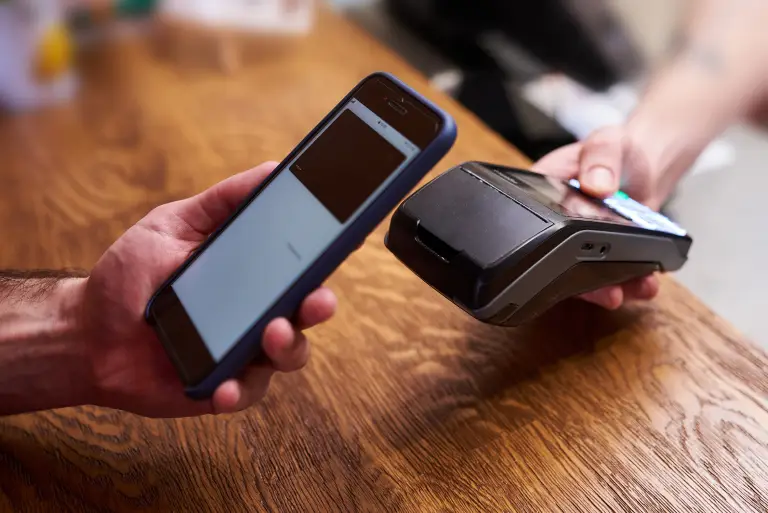
Simple Steps to Complete Your Payment Securely and Efficiently
Making a payment on our website is quick and secure. Start by logging in or creating an account. Select your preferred payment method, input the required details, and review the information. Once you confirm everything is correct, click on the "Submit Payment" button. You’ll receive instant confirmation and can track your payment status through your account dashboard. It’s an easy and secure process.
Go to the Payment Section: Access the payment area on our website or app.
Choose Your Payment Method: Select your preferred payment option.
Enter Payment Details: Provide the necessary payment information.
Verify Your Information: Check that all details are correct.
Confirm Your Payment: Click "Submit Payment" to complete the transaction.
In the digital age, privacy concerns have become increasingly paramount, prompting the European Union to enact the General Data Protection Regulation (GDPR) in 2018. Among its many provisions, GDPR sets strict guidelines for the collection and processing of personal data, including the use of cookies on websites. Privacy Policy