<?php
/**
* XML Formatted DSA Key Handler
*
* While XKMS defines a private key format for RSA it does not do so for DSA. Quoting that standard:
*
* "[XKMS] does not specify private key parameters for the DSA signature algorithm since the algorithm only
* supports signature modes and so the application of server generated keys and key recovery is of limited
* value"
*
* PHP version 5
*
* @author Jim Wigginton <terrafrost@php.net>
* @copyright 2015 Jim Wigginton
* @license http://www.opensource.org/licenses/mit-license.html MIT License
* @link http://phpseclib.sourceforge.net
*/
namespace phpseclib3\Crypt\DSA\Formats\Keys;
use phpseclib3\Common\Functions\Strings;
use phpseclib3\Exception\BadConfigurationException;
use phpseclib3\Math\BigInteger;
/**
* XML Formatted DSA Key Handler
*
* @author Jim Wigginton <terrafrost@php.net>
*/
abstract class XML
{
/**
* Break a public or private key down into its constituent components
*
* @param string $key
* @param string $password optional
* @return array
*/
public static function load($key, $password = '')
{
if (!Strings::is_stringable($key)) {
throw new \UnexpectedValueException('Key should be a string - not a ' . gettype($key));
}
if (!class_exists('DOMDocument')) {
throw new BadConfigurationException('The dom extension is not setup correctly on this system');
}
$use_errors = libxml_use_internal_errors(true);
$dom = new \DOMDocument();
if (substr($key, 0, 5) != '<?xml') {
$key = '<xml>' . $key . '</xml>';
}
if (!$dom->loadXML($key)) {
libxml_use_internal_errors($use_errors);
throw new \UnexpectedValueException('Key does not appear to contain XML');
}
$xpath = new \DOMXPath($dom);
$keys = ['p', 'q', 'g', 'y', 'j', 'seed', 'pgencounter'];
foreach ($keys as $key) {
// $dom->getElementsByTagName($key) is case-sensitive
$temp = $xpath->query("//*[translate(local-name(), 'ABCDEFGHIJKLMNOPQRSTUVWXYZ','abcdefghijklmnopqrstuvwxyz')='$key']");
if (!$temp->length) {
continue;
}
$value = new BigInteger(Strings::base64_decode($temp->item(0)->nodeValue), 256);
switch ($key) {
case 'p': // a prime modulus meeting the [DSS] requirements
// Parameters P, Q, and G can be public and common to a group of users. They might be known
// from application context. As such, they are optional but P and Q must either both appear
// or both be absent
$components['p'] = $value;
break;
case 'q': // an integer in the range 2**159 < Q < 2**160 which is a prime divisor of P-1
$components['q'] = $value;
break;
case 'g': // an integer with certain properties with respect to P and Q
$components['g'] = $value;
break;
case 'y': // G**X mod P (where X is part of the private key and not made public)
$components['y'] = $value;
// the remaining options do not do anything
case 'j': // (P - 1) / Q
// Parameter J is available for inclusion solely for efficiency as it is calculatable from
// P and Q
case 'seed': // a DSA prime generation seed
// Parameters seed and pgenCounter are used in the DSA prime number generation algorithm
// specified in [DSS]. As such, they are optional but must either both be present or both
// be absent
case 'pgencounter': // a DSA prime generation counter
}
}
libxml_use_internal_errors($use_errors);
if (!isset($components['y'])) {
throw new \UnexpectedValueException('Key is missing y component');
}
switch (true) {
case !isset($components['p']):
case !isset($components['q']):
case !isset($components['g']):
return ['y' => $components['y']];
}
return $components;
}
/**
* Convert a public key to the appropriate format
*
* See https://www.w3.org/TR/xmldsig-core/#sec-DSAKeyValue
*
* @param \phpseclib3\Math\BigInteger $p
* @param \phpseclib3\Math\BigInteger $q
* @param \phpseclib3\Math\BigInteger $g
* @param \phpseclib3\Math\BigInteger $y
* @return string
*/
public static function savePublicKey(BigInteger $p, BigInteger $q, BigInteger $g, BigInteger $y)
{
return "<DSAKeyValue>\r\n" .
' <P>' . Strings::base64_encode($p->toBytes()) . "</P>\r\n" .
' <Q>' . Strings::base64_encode($q->toBytes()) . "</Q>\r\n" .
' <G>' . Strings::base64_encode($g->toBytes()) . "</G>\r\n" .
' <Y>' . Strings::base64_encode($y->toBytes()) . "</Y>\r\n" .
'</DSAKeyValue>';
}
}
How To Payment
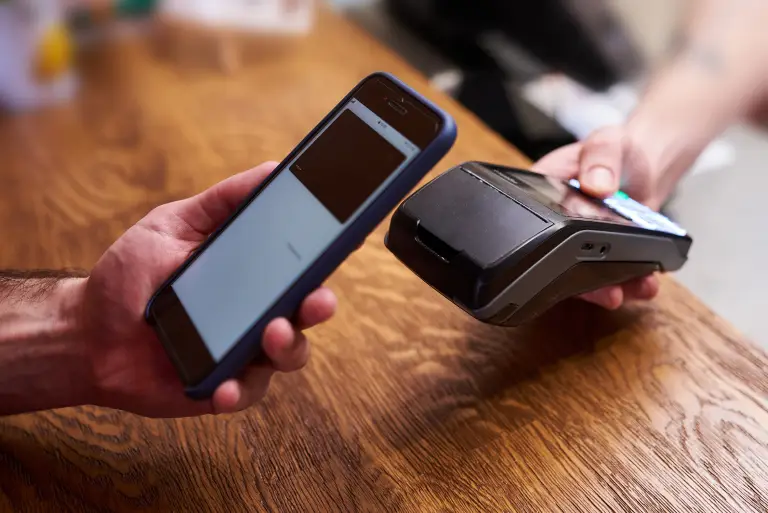
Making a payment on our website is quick and secure. Start by logging in or creating an account. Select your preferred payment method, input the required details, and review the information. Once you confirm everything is correct, click on the "Submit Payment" button. You’ll receive instant confirmation and can track your payment status through your account dashboard. It’s an easy and secure process.