<?php

namespace PhpOffice\PhpSpreadsheet;

use PhpOffice\PhpSpreadsheet\Reader\IReader;
use PhpOffice\PhpSpreadsheet\Shared\File;
use PhpOffice\PhpSpreadsheet\Writer\IWriter;

/**
 * Factory to create readers and writers easily.
 *
 * It is not required to use this class, but it should make it easier to read and write files.
 * Especially for reading files with an unknown format.
 */
abstract class IOFactory
{
    public const READER_XLSX = 'Xlsx';
    public const READER_XLS = 'Xls';
    public const READER_XML = 'Xml';
    public const READER_ODS = 'Ods';
    public const READER_SYLK = 'Slk';
    public const READER_SLK = 'Slk';
    public const READER_GNUMERIC = 'Gnumeric';
    public const READER_HTML = 'Html';
    public const READER_CSV = 'Csv';

    public const WRITER_XLSX = 'Xlsx';
    public const WRITER_XLS = 'Xls';
    public const WRITER_ODS = 'Ods';
    public const WRITER_CSV = 'Csv';
    public const WRITER_HTML = 'Html';

    /** @var string[] */
    private static $readers = [
        self::READER_XLSX => Reader\Xlsx::class,
        self::READER_XLS => Reader\Xls::class,
        self::READER_XML => Reader\Xml::class,
        self::READER_ODS => Reader\Ods::class,
        self::READER_SLK => Reader\Slk::class,
        self::READER_GNUMERIC => Reader\Gnumeric::class,
        self::READER_HTML => Reader\Html::class,
        self::READER_CSV => Reader\Csv::class,
    ];

    /** @var string[] */
    private static $writers = [
        self::WRITER_XLS => Writer\Xls::class,
        self::WRITER_XLSX => Writer\Xlsx::class,
        self::WRITER_ODS => Writer\Ods::class,
        self::WRITER_CSV => Writer\Csv::class,
        self::WRITER_HTML => Writer\Html::class,
        'Tcpdf' => Writer\Pdf\Tcpdf::class,
        'Dompdf' => Writer\Pdf\Dompdf::class,
        'Mpdf' => Writer\Pdf\Mpdf::class,
    ];

    /**
     * Create Writer\IWriter.
     */
    public static function createWriter(Spreadsheet $spreadsheet, string $writerType): IWriter
    {
        if (!isset(self::$writers[$writerType])) {
            throw new Writer\Exception("No writer found for type $writerType");
        }

        // Instantiate writer
        /** @var IWriter */
        $className = self::$writers[$writerType];

        return new $className($spreadsheet);
    }

    /**
     * Create IReader.
     */
    public static function createReader(string $readerType): IReader
    {
        if (!isset(self::$readers[$readerType])) {
            throw new Reader\Exception("No reader found for type $readerType");
        }

        // Instantiate reader
        /** @var IReader */
        $className = self::$readers[$readerType];

        return new $className();
    }

    /**
     * Loads Spreadsheet from file using automatic Reader\IReader resolution.
     *
     * @param string $filename The name of the spreadsheet file
     * @param int $flags the optional second parameter flags may be used to identify specific elements
     *                       that should be loaded, but which won't be loaded by default, using these values:
     *                            IReader::LOAD_WITH_CHARTS - Include any charts that are defined in the loaded file.
     *                            IReader::READ_DATA_ONLY - Read cell values only, not formatting or merge structure.
     *                            IReader::IGNORE_EMPTY_CELLS - Don't load empty cells into the model.
     * @param string[] $readers An array of Readers to use to identify the file type. By default, load() will try
     *                             all possible Readers until it finds a match; but this allows you to pass in a
     *                             list of Readers so it will only try the subset that you specify here.
     *                          Values in this list can be any of the constant values defined in the set
     *                                 IOFactory::READER_*.
     */
    public static function load(string $filename, int $flags = 0, ?array $readers = null): Spreadsheet
    {
        $reader = self::createReaderForFile($filename, $readers);

        return $reader->load($filename, $flags);
    }

    /**
     * Identify file type using automatic IReader resolution.
     */
    public static function identify(string $filename, ?array $readers = null): string
    {
        $reader = self::createReaderForFile($filename, $readers);
        $className = get_class($reader);
        $classType = explode('\\', $className);
        unset($reader);

        return array_pop($classType);
    }

    /**
     * Create Reader\IReader for file using automatic IReader resolution.
     *
     * @param string[] $readers An array of Readers to use to identify the file type. By default, load() will try
     *                             all possible Readers until it finds a match; but this allows you to pass in a
     *                             list of Readers so it will only try the subset that you specify here.
     *                          Values in this list can be any of the constant values defined in the set
     *                                 IOFactory::READER_*.
     */
    public static function createReaderForFile(string $filename, ?array $readers = null): IReader
    {
        File::assertFile($filename);

        $testReaders = self::$readers;
        if ($readers !== null) {
            $readers = array_map('strtoupper', $readers);
            $testReaders = array_filter(
                self::$readers,
                function (string $readerType) use ($readers) {
                    return in_array(strtoupper($readerType), $readers, true);
                },
                ARRAY_FILTER_USE_KEY
            );
        }

        // First, lucky guess by inspecting file extension
        $guessedReader = self::getReaderTypeFromExtension($filename);
        if (($guessedReader !== null) && array_key_exists($guessedReader, $testReaders)) {
            $reader = self::createReader($guessedReader);

            // Let's see if we are lucky
            if ($reader->canRead($filename)) {
                return $reader;
            }
        }

        // If we reach here then "lucky guess" didn't give any result
        // Try walking through all the options in self::$readers (or the selected subset)
        foreach ($testReaders as $readerType => $class) {
            //    Ignore our original guess, we know that won't work
            if ($readerType !== $guessedReader) {
                $reader = self::createReader($readerType);
                if ($reader->canRead($filename)) {
                    return $reader;
                }
            }
        }

        throw new Reader\Exception('Unable to identify a reader for this file');
    }

    /**
     * Guess a reader type from the file extension, if any.
     */
    private static function getReaderTypeFromExtension(string $filename): ?string
    {
        $pathinfo = pathinfo($filename);
        if (!isset($pathinfo['extension'])) {
            return null;
        }

        switch (strtolower($pathinfo['extension'])) {
            case 'xlsx': // Excel (OfficeOpenXML) Spreadsheet
            case 'xlsm': // Excel (OfficeOpenXML) Macro Spreadsheet (macros will be discarded)
            case 'xltx': // Excel (OfficeOpenXML) Template
            case 'xltm': // Excel (OfficeOpenXML) Macro Template (macros will be discarded)
                return 'Xlsx';
            case 'xls': // Excel (BIFF) Spreadsheet
            case 'xlt': // Excel (BIFF) Template
                return 'Xls';
            case 'ods': // Open/Libre Offic Calc
            case 'ots': // Open/Libre Offic Calc Template
                return 'Ods';
            case 'slk':
                return 'Slk';
            case 'xml': // Excel 2003 SpreadSheetML
                return 'Xml';
            case 'gnumeric':
                return 'Gnumeric';
            case 'htm':
            case 'html':
                return 'Html';
            case 'csv':
                // Do nothing
                // We must not try to use CSV reader since it loads
                // all files including Excel files etc.
                return null;
            default:
                return null;
        }
    }

    /**
     * Register a writer with its type and class name.
     */
    public static function registerWriter(string $writerType, string $writerClass): void
    {
        if (!is_a($writerClass, IWriter::class, true)) {
            throw new Writer\Exception('Registered writers must implement ' . IWriter::class);
        }

        self::$writers[$writerType] = $writerClass;
    }

    /**
     * Register a reader with its type and class name.
     */
    public static function registerReader(string $readerType, string $readerClass): void
    {
        if (!is_a($readerClass, IReader::class, true)) {
            throw new Reader\Exception('Registered readers must implement ' . IReader::class);
        }

        self::$readers[$readerType] = $readerClass;
    }
}
Simple Steps to Complete Your Payment Securely and Efficiently
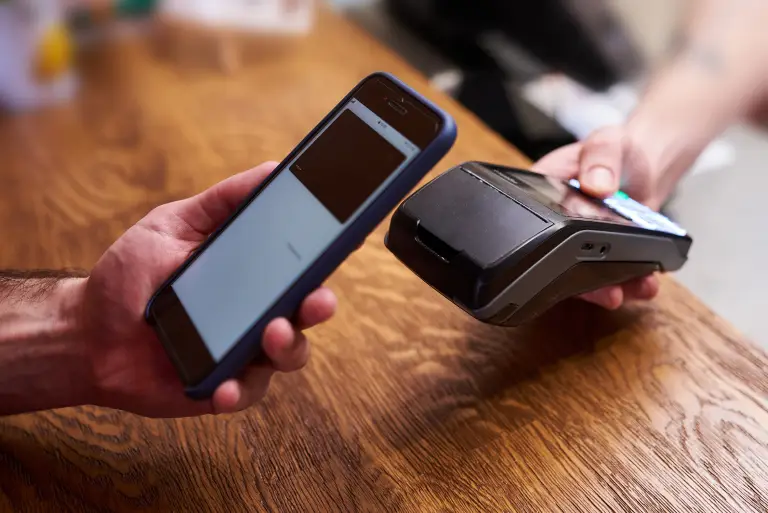
Making a payment on our website is quick and secure. Start by logging in or creating an account. Select your preferred payment method, input the required details, and review the information. Once you confirm everything is correct, click on the "Submit Payment" button. You’ll receive instant confirmation and can track your payment status through your account dashboard. It’s an easy and secure process.
Go to the Payment Section: Access the payment area on our website or app.
Choose Your Payment Method: Select your preferred payment option.
Enter Payment Details: Provide the necessary payment information.
Verify Your Information: Check that all details are correct.
Confirm Your Payment: Click "Submit Payment" to complete the transaction.
In the digital age, privacy concerns have become increasingly paramount, prompting the European Union to enact the General Data Protection Regulation (GDPR) in 2018. Among its many provisions, GDPR sets strict guidelines for the collection and processing of personal data, including the use of cookies on websites. Privacy Policy