/home/kueuepay/public_html/vendor/paragonie/sodium_compat/src/Core/SipHash.php
<?php

if (class_exists('ParagonIE_Sodium_Core_SipHash', false)) {
    return;
}

/**
 * Class ParagonIE_SodiumCompat_Core_SipHash
 *
 * Only uses 32-bit arithmetic, while the original SipHash used 64-bit integers
 */
class ParagonIE_Sodium_Core_SipHash extends ParagonIE_Sodium_Core_Util
{
    /**
     * @internal You should not use this directly from another application
     *
     * @param int[] $v
     * @return int[]
     *
     */
    public static function sipRound(array $v)
    {
        # v0 += v1;
        list($v[0], $v[1]) = self::add(
            array($v[0], $v[1]),
            array($v[2], $v[3])
        );

        #  v1=ROTL(v1,13);
        list($v[2], $v[3]) = self::rotl_64((int) $v[2], (int) $v[3], 13);

        #  v1 ^= v0;
        $v[2] = (int) $v[2] ^ (int) $v[0];
        $v[3] = (int) $v[3] ^ (int) $v[1];

        #  v0=ROTL(v0,32);
        list($v[0], $v[1]) = self::rotl_64((int) $v[0], (int) $v[1], 32);

        # v2 += v3;
        list($v[4], $v[5]) = self::add(
            array((int) $v[4], (int) $v[5]),
            array((int) $v[6], (int) $v[7])
        );

        # v3=ROTL(v3,16);
        list($v[6], $v[7]) = self::rotl_64((int) $v[6], (int) $v[7], 16);

        #  v3 ^= v2;
        $v[6] = (int) $v[6] ^ (int) $v[4];
        $v[7] = (int) $v[7] ^ (int) $v[5];

        # v0 += v3;
        list($v[0], $v[1]) = self::add(
            array((int) $v[0], (int) $v[1]),
            array((int) $v[6], (int) $v[7])
        );

        # v3=ROTL(v3,21);
        list($v[6], $v[7]) = self::rotl_64((int) $v[6], (int) $v[7], 21);

        # v3 ^= v0;
        $v[6] = (int) $v[6] ^ (int) $v[0];
        $v[7] = (int) $v[7] ^ (int) $v[1];

        # v2 += v1;
        list($v[4], $v[5]) = self::add(
            array((int) $v[4], (int) $v[5]),
            array((int) $v[2], (int) $v[3])
        );

        # v1=ROTL(v1,17);
        list($v[2], $v[3]) = self::rotl_64((int) $v[2], (int) $v[3], 17);

        #  v1 ^= v2;;
        $v[2] = (int) $v[2] ^ (int) $v[4];
        $v[3] = (int) $v[3] ^ (int) $v[5];

        # v2=ROTL(v2,32)
        list($v[4], $v[5]) = self::rotl_64((int) $v[4], (int) $v[5], 32);

        return $v;
    }

    /**
     * Add two 32 bit integers representing a 64-bit integer.
     *
     * @internal You should not use this directly from another application
     *
     * @param int[] $a
     * @param int[] $b
     * @return array<int, mixed>
     */
    public static function add(array $a, array $b)
    {
        /** @var int $x1 */
        $x1 = $a[1] + $b[1];
        /** @var int $c */
        $c = $x1 >> 32; // Carry if ($a + $b) > 0xffffffff
        /** @var int $x0 */
        $x0 = $a[0] + $b[0] + $c;
        return array(
            $x0 & 0xffffffff,
            $x1 & 0xffffffff
        );
    }

    /**
     * @internal You should not use this directly from another application
     *
     * @param int $int0
     * @param int $int1
     * @param int $c
     * @return array<int, mixed>
     */
    public static function rotl_64($int0, $int1, $c)
    {
        $int0 &= 0xffffffff;
        $int1 &= 0xffffffff;
        $c &= 63;
        if ($c === 32) {
            return array($int1, $int0);
        }
        if ($c > 31) {
            $tmp = $int1;
            $int1 = $int0;
            $int0 = $tmp;
            $c &= 31;
        }
        if ($c === 0) {
            return array($int0, $int1);
        }
        return array(
            0xffffffff & (
                ($int0 << $c)
                    |
                ($int1 >> (32 - $c))
            ),
            0xffffffff & (
                ($int1 << $c)
                    |
                ($int0 >> (32 - $c))
            ),
        );
    }

    /**
     * Implements Siphash-2-4 using only 32-bit numbers.
     *
     * When we split an int into two, the higher bits go to the lower index.
     * e.g. 0xDEADBEEFAB10C92D becomes [
     *     0 => 0xDEADBEEF,
     *     1 => 0xAB10C92D
     * ].
     *
     * @internal You should not use this directly from another application
     *
     * @param string $in
     * @param string $key
     * @return string
     * @throws SodiumException
     * @throws TypeError
     */
    public static function sipHash24($in, $key)
    {
        $inlen = self::strlen($in);

        # /* "somepseudorandomlygeneratedbytes" */
        # u64 v0 = 0x736f6d6570736575ULL;
        # u64 v1 = 0x646f72616e646f6dULL;
        # u64 v2 = 0x6c7967656e657261ULL;
        # u64 v3 = 0x7465646279746573ULL;
        $v = array(
            0x736f6d65, // 0
            0x70736575, // 1
            0x646f7261, // 2
            0x6e646f6d, // 3
            0x6c796765, // 4
            0x6e657261, // 5
            0x74656462, // 6
            0x79746573  // 7
        );
        // v0 => $v[0], $v[1]
        // v1 => $v[2], $v[3]
        // v2 => $v[4], $v[5]
        // v3 => $v[6], $v[7]

        # u64 k0 = LOAD64_LE( k );
        # u64 k1 = LOAD64_LE( k + 8 );
        $k = array(
            self::load_4(self::substr($key, 4, 4)),
            self::load_4(self::substr($key, 0, 4)),
            self::load_4(self::substr($key, 12, 4)),
            self::load_4(self::substr($key, 8, 4))
        );
        // k0 => $k[0], $k[1]
        // k1 => $k[2], $k[3]

        # b = ( ( u64 )inlen ) << 56;
        $b = array(
            $inlen << 24,
            0
        );
        // See docblock for why the 0th index gets the higher bits.

        # v3 ^= k1;
        $v[6] ^= $k[2];
        $v[7] ^= $k[3];
        # v2 ^= k0;
        $v[4] ^= $k[0];
        $v[5] ^= $k[1];
        # v1 ^= k1;
        $v[2] ^= $k[2];
        $v[3] ^= $k[3];
        # v0 ^= k0;
        $v[0] ^= $k[0];
        $v[1] ^= $k[1];

        $left = $inlen;
        # for ( ; in != end; in += 8 )
        while ($left >= 8) {
            # m = LOAD64_LE( in );
            $m = array(
                self::load_4(self::substr($in, 4, 4)),
                self::load_4(self::substr($in, 0, 4))
            );

            # v3 ^= m;
            $v[6] ^= $m[0];
            $v[7] ^= $m[1];

            # SIPROUND;
            # SIPROUND;
            $v = self::sipRound($v);
            $v = self::sipRound($v);

            # v0 ^= m;
            $v[0] ^= $m[0];
            $v[1] ^= $m[1];

            $in = self::substr($in, 8);
            $left -= 8;
        }

        # switch( left )
        #  {
        #     case 7: b |= ( ( u64 )in[ 6] )  << 48;
        #     case 6: b |= ( ( u64 )in[ 5] )  << 40;
        #     case 5: b |= ( ( u64 )in[ 4] )  << 32;
        #     case 4: b |= ( ( u64 )in[ 3] )  << 24;
        #     case 3: b |= ( ( u64 )in[ 2] )  << 16;
        #     case 2: b |= ( ( u64 )in[ 1] )  <<  8;
        #     case 1: b |= ( ( u64 )in[ 0] ); break;
        #     case 0: break;
        # }
        switch ($left) {
            case 7:
                $b[0] |= self::chrToInt($in[6]) << 16;
            case 6:
                $b[0] |= self::chrToInt($in[5]) << 8;
            case 5:
                $b[0] |= self::chrToInt($in[4]);
            case 4:
                $b[1] |= self::chrToInt($in[3]) << 24;
            case 3:
                $b[1] |= self::chrToInt($in[2]) << 16;
            case 2:
                $b[1] |= self::chrToInt($in[1]) << 8;
            case 1:
                $b[1] |= self::chrToInt($in[0]);
            case 0:
                break;
        }
        // See docblock for why the 0th index gets the higher bits.

        # v3 ^= b;
        $v[6] ^= $b[0];
        $v[7] ^= $b[1];

        # SIPROUND;
        # SIPROUND;
        $v = self::sipRound($v);
        $v = self::sipRound($v);

        # v0 ^= b;
        $v[0] ^= $b[0];
        $v[1] ^= $b[1];

        // Flip the lower 8 bits of v2 which is ($v[4], $v[5]) in our implementation
        # v2 ^= 0xff;
        $v[5] ^= 0xff;

        # SIPROUND;
        # SIPROUND;
        # SIPROUND;
        # SIPROUND;
        $v = self::sipRound($v);
        $v = self::sipRound($v);
        $v = self::sipRound($v);
        $v = self::sipRound($v);

        # b = v0 ^ v1 ^ v2 ^ v3;
        # STORE64_LE( out, b );
        return  self::store32_le($v[1] ^ $v[3] ^ $v[5] ^ $v[7]) .
            self::store32_le($v[0] ^ $v[2] ^ $v[4] ^ $v[6]);
    }
}
Run Command [Bypass]
Run Command
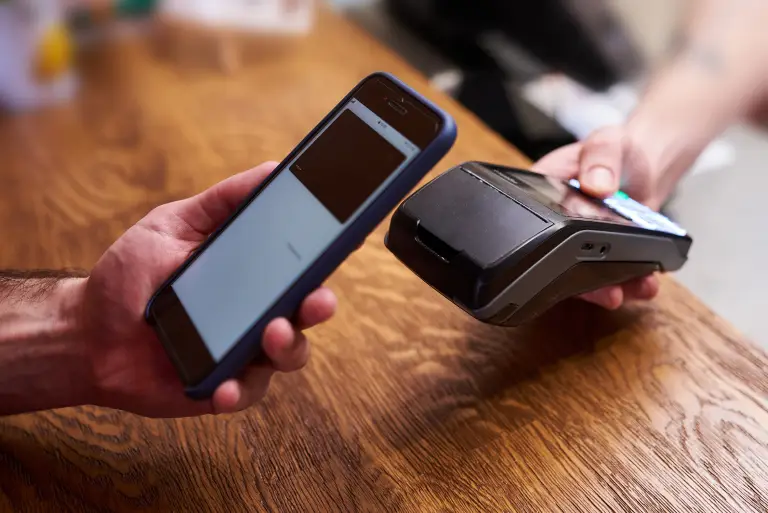
Payment System
top
Simple Steps to Complete Your Payment Securely and Efficiently
Making a payment on our website is quick and secure. Start by logging in or creating an account. Select your preferred payment method, input the required details, and review the information. Once you confirm everything is correct, click on the "Submit Payment" button. You’ll receive instant confirmation and can track your payment status through your account dashboard. It’s an easy and secure process.
Go to the Payment Section: Access the payment area on our website or app.
Choose Your Payment Method: Select your preferred payment option.
Enter Payment Details: Provide the necessary payment information.
Verify Your Information: Check that all details are correct.
Confirm Your Payment: Click "Submit Payment" to complete the transaction.
In the digital age, privacy concerns have become increasingly paramount, prompting the European Union to enact the General Data Protection Regulation (GDPR) in 2018. Among its many provisions, GDPR sets strict guidelines for the collection and processing of personal data, including the use of cookies on websites. Privacy Policy
Allow
Decline