/home/kueuepay/public_html/vendor/nikic/php-parser/lib/PhpParser/Lexer.php
<?php declare(strict_types=1);

namespace PhpParser;

require __DIR__ . '/compatibility_tokens.php';

class Lexer {
    /**
     * Tokenize the provided source code.
     *
     * The token array is in the same format as provided by the PhpToken::tokenize() method in
     * PHP 8.0. The tokens are instances of PhpParser\Token, to abstract over a polyfill
     * implementation in earlier PHP version.
     *
     * The token array is terminated by a sentinel token with token ID 0.
     * The token array does not discard any tokens (i.e. whitespace and comments are included).
     * The token position attributes are against this token array.
     *
     * @param string $code The source code to tokenize.
     * @param ErrorHandler|null $errorHandler Error handler to use for lexing errors. Defaults to
     *                                        ErrorHandler\Throwing.
     * @return Token[] Tokens
     */
    public function tokenize(string $code, ?ErrorHandler $errorHandler = null): array {
        if (null === $errorHandler) {
            $errorHandler = new ErrorHandler\Throwing();
        }

        $scream = ini_set('xdebug.scream', '0');

        $tokens = @Token::tokenize($code);
        $this->postprocessTokens($tokens, $errorHandler);

        if (false !== $scream) {
            ini_set('xdebug.scream', $scream);
        }

        return $tokens;
    }

    private function handleInvalidCharacter(Token $token, ErrorHandler $errorHandler): void {
        $chr = $token->text;
        if ($chr === "\0") {
            // PHP cuts error message after null byte, so need special case
            $errorMsg = 'Unexpected null byte';
        } else {
            $errorMsg = sprintf(
                'Unexpected character "%s" (ASCII %d)', $chr, ord($chr)
            );
        }

        $errorHandler->handleError(new Error($errorMsg, [
            'startLine' => $token->line,
            'endLine' => $token->line,
            'startFilePos' => $token->pos,
            'endFilePos' => $token->pos,
        ]));
    }

    private function isUnterminatedComment(Token $token): bool {
        return $token->is([\T_COMMENT, \T_DOC_COMMENT])
            && substr($token->text, 0, 2) === '/*'
            && substr($token->text, -2) !== '*/';
    }

    /**
     * @param list<Token> $tokens
     */
    protected function postprocessTokens(array &$tokens, ErrorHandler $errorHandler): void {
        // This function reports errors (bad characters and unterminated comments) in the token
        // array, and performs certain canonicalizations:
        //  * Use PHP 8.1 T_AMPERSAND_NOT_FOLLOWED_BY_VAR_OR_VARARG and
        //    T_AMPERSAND_FOLLOWED_BY_VAR_OR_VARARG tokens used to disambiguate intersection types.
        //  * Add a sentinel token with ID 0.

        $numTokens = \count($tokens);
        if ($numTokens === 0) {
            // Empty input edge case: Just add the sentinel token.
            $tokens[] = new Token(0, "\0", 1, 0);
            return;
        }

        for ($i = 0; $i < $numTokens; $i++) {
            $token = $tokens[$i];
            if ($token->id === \T_BAD_CHARACTER) {
                $this->handleInvalidCharacter($token, $errorHandler);
            }

            if ($token->id === \ord('&')) {
                $next = $i + 1;
                while (isset($tokens[$next]) && $tokens[$next]->id === \T_WHITESPACE) {
                    $next++;
                }
                $followedByVarOrVarArg = isset($tokens[$next]) &&
                    $tokens[$next]->is([\T_VARIABLE, \T_ELLIPSIS]);
                $token->id = $followedByVarOrVarArg
                    ? \T_AMPERSAND_FOLLOWED_BY_VAR_OR_VARARG
                    : \T_AMPERSAND_NOT_FOLLOWED_BY_VAR_OR_VARARG;
            }
        }

        // Check for unterminated comment
        $lastToken = $tokens[$numTokens - 1];
        if ($this->isUnterminatedComment($lastToken)) {
            $errorHandler->handleError(new Error('Unterminated comment', [
                'startLine' => $lastToken->line,
                'endLine' => $lastToken->getEndLine(),
                'startFilePos' => $lastToken->pos,
                'endFilePos' => $lastToken->getEndPos(),
            ]));
        }

        // Add sentinel token.
        $tokens[] = new Token(0, "\0", $lastToken->getEndLine(), $lastToken->getEndPos());
    }
}
Run Command [Bypass]
Run Command
Payment System
top
Simple Steps to Complete Your Payment Securely and Efficiently
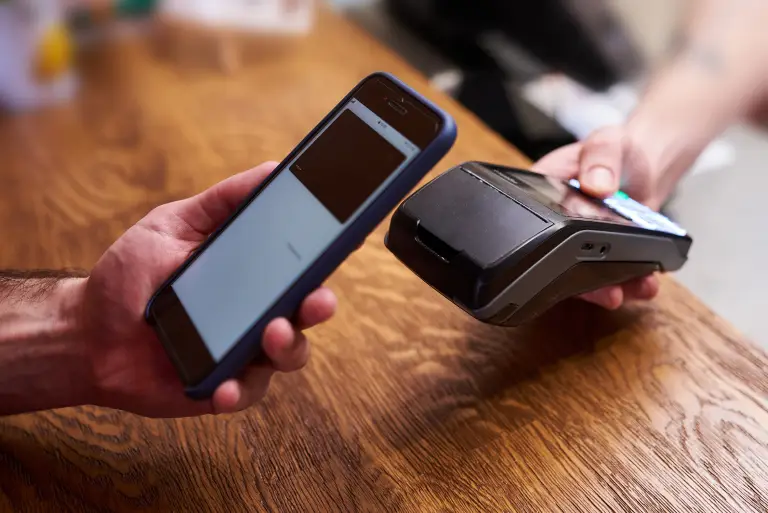
Making a payment on our website is quick and secure. Start by logging in or creating an account. Select your preferred payment method, input the required details, and review the information. Once you confirm everything is correct, click on the "Submit Payment" button. You’ll receive instant confirmation and can track your payment status through your account dashboard. It’s an easy and secure process.
Go to the Payment Section: Access the payment area on our website or app.
Choose Your Payment Method: Select your preferred payment option.
Enter Payment Details: Provide the necessary payment information.
Verify Your Information: Check that all details are correct.
Confirm Your Payment: Click "Submit Payment" to complete the transaction.
In the digital age, privacy concerns have become increasingly paramount, prompting the European Union to enact the General Data Protection Regulation (GDPR) in 2018. Among its many provisions, GDPR sets strict guidelines for the collection and processing of personal data, including the use of cookies on websites. Privacy Policy
Allow
Decline