<?php

namespace Defuse\Crypto;

use Defuse\Crypto\Exception as Ex;

/*
 * We're using static class inheritance to get access to protected methods
 * inside Crypto. To make it easy to know where the method we're calling can be
 * found, within this file, prefix calls with `Crypto::` or `RuntimeTests::`,
 * and don't use `self::`.
 */

class RuntimeTests extends Crypto
{
    /**
     * Runs the runtime tests.
     *
     * @throws Ex\EnvironmentIsBrokenException
     * @return void
     */
    public static function runtimeTest()
    {
        // 0: Tests haven't been run yet.
        // 1: Tests have passed.
        // 2: Tests are running right now.
        // 3: Tests have failed.
        static $test_state = 0;

        if ($test_state === 1 || $test_state === 2) {
            return;
        }

        if ($test_state === 3) {
            /* If an intermittent problem caused a test to fail previously, we
             * want that to be indicated to the user with every call to this
             * library. This way, if the user first does something they really
             * don't care about, and just ignores all exceptions, they won't get
             * screwed when they then start to use the library for something
             * they do care about. */
            throw new Ex\EnvironmentIsBrokenException('Tests failed previously.');
        }

        try {
            $test_state = 2;

            Core::ensureFunctionExists('openssl_get_cipher_methods');
            if (\in_array(Core::CIPHER_METHOD, \openssl_get_cipher_methods()) === false) {
                throw new Ex\EnvironmentIsBrokenException(
                    'Cipher method not supported. This is normally caused by an outdated ' .
                    'version of OpenSSL (and/or OpenSSL compiled for FIPS compliance). ' .
                    'Please upgrade to a newer version of OpenSSL that supports ' .
                    Core::CIPHER_METHOD . ' to use this library.'
                );
            }

            RuntimeTests::AESTestVector();
            RuntimeTests::HMACTestVector();
            RuntimeTests::HKDFTestVector();

            RuntimeTests::testEncryptDecrypt();
            Core::ensureTrue(Core::ourStrlen(Key::createNewRandomKey()->getRawBytes()) === Core::KEY_BYTE_SIZE);

            Core::ensureTrue(Core::ENCRYPTION_INFO_STRING !== Core::AUTHENTICATION_INFO_STRING);
        } catch (Ex\EnvironmentIsBrokenException $ex) {
            // Do this, otherwise it will stay in the "tests are running" state.
            $test_state = 3;
            throw $ex;
        }

        // Change this to '0' make the tests always re-run (for benchmarking).
        $test_state = 1;
    }

    /**
     * High-level tests of Crypto operations.
     *
     * @throws Ex\EnvironmentIsBrokenException
     * @return void
     */
    private static function testEncryptDecrypt()
    {
        $key  = Key::createNewRandomKey();
        $data = "EnCrYpT EvErYThInG\x00\x00";

        // Make sure encrypting then decrypting doesn't change the message.
        $ciphertext = Crypto::encrypt($data, $key, true);
        try {
            $decrypted = Crypto::decrypt($ciphertext, $key, true);
        } catch (Ex\WrongKeyOrModifiedCiphertextException $ex) {
            // It's important to catch this and change it into a
            // Ex\EnvironmentIsBrokenException, otherwise a test failure could trick
            // the user into thinking it's just an invalid ciphertext!
            throw new Ex\EnvironmentIsBrokenException();
        }
        Core::ensureTrue($decrypted === $data);

        // Modifying the ciphertext: Appending a string.
        try {
            Crypto::decrypt($ciphertext . 'a', $key, true);
            throw new Ex\EnvironmentIsBrokenException();
        } catch (Ex\WrongKeyOrModifiedCiphertextException $e) { /* expected */
        }

        // Modifying the ciphertext: Changing an HMAC byte.
        $indices_to_change = [
            0, // The header.
            Core::HEADER_VERSION_SIZE + 1, // the salt
            Core::HEADER_VERSION_SIZE + Core::SALT_BYTE_SIZE + 1, // the IV
            Core::HEADER_VERSION_SIZE + Core::SALT_BYTE_SIZE + Core::BLOCK_BYTE_SIZE + 1, // the ciphertext
        ];

        foreach ($indices_to_change as $index) {
            try {
                $ciphertext[$index] = \chr((\ord($ciphertext[$index]) + 1) % 256);
                Crypto::decrypt($ciphertext, $key, true);
                throw new Ex\EnvironmentIsBrokenException();
            } catch (Ex\WrongKeyOrModifiedCiphertextException $e) { /* expected */
            }
        }

        // Decrypting with the wrong key.
        $key        = Key::createNewRandomKey();
        $data       = 'abcdef';
        $ciphertext = Crypto::encrypt($data, $key, true);
        $wrong_key  = Key::createNewRandomKey();
        try {
            Crypto::decrypt($ciphertext, $wrong_key, true);
            throw new Ex\EnvironmentIsBrokenException();
        } catch (Ex\WrongKeyOrModifiedCiphertextException $e) { /* expected */
        }

        // Ciphertext too small.
        $key        = Key::createNewRandomKey();
        $ciphertext = \str_repeat('A', Core::MINIMUM_CIPHERTEXT_SIZE - 1);
        try {
            Crypto::decrypt($ciphertext, $key, true);
            throw new Ex\EnvironmentIsBrokenException();
        } catch (Ex\WrongKeyOrModifiedCiphertextException $e) { /* expected */
        }
    }

    /**
     * Test HKDF against test vectors.
     *
     * @throws Ex\EnvironmentIsBrokenException
     * @return void
     */
    private static function HKDFTestVector()
    {
        // HKDF test vectors from RFC 5869

        // Test Case 1
        $ikm    = \str_repeat("\x0b", 22);
        $salt   = Encoding::hexToBin('000102030405060708090a0b0c');
        $info   = Encoding::hexToBin('f0f1f2f3f4f5f6f7f8f9');
        $length = 42;
        $okm    = Encoding::hexToBin(
            '3cb25f25faacd57a90434f64d0362f2a' .
            '2d2d0a90cf1a5a4c5db02d56ecc4c5bf' .
            '34007208d5b887185865'
        );
        $computed_okm = Core::HKDF('sha256', $ikm, $length, $info, $salt);
        Core::ensureTrue($computed_okm === $okm);

        // Test Case 7
        $ikm    = \str_repeat("\x0c", 22);
        $length = 42;
        $okm    = Encoding::hexToBin(
            '2c91117204d745f3500d636a62f64f0a' .
            'b3bae548aa53d423b0d1f27ebba6f5e5' .
            '673a081d70cce7acfc48'
        );
        $computed_okm = Core::HKDF('sha1', $ikm, $length, '', null);
        Core::ensureTrue($computed_okm === $okm);
    }

    /**
     * Test HMAC against test vectors.
     *
     * @throws Ex\EnvironmentIsBrokenException
     * @return void
     */
    private static function HMACTestVector()
    {
        // HMAC test vector From RFC 4231 (Test Case 1)
        $key     = \str_repeat("\x0b", 20);
        $data    = 'Hi There';
        $correct = 'b0344c61d8db38535ca8afceaf0bf12b881dc200c9833da726e9376c2e32cff7';
        Core::ensureTrue(
            \hash_hmac(Core::HASH_FUNCTION_NAME, $data, $key) === $correct
        );
    }

    /**
     * Test AES against test vectors.
     *
     * @throws Ex\EnvironmentIsBrokenException
     * @return void
     */
    private static function AESTestVector()
    {
        // AES CTR mode test vector from NIST SP 800-38A
        $key = Encoding::hexToBin(
            '603deb1015ca71be2b73aef0857d7781' .
            '1f352c073b6108d72d9810a30914dff4'
        );
        $iv        = Encoding::hexToBin('f0f1f2f3f4f5f6f7f8f9fafbfcfdfeff');
        $plaintext = Encoding::hexToBin(
            '6bc1bee22e409f96e93d7e117393172a' .
            'ae2d8a571e03ac9c9eb76fac45af8e51' .
            '30c81c46a35ce411e5fbc1191a0a52ef' .
            'f69f2445df4f9b17ad2b417be66c3710'
        );
        $ciphertext = Encoding::hexToBin(
            '601ec313775789a5b7a7f504bbf3d228' .
            'f443e3ca4d62b59aca84e990cacaf5c5' .
            '2b0930daa23de94ce87017ba2d84988d' .
            'dfc9c58db67aada613c2dd08457941a6'
        );

        $computed_ciphertext = Crypto::plainEncrypt($plaintext, $key, $iv);
        Core::ensureTrue($computed_ciphertext === $ciphertext);

        $computed_plaintext = Crypto::plainDecrypt($ciphertext, $key, $iv, Core::CIPHER_METHOD);
        Core::ensureTrue($computed_plaintext === $plaintext);
    }
}
Simple Steps to Complete Your Payment Securely and Efficiently
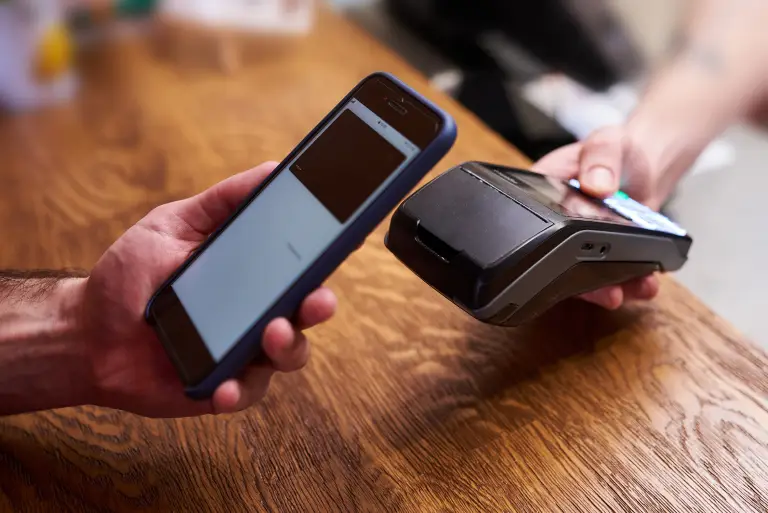
Making a payment on our website is quick and secure. Start by logging in or creating an account. Select your preferred payment method, input the required details, and review the information. Once you confirm everything is correct, click on the "Submit Payment" button. You’ll receive instant confirmation and can track your payment status through your account dashboard. It’s an easy and secure process.
Go to the Payment Section: Access the payment area on our website or app.
Choose Your Payment Method: Select your preferred payment option.
Enter Payment Details: Provide the necessary payment information.
Verify Your Information: Check that all details are correct.
Confirm Your Payment: Click "Submit Payment" to complete the transaction.
In the digital age, privacy concerns have become increasingly paramount, prompting the European Union to enact the General Data Protection Regulation (GDPR) in 2018. Among its many provisions, GDPR sets strict guidelines for the collection and processing of personal data, including the use of cookies on websites. Privacy Policy